

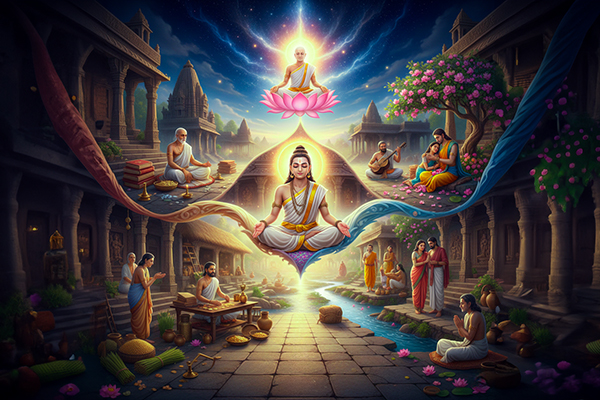
The Purusharthas are the four fundamental aims of human life in Hindu philosophy, offering a holistic framework for living a balanced, meaningful, and purposeful life. These four goals-Dharma, Artha, Kama, and Moksha, address the moral, material, emotional, and spiritual dimensions of human existence, guiding individuals toward harmony and fulfilment.
Dharma represents righteous conduct, ethical responsibility, and living in alignment with universal laws. Artha focuses on material prosperity, financial stability, and worldly success achieved through honest means. Kama encompasses desires, love, pleasure, and emotional satisfaction, encouraging the enjoyment of life within moral boundaries. Moksha, the highest aim, signifies spiritual liberation and freedom from the cycle of birth and death through self-realization.
Rooted in the Vedas, Upanishads, Mahabharata, and Dharma Shastras, the concept of Purusharthas emphasizes balance rather than renunciation. Together, these four goals help individuals integrate duty, wealth, pleasure, and spiritual wisdom, forming the foundation of a well-rounded and harmonious life in Hindu tradition.
Dharma: Righteous Living & Duty
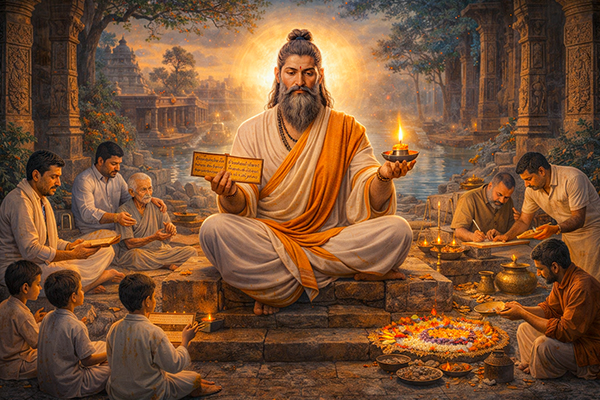
Dharma in Hindu philosophy represents the principle of righteous living, moral responsibility, and the fulfillment of duty. It governs ethical conduct, justice, and actions that uphold truth and harmony in both personal and social life. Dharma guides individuals to act with integrity, compassion, and respect, ensuring balance within society and alignment with universal laws.
Unlike rigid rules, dharma is a dynamic and context-sensitive principle. It applies to every aspect of life, including personal behavior, family responsibilities, professional roles, and social obligations. An individual’s dharma varies according to age, occupation, stage of life, and circumstances, allowing ethical decision-making to remain flexible yet principled.
Dharma is considered the foundation of the four Purusharthas because it regulates the pursuit of artha (wealth) and kama (pleasure). When material success and desires are guided by dharma, they contribute to social well-being rather than greed or exploitation. By upholding dharma, individuals create a life rooted in moral clarity, social responsibility, and steady progress toward spiritual realization.
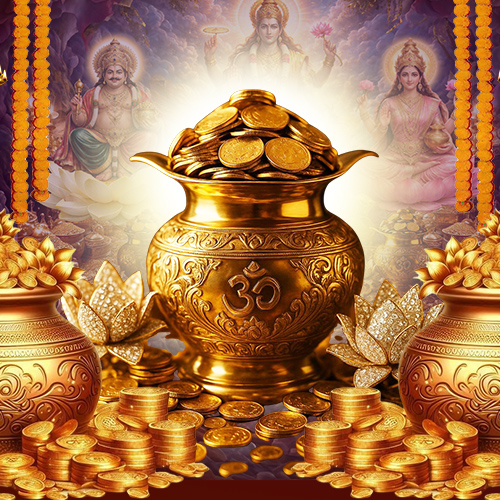
Artha: Wealth & Material Well-being
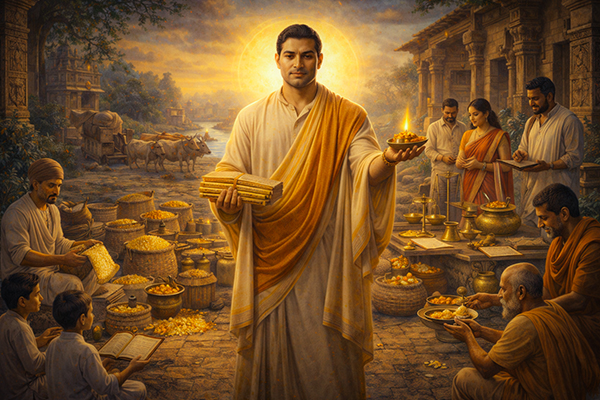
Artha represents the pursuit of wealth, material resources, and economic stability in Hindu philosophy. It emphasises the importance of financial security, professional success, and the responsible management of resources necessary for a stable and dignified life. Artha recognises that material well-being is essential for fulfilling personal responsibilities and contributing positively to society.
This aim encourages individuals to seek prosperity through honest and ethical means, ensuring that economic activities align with moral values and social responsibility. Artha supports the fulfillment of other life goals, such as caring for family, sustaining community welfare, and enabling acts of charity and service. Wealth, when guided by dharma, becomes a means for growth rather than a source of attachment or exploitation.
By integrating artha with ethical living, Hindu philosophy promotes a balanced attitude toward wealth. It teaches that material prosperity should serve as a foundation for stability, generosity, and personal development, while remaining harmonised with higher values and spiritual aspirations.
Kama: Desires, Love & Pleasure
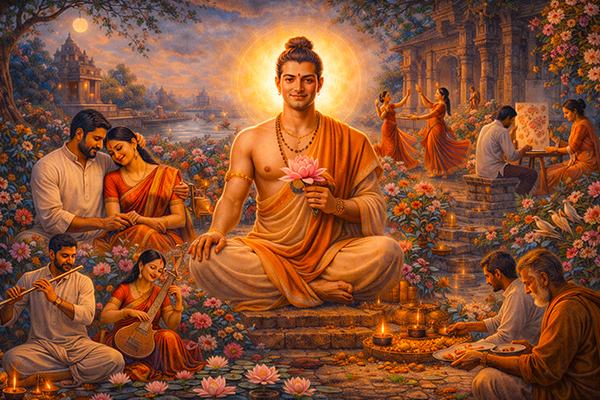
Kama is the pursuit of desires, love, and pleasure in Hindu philosophy, encompassing emotional fulfillment, aesthetic appreciation, and sensory enjoyment. It recognizes the importance of joy, affection, and meaningful relationships as essential components of a balanced and satisfying life. Kama encourages individuals to appreciate beauty, art, music, and companionship while remaining conscious of ethical boundaries.
This principle values intimacy, creativity, and the healthy expression of desires, provided they are guided by self-awareness and moral responsibility. Kama is not limited to physical pleasure alone; it also includes intellectual stimulation, emotional connection, and the enjoyment derived from culture and creativity. When approached mindfully, kama enriches human experience and deepens interpersonal bonds.
In the framework of the four Purusharthas, kama must be harmonized with dharma and artha. Pleasure pursued without ethical grounding can lead to attachment and imbalance, while pleasure guided by dharma supports well-being and emotional maturity. When integrated wisely, kama contributes to happiness, vitality, and a fuller engagement with life.
Moksha: Liberation from the Cycle of Birth
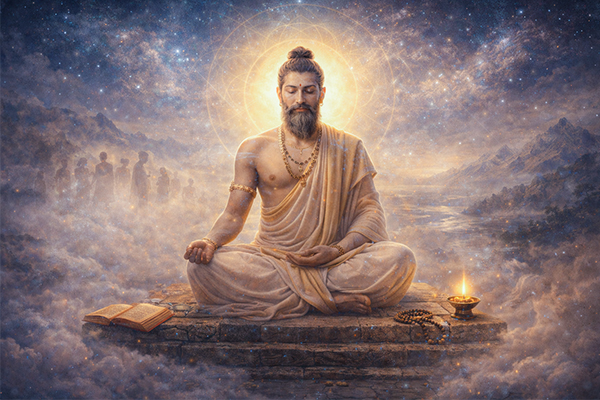
Moksha is the highest and ultimate goal in Hindu philosophy, representing liberation from the cycle of birth, death, and rebirth ( samsara ). It signifies complete freedom from ignorance, attachment, and suffering, achieved through the realization of the true self ( atman ). Unlike material goals, moksha offers permanent fulfilment beyond worldly limitations.
This state of liberation is marked by inner peace, realisation, and unity with the ultimate reality, often described as Brahman. Moksha is attained through spiritual discipline, self-knowledge ( jnana ), meditation, devotion ( bhakti ), and ethical living rooted in dharma. It involves transcending ego, desires, and the illusion of separateness, leading to profound clarity and freedom.
Among the four Purusharthas, moksha stands apart as the culmination of human life. While dharma, artha, and kama address life within the world, moksha leads beyond it, offering release from all limitations and suffering. It provides a lasting answer to human restlessness and the deepest aspiration for truth, peace, and eternal bliss.
The Dynamic Interplay of the Four Purusharthas
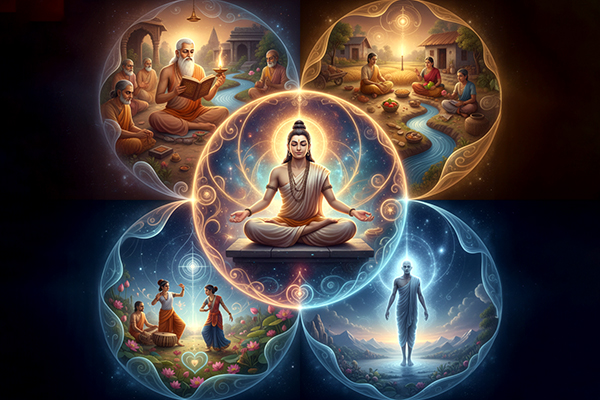
The four Purusharthas-Dharma, Artha, Kama, and Moksha, are designed to function as an integrated and interdependent framework, rather than as isolated goals. Together, they guide individuals toward a balanced life that harmonizes ethical responsibility, material prosperity, emotional fulfillment, and spiritual liberation.
Artha, the pursuit of wealth and material stability, is often motivated by kama, the realm of desires, aspirations, and enjoyment. Desires inspire action and ambition, driving individuals to seek success and security. However, Hindu philosophy emphasizes that kama must be understood with awareness, recognizing its temporary nature to prevent excess, attachment, or indulgence.
Dharma acts as the moral compass that regulates both artha and kama. It ensures that material pursuits and pleasures are achieved through just, responsible, and compassionate means. When guided by dharma, wealth and pleasure support social harmony and personal integrity rather than becoming sources of bondage or suffering.
This ethical balance gradually prepares the individual for moksha, the ultimate aim of liberation. By fulfilling worldly responsibilities without attachment and living in alignment with higher values, one develops inner maturity and spiritual insight. The dynamic interplay of the Purusharthas thus enables individuals to live fully in the world while steadily progressing toward self-realization and lasting freedom.
Relevance of Purusharthas in Modern Life

The Purusharthas remain highly relevant in modern life, offering a timeless framework for achieving balance, purpose, and fulfillment amid contemporary challenges. In a fast-paced world driven by ambition, material success, and constant stimulation, the four aims-Dharma, Artha, Kama, and Moksha, provide guidance for integrating ethical living with personal and professional aspirations.
Dharma serves as a moral foundation, encouraging integrity, responsibility, and compassion in personal relationships, workplaces, and society at large. It helps counter the excesses of materialism, competition, and ethical compromise by reminding individuals to act in alignment with higher values.
Artha supports the pursuit of financial security and career growth while emphasizing ethical means and social responsibility. It acknowledges the importance of material well-being but cautions against allowing wealth to dominate one’s sense of purpose or identity.
Kama validates the need for pleasure, love, and emotional fulfillment, while urging mindfulness and self-control. In an age of instant gratification, the integration of kama with dharma offers a path to genuine happiness rather than fleeting satisfaction.
Moksha remains a vital aspiration even in modern society, inviting reflection on deeper meaning, inner peace, and spiritual freedom beyond material success. Together, the Purusharthas encourage a harmonious balance between tradition and modernity, ambition and compassion, and worldly engagement and inner growth, guiding individuals toward a meaningful and well-rounded life.
Conclusion: Path to a Fulfilling Life
The four Purusharthas-Dharma, Artha, Kama, and Moksha, offer a comprehensive and timeless framework for living a balanced and meaningful life. Together, they address the ethical, material, emotional, and spiritual dimensions of human existence, guiding individuals toward harmony within themselves and society.
By grounding actions in dharma, pursuing artha and kama responsibly, and aspiring toward moksha, individuals can enjoy worldly life without becoming bound by it. This integrated approach ensures that material success and personal pleasure support growth rather than distraction, while spiritual awareness provides deeper purpose and inner peace.
In both traditional and modern contexts, the Purusharthas remain profoundly relevant. They encourage conscious living, ethical responsibility, emotional fulfillment, and spiritual realization. By applying this wisdom in daily life, one can navigate complexity with clarity, cultivate lasting contentment, and progress steadily toward true fulfillment and inner freedom.
-in-Astrology.jpg)
.jpg)



Comments 0
Leave your thought here