

Goddess Tripura Sundari stands as the supreme embodiment of beauty, wisdom, and divine energy in the Shakta tradition. Revered as one of the ten Mahavidyas, she represents the ultimate form of Shakti, uniting cosmic power with spiritual enlightenment and the harmony of material and transcendental beauty. Known as the Beauty of the Three Worlds, she presides over creation, preservation, and dissolution, radiating unmatched grace and bliss. Her youthful form, adorned with a radiant smile, symbolizes the fulfillment of all desires and the promise of profound inner awakening. Associated with the sacred Sri Vidya tradition, worship of Tripura Sundari leads devotees toward both material prosperity and ultimate liberation, making her a central figure in the pursuit of spiritual realization and the celebration of divine femininity.
Who is Maa Tripura Sundari Devi?
Maa Tripura Sundari occupies a central place in Hindu spirituality as the embodiment of supreme beauty, wisdom, and creative energy. She is revered as one of the ten Mahavidyas, signifying her role as a powerful and transformative force within the Shakta tradition. Her title, meaning 'She who is beautiful in the three worlds,' highlights her authority over the physical, astral, and causal realms, reflecting her all-encompassing presence across the cosmos. Tripura Sundari is the complete manifestation of Mahadevi, the Great Goddess, and is intimately linked to the Sri Vidya tradition, where she guides devotees toward both material fulfillment and ultimate spiritual liberation.
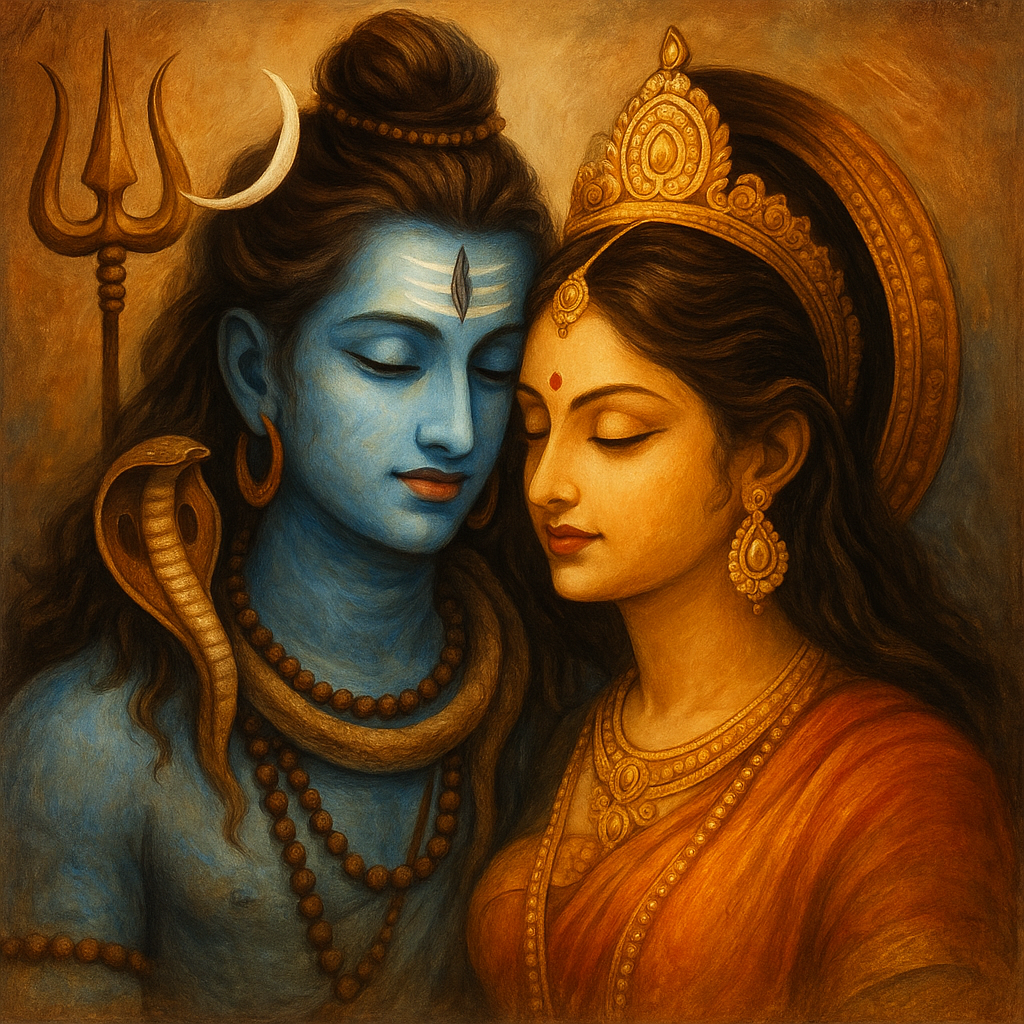
In her divine lineage, Tripura Sundari is recognized as a form of Parvati and is the consort of Lord Shiva, symbolizing the union of consciousness and energy. She is also associated with other major goddesses like Kali, Durga, and Bhagavati, which underscores her multifaceted nature and her role as the source of all feminine divinity. Through her union with Shiva, she is venerated as the mother of Ganesha and Kartikeya, highlighting her nurturing and protective aspects. Her worship is deeply embedded in Hindu scriptures such as the Lalita Sahasranama, where she is celebrated as the Adi Mahavidya, the primordial expression of enlightened consciousness and the origin of all creation.
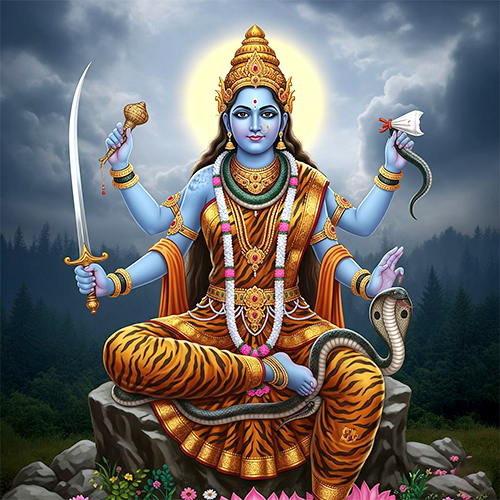
Goddess Tripura Sundari is often shown seated on a lotus that rests on Shiva’s horizontal body, itself supported by a throne with legs representing Brahma, Vishnu, and Rudra, which signifies her supremacy over the trinity of creation, preservation, and destruction. In some representations, she wears a tiger skin and a snake garland, with her hair arranged in matted locks, holding a trident and a drum, and riding a bull. In other forms, she appears with four hands, holding a noose, goad, arrows, and a bow, each symbolizing her control over desire, power to remove obstacles, mastery of the senses, and ability to grant wishes. Her attire of red silk, adorned with jewels and flowers, a crescent moon on her forehead, and her fish-shaped eyes and radiant smile, all convey her roles as the bestower of wisdom, fulfillment, and the sustaining force behind cosmic harmony.
Significance of Maa Tripura Sundari
Maa Tripura Sundari embodies the highest form of Shakti, representing cosmic power, spiritual enlightenment, and the union of material and transcendental beauty. She is revered as the supreme goddess who governs creation, preservation, and dissolution. Her philosophical significance lies in her triple-natured aspect, which symbolizes the journey of consciousness through the senses, mind, and heart. This tripartite theme extends to the physical, astral, and causal realms, as well as the states of waking, dreaming, and deep sleep. Through her worship, devotees are guided from ignorance to enlightenment, with her beauty serving as a metaphor for the transformative power that leads to self-realization and pure perception of the universe. Tripura Sundari is honored in the Sri Vidya tradition as the Vedic Goddess of wisdom, steering seekers toward samadhi and the awareness of the Absolute. Her spirit is central in the Tantric tradition, where she is seen as the path to both material prosperity and spiritual liberation.
Her importance is especially pronounced in the Tantric and Shakta traditions, notably within the Srikula lineage and the Sri Vidya school, which is prominent in South India. She is the presiding deity of the Tripura Sundari Temple in Tripura, a major Shakti Peetha, and serves as the patron goddess of the region. Her worship is deeply woven into the cultural and spiritual fabric of Tripura, influencing local art, music, dance, and community life. The goddess is also widely venerated in states like West Bengal, Tamil Nadu, Andhra Pradesh, Telangana, Jharkhand, and Karnataka, where she is celebrated as the supreme divinity and the embodiment of the divine feminine.
Several festivals are dedicated to Tripura Sundari, reflecting her widespread devotion. Lalita Jayanti, observed on the full moon day of the Magha month, is a major celebration honoring her divine appearance and power. This festival is marked by rituals, prayers, and self-reflection, with devotees seeking both spiritual and worldly blessings. In Tripura, the annual Tripura Sundari Puja is a grand event, drawing thousands of worshippers who gather for prayers, mantras, and community festivities.
The Diwali festival at the Tripura Sundari Temple is another significant occasion, featuring vibrant celebrations and religious ceremonies that attract devotees from across the region. Kharchi Puja, unique to Tripura, is also associated with the goddess and involves rituals to purify the earth and wash away sins. Through these festivals, the goddess's role as the source of beauty, wisdom, and cosmic order is continually reaffirmed in the hearts of her followers.
Iconography & Symbolism
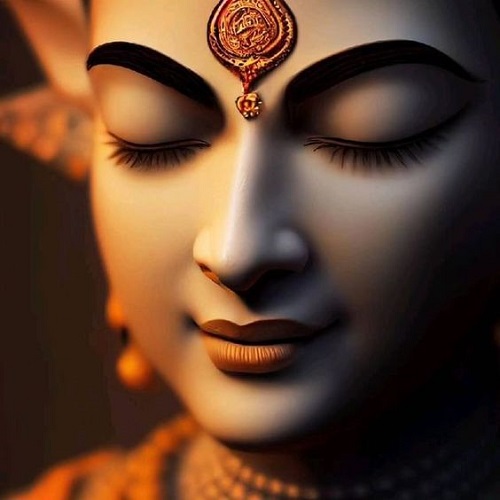
Maa Tripura Sundari is depicted as a radiant young goddess, embodying supreme beauty and grace. Her face glows with freshness, sparkling rosy cheeks, fish-shaped eyes, perfect teeth, and a charming smile. She is often shown adorned in red silk, her long, dark hair decorated with flowers, and her body embellished with shimmering jewels. A crescent moon graces her forehead. She is usually depicted with four arms, holding a noose, a goad, arrows, and a bow. These objects symbolize her control over desire, power to remove obstacles, mastery of the mind, and dominion over the senses. In some representations, she sits on a lotus placed upon the supine body of Shiva, which rests on a throne supported by Brahma, Vishnu, and Rudra, emphasizing her sovereignty over the three principal deities. She may also be shown wearing a tiger skin, a snake garland, and holding a trident and drum, with a bull as her vehicle. Her youthful form, known as Shodashi, reflects the fulfillment of desires and the promise of spiritual awakening.
Art, sculptures, and temple depictions of Tripura Sundari are rich with intricate details and symbolic motifs. The Tripura Sundari Temple in Udaipur, Tripura, features a stone idol of the goddess, adorned with jewels and positioned in a serene posture that radiates grace and power. The temple’s architecture blends Bengali and traditional Tripura styles, with elaborate carvings on walls and pillars depicting deities, floral patterns, and mythological scenes. Bronze and Tanjore artworks capture her as a regal figure, often seated on a lotus throne, flanked by Lakshmi and Saraswati, and surrounded by the ten Mahavidyas. These artistic representations serve as focal points for worship and meditation, inviting devotees to connect with her divine energy and cosmic significance.
Color symbolism, posture, and mudras play a vital role in her iconography. Tripura Sundari is predominantly depicted in shades of red, symbolizing passion, transformative energy, activity, and auspiciousness. The red hue is associated with the rajas guna, representing her dynamic power to manifest and guide the cosmos. Her posture is typically seated on a lotus, signifying purity and spiritual awakening, with one leg bent and the other extended, representing mastery over both material and spiritual realms. Her mudras include the abhaya mudra, which dispels fear, and the varada mudra, which grants boons, reinforcing her roles as protector and benefactor. The objects in her hands; noose, goad, bow, and arrows, further emphasize her ability to guide, control, and transform the inner and outer worlds of her devotees.
Origins of Maa Tripura Sundari
Tripura Sundari’s origins are deeply embedded in ancient Hindu scriptures and legends. She is considered a manifestation of Mahadevi, the supreme goddess, and is closely associated with Parvati, the consort of Shiva. Her name, originating from Sanskrit, combines 'Tri' meaning three and 'Pura' meaning city or citadel, signifying 'the one constituting all three citadels.' This directly reflects her dominion over the three worlds: the physical, astral, and causal realms. The name also embodies the three states of consciousness; waking, dreaming, and deep sleep. 'Sundari' translates to 'she who is gorgeous,' so Tripura Sundari means 'She who is beautiful in the three worlds' or 'She who is gorgeous in the three states of consciousness.' This name captures her embodiment of beauty, wisdom, and divine energy across all planes of existence.
According to the Lalita Sahasranama and various Shakta texts, she is the Adi Mahavidya, the primordial form of divine consciousness and the complete embodiment of reality. Many narratives describe her as emerging to restore cosmic balance when the universe is threatened by chaos or demonic forces. In one legend, the divine trinity of Brahma, Vishnu, and Shiva created her to bring harmony and order to the cosmos. Another account highlights her as the radiant light in Shiva's eyes, with her beauty so captivating that even Shiva could not look away. The Shodashi Tantra and the Vamakeshvara Tantra further elaborate on her cosmic role, describing her as the instructor of the universe and the force behind creation, preservation, and dissolution.
Her avatar stories and connections to cosmic events are reflected in several key scriptures. The Lalita Sahasranama details her cosmic battle against the demon Bhandasura, where she leads an army of divine beings to victory, symbolizing the triumph of good over evil. The Tripura Upanishad elevates her as the ultimate Shakti, the supreme consciousness above Brahma, Vishnu, and Shiva, and presents her as the source of the universe’s energy and wisdom. The Brahmanda Purana narrates that Vishnu became the elder brother of Parvati in her form as Tripura Sundari to help her unite with Shiva, highlighting her interconnectedness with the principal deities.
Legends also link her to the churning of the cosmic ocean, where she emerges as a radiant goddess during the Samudra Manthan, captivating all beings with her beauty and power. In regional traditions, such as those found in Tripura, the goddess’s presence is intertwined with local legends, temple histories, and even the Ramayana and Mahabharata, where she is invoked for guidance and protection. Through these stories and scriptures, Tripura Sundari is established as the central force of cosmic order, spiritual enlightenment, and the divine feminine energy that sustains the universe.
Legends and Stories
The story of Tripura Sundari’s emergence is rooted in a cosmic event following the death of Sati, Shiva’s first wife. After Sati’s self-immolation at her father Daksha’s yagna, Shiva withdrew into deep penance. Sati was reborn as Parvati, daughter of the mountain king Himavat and Mena, due to a boon from Adi Parashakti. Parvati’s union with Shiva was crucial for the birth of a son destined to defeat the demon Tarakasura. The gods sent Kamadeva, the god of love, to awaken Shiva’s desire for Parvati. When Kamadeva shot his arrows at Shiva and Parvati, Shiva, angered by the disturbance, burned Kamadeva to ashes with his third eye.
From the ashes of Kamadeva arose the demon Bhandasura, who began to terrorize the universe from his city, Shonitha Pura. The gods, seeking relief, approached Sage Narada and the Trimurti for guidance. They were advised to invoke the ultimate divine power through a great sacrifice. During this Maha Yagna, the entire creation was offered as oblation, and from the sacrificial fire emerged Maha Tripura Sundari. She manifested as the supreme goddess, split herself into Kameswara (Purusha) and Kameshwari (Prakriti), and recreated the universe, restoring harmony and balance.
Another tale highlights Parvati’s desire to captivate Shiva. To demonstrate her beauty and omnipresence, she transformed herself into Lalita Tripura Sundari, enchanting Shiva and asserting her divine presence across all three worlds. These stories emphasize her role as the embodiment of love, cosmic order, and the ultimate source of creation and restoration in the universe.
Spiritual Lessons from Tripura Sundari
The tales of Tripura Sundari convey profound moral and spiritual lessons that guide devotees toward higher consciousness and self-realization. Her emergence to restore cosmic order after chaos demonstrates the power of divine wisdom and beauty to overcome negativity and restore balance. She teaches that true strength lies in inner harmony, the integration of mind, senses, and heart, and the pursuit of wisdom over brute force. The goddess’s victory over the demon Bhandasura underscores the importance of perseverance, courage, and the ability to confront and transform inner and outer obstacles.
Tripura Sundari’s stories highlight the journey from ignorance to enlightenment, showing that devotion and self-discipline can lead to both material prosperity and spiritual awakening. Her triple-natured symbolism reminds seekers to recognize and harmonize the physical, mental, and spiritual aspects of their being. By steering devotees toward pure perception and awareness of the Absolute, she inspires the pursuit of clarity, self-mastery, and a deeper connection with the divine. These lessons make her a powerful guide for those seeking both worldly fulfillment and ultimate liberation.
Puja Vidhi at Home
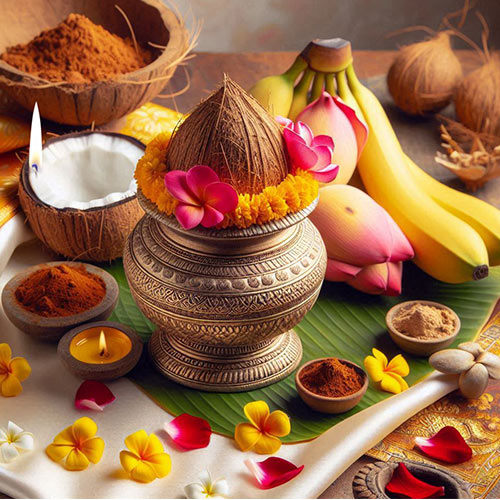
Required Materials
- Shree Yantra (preferably gold plated)
- White asan (seat)
- White cloth
- Fruits and sweet offerings
- Sugar drop candy (batasha)
- White ghee
- Moti, chandan, or tulsi mala
- Kamal gatta (lotus seeds)
- Guggal (incense)
- Yellow mustard
- Naivedya (food offering)
- Kalash (water pot)
- Diya (lamp)
- Flowers
- Incense sticks
- Gangajal (holy water)
- Tilak materials (haldi, kumkum, sandalwood paste)
- Betel nut
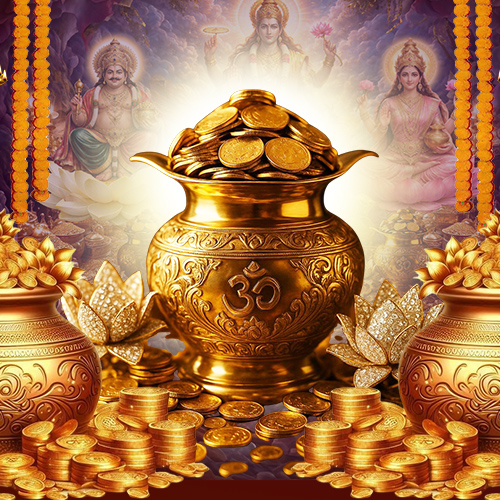
- Prosperity bowl (with gomati chakra, cowry, sriphal, lotus seeds, shell)
- Puja coins
Step-by-step home or festival puja guide
- Choose an auspicious day, ideally a Friday.
- Bathe and wear clean clothes, preferably white.
- Set up a clean puja space facing east. Lay the white asan and place the Shree Yantra or Tripura Sundari image on the altar.
- Light the diya and incense.
- Sprinkle gangajal on yourself and the surroundings while chanting the Pavitrikaran mantra: Om Apavitrah Pavitro Va Sarva Vastan Gatopi Va Yah Smaret Pundari Kaksham Sa Bahya Bhyantarah Shuchih
- Offer flowers, white cloth, and naivedya to the deity.
- Perform Panchopachara puja (five offerings): Avahanam (invocation), Asanam (offering seat), Vastram (offering cloth), Dhupam (incense), Naivedyam (food).
- Circumambulate (parikrama) the altar three times.
- Meditate on the Shree Yantra, starting from the central bindu and moving outward through each layer, focusing on the divine energy.
- Recite the Tripura Sundari mantra and Lalita Sahasranama or any preferred stotra.
- Offer pushpanjali (flowers) and perform aarti.
- Distribute prasad and, if possible, donate food or items to the needy, animals, or temples.
Chanting and Aarti process
Main mantra for chanting :
Aum Aim Hreem Shreem Aim Kleem Sowm Kleem Aim Aum Namo Bhagavathi Tripura Dhevee Mama Vasam Kuru Kuru Swaha
Lalita Sahasranama or Tripura Sundari Kavach can also be recited.
Conclude the puja with aarti, waving the lamp in a circular motion before the deity while singing aarti or reciting the Shanti mantra:
Om Purnamadah Purnamidam Purnat Purnamudachyate Purnasya Purnamadaya Purnameva Vashishyate Om Shantih
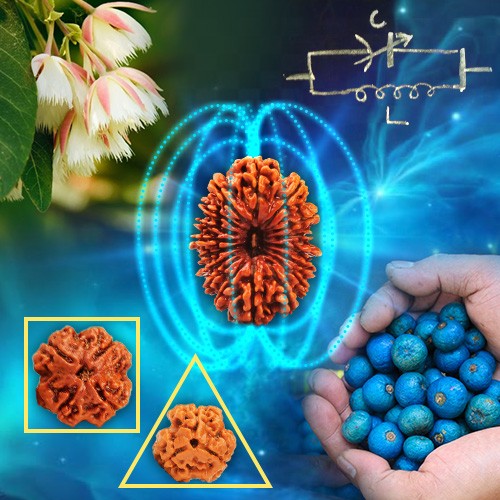
After the rituals, distribute prasad and keep energized items such as Shree Yantra, rudraksha, and prosperity bowl in your puja space or wallet for ongoing blessings.
This process brings harmony, prosperity, and spiritual upliftment when performed with devotion and sincerity.
Mantras Dedicated to Maa Tripura Sundari Devi
Shrim Ka E I La Hrim; Ha Sa Ka Ha La Hrim; Sa Ka La Hrim
Meaning: This is the core Sri Vidya mantra, invoking the essence of Tripura Sundari as the beauty and power of the three worlds. It is a mystical formula that encapsulates the goddess’s energy, wisdom, and the union of matter, energy, and consciousness.
Benefits:
- Grants spiritual awakening and self-realization.
- Attracts prosperity, abundance, and material success.
- Bestows inner and outer beauty.
- Enhances mental clarity, focus, and wisdom.
- Removes obstacles and brings harmony in life.
- Aligns the practitioner with higher consciousness and the blessings of the goddess.
Om Shreem Hreem Kleem Tripurasundaryai Namah
Meaning: Salutations to Tripura Sundari, the supreme beauty of the three worlds, source of all auspiciousness, power, and attraction.
Benefits:
- Alleviates marital problems, disharmony, and delays in marriage
- Supports fertility, safe pregnancy, and family happiness
- Protects from misfortunes and planetary afflictions
- Grants fulfillment of desires and material well-being
- Awakens the heart to divine love and bliss
Benefits of Worshipping Maa Tripura Sundari Devi
Worship of Tripura Sundari brings transformative benefits to spiritual, mental, and material aspects of life. Spiritually, her worship leads to profound inner wisdom, self-realization, and the awakening of higher consciousness. She guides devotees toward samadhi and ultimate liberation, helping them transcend worldly limitations and experience unity with the divine. Mentally, invoking her energy enhances clarity, focus, and emotional stability. Devotees find relief from stress, anxiety, and negative emotions, gaining the strength to overcome obstacles and make sound decisions. Materially, her blessings manifest as prosperity, success, harmonious relationships, and protection from misfortunes. She grants abundance, removes delays in marriage, supports fertility, and fosters overall well-being, ensuring a life filled with joy, peace, and fulfillment.
Most important benefits of worshipping Tripura Sundari:
- Awakens spiritual wisdom and guides toward self-realization
- Brings peace, harmony, and emotional stability
- Attracts prosperity, wealth, and material success
- Removes obstacles and negative influences from life
- Enhances mental clarity, focus, and decision-making
- Fosters creativity, artistic expression, and inspiration
- Promotes loving relationships and resolves conflicts
- Supports health, vitality, and longevity
- Encourages self-confidence, gratitude, and contentment
- Aligns life with divine purpose and provides guidance in challenging times
Through sincere devotion and regular practice, Tripura Sundari’s worship transforms every dimension of life, leading to lasting abundance, inner peace, and spiritual fulfillment.
Temples Dedicated to Goddess Tripura Sundari
Several renowned temples across India are dedicated to Goddess Tripura Sundari, each holding deep spiritual, historical, and cultural significance. The most prominent is the Tripura Sundari Temple in Udaipur, Tripura, located atop a hill near Radhakishorepur village. Established in 1501 by Maharaja Dhanya Manikya, this temple is one of the 51 Shakti Peethas and is considered the spiritual heart of the state, which derives its very name from the goddess. The temple’s architecture features a square sanctum modeled after a rural Bengali hut, crowned with a conical dome. The main shrine houses two black stone idols, Tripura Sundari and Chhotima, and the complex includes the sacred Kalyansagar lake, revered for its tortoises. Diwali is the grandest festival here, drawing massive gatherings of devotees who participate in vibrant rituals and fairs.
In Rajasthan, two major temples stand out. The Tripura Sundari Temple in Banswara is celebrated for its spiritual ambiance and architectural elegance, blending Rajput and Mughal styles. The temple’s black stone idol and its tranquil setting near lakes and hills make it a significant pilgrimage destination, especially during Navratri and Makar Sankranti. Another important shrine is the Tripura Sundari Temple in Udaipur, Rajasthan, which is also a focal point for local devotees.
Himachal Pradesh is home to the Tripura Sundari Temple in Naggar, Kullu district, perched on a hill with panoramic views of the Kullu Valley. This temple is built in the traditional Himachali wooden style and is adorned with intricate carvings. The main shrine enshrines an ancient and powerful idol of the goddess, making it a revered site for Shakta worshippers and a notable stop for pilgrims in the region.
In Karnataka, the Sri Tripurasundari Temple in Mysore, particularly in the town of Moogooru, is an ancient site with a rich local legend. The temple is known for its Dravidian architecture, high walls, and colorful statuettes of the goddess. The idol, made of black stone and seated with a Sri Chakra at her feet, draws devotees from across the state, especially during the Mysore Dasara festival.
These temples not only serve as centers of worship but also as custodians of art, music, and local traditions. They host major festivals such as Diwali, Navratri, and regional celebrations, transforming into vibrant hubs of devotion and community life. Each temple’s unique architecture, legends, and rituals contribute to the enduring legacy and widespread reverence of Goddess Tripura Sundari throughout India.
Presence in Other Traditions
Tripura Sundari’s influence extends beyond Hinduism, touching other religious and cultural traditions across South Asia. In Nepal, she holds a prominent place within the Shakta tradition, particularly among Newar communities and royal families. Her worship, often linked with the Taleju deity, blends local and pan-Indian Shakta practices, and several temples in Kathmandu Valley and Bhaktapur are dedicated to her. The tradition’s historical roots in Nepal may trace back to Kashmir, Bengal, or South India, and her rituals there reflect a fusion of Vedic, Tantric, and indigenous elements.
While Tripura Sundari’s direct presence in Buddhism and Jainism is less pronounced, her attributes as the supreme feminine energy resonate with similar goddess figures in Vajrayana Buddhism, such as Tara. Both are considered powerful manifestations of the divine feminine, associated with protection, wisdom, and the ability to grant liberation. In Southeast Asia, especially in regions influenced by Tantric Hinduism, aspects of Tripura Sundari have merged with local goddess cults and temple traditions, contributing to the broader tapestry of goddess worship in the region.
Comparative mythology reveals that Tripura Sundari shares core themes with other great goddesses across cultures. Like Tara in Buddhism and Saraswati in Hinduism, she embodies the creative, sustaining, and transformative power of the universe. Her role as the source of creation, sustenance, and destruction aligns her with other mother goddesses who protect, nurture, and guide devotees.
In Tantric traditions, her worship parallels that of goddesses like Matangi and Kamakhya, each representing distinct aspects of the divine feminine but united in their empowerment of seekers and their central place in ritual practice. Through these connections, Tripura Sundari stands as a universal symbol of beauty, wisdom, and cosmic order, revered in diverse spiritual landscapes.
Rudra Centre’s Tripura Sundari Products & Puja Services
A beautifully crafted marble idol of Goddess Lalitha Devi, also known as Tripura Sundari, depicted sitting on a throne holding a parrot, noose, and sugarcane, with her right hand in blessing mudra. Ideal for home altars to invoke success, beauty, prosperity, knowledge, harmony, and spiritual growth.
Goddess Bala Tripura Sundari Mahavidya Bronze Idol
A finely detailed bronze idol of Bala Tripura Sundari, representing her youthful form. The idol radiates purity and spiritual grace, making it ideal for worship to seek spiritual awakening, inner peace, and fulfillment of wishes.
Shri Vidya Shodashi Tripurasundari Mahavidya Puja
A comprehensive puja service invoking Tripura Sundari for bliss, beauty, good fortune, wealth, pleasure, and salvation. Includes Shree Yantra, Rudraksha, energized amulet, prosperity bowl, and prasad shipped after rituals.
Goddess Lalita (Tripura Sundari) Devi Puja and Yajna
A Vedic puja and yajna service for removal of worries, fears, malefic energies, and for happiness and power. Includes Kalash Sthapana, planetary mantra chanting, Tripur Sundari Yantra Puja, Kavach recitation, yajna, and aarti, with prasad and energized items provided.
The Radiant Heart of the Universe: Tripura Sundari’s Timeless Beauty
Maa Tripura Sundari radiates as the living pulse of divine femininity, captivating hearts with her unparalleled beauty and wisdom while commanding the vast expanse of the cosmos. She is not just a distant celestial figure but a guiding presence, drawing seekers from the shadows of confusion into the brilliance of self-realization. Her essence weaves through the three worlds and the layers of human experience, offering a bridge from the ordinary to the extraordinary. Every ritual, every mantra, every moment of devotion to her becomes a step toward inner clarity, emotional resilience, and tangible abundance. As the original Mahavidya, she is the heartbeat of cosmic order, inspiring a devotion that feels both timeless and deeply personal. To invite Tripura Sundari into one’s life is to awaken a force that harmonizes chaos into beauty, transforms longing into fulfillment, and ultimately leads the soul to its highest freedom. Her story is not just mythology, it is an invitation to experience the sacred, to find purpose, and to embrace the transformative dance of existence itself.
-in-Astrology.jpg)
.jpg)


Sadeesha liyanarachchi
|June 13, 2025
Thank you
Ankur
|December 26, 2023
Excellent Article, thanks for spreading this information