

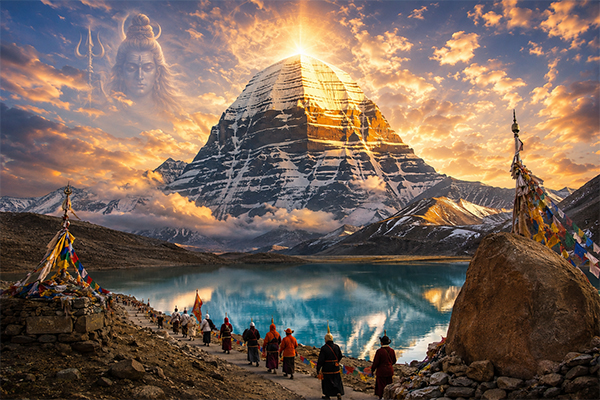
Rising majestically on the remote Tibetan Plateau, Mount Kailash stands as one of the most revered and mysterious mountains on Earth. At an elevation of approximately 21,778 feet (6,638 meters), this extraordinary peak has inspired devotion, wonder, and spiritual longing for thousands of years.
Unlike other famous mountains that attract climbers seeking conquest, Mount Kailash remains untouched by human feet, revered not as a summit to be conquered but as a divine presence to be worshipped.
Together with the sacred Lake Mansarovar, Kailash forms one of the most powerful spiritual destinations in the world. For Hindus, Buddhists, Jains, and followers of the ancient Bon tradition, Kailash is not merely a mountain—it is the cosmic center of existence, the meeting point of heaven and earth, and the axis around which the universe symbolically revolves.
The Kailash Mansarovar Yatra is therefore far more than a journey through the Himalayas. It is a pilgrimage into the heart of spirituality, self-discovery, humility, and transformation.
The Sacred Geography of Mount Kailash
Located in western Tibet near the tri-junction of India, Nepal, and China, Mount Kailash dominates the landscape with its striking pyramid-like shape. Made of dark rock and capped with eternal snow, the mountain appears like a gigantic crystal rising from a rugged and barren terrain.
According to ancient Hindu scriptures and Puranic descriptions, Mount Kailash stands at the center of six mountain ranges arranged like the petals of a lotus. In this symbolism, Kailash forms the sacred core—the spiritual heart of creation.
This is why it is often described as:
- The Axis Mundi (Cosmic Axis)
- The Pillar of the World
- The Stairway to Heaven
- The Center of the Universe
In spiritual traditions, 'center' does not refer to a geographical midpoint but rather to the point where divine consciousness, creation, and cosmic energy converge.
Why Mount Kailash Is Sacred to Four Religions
Few places on Earth unite as many faiths as Kailash Mansarovar.
Mount Kailash in Hinduism
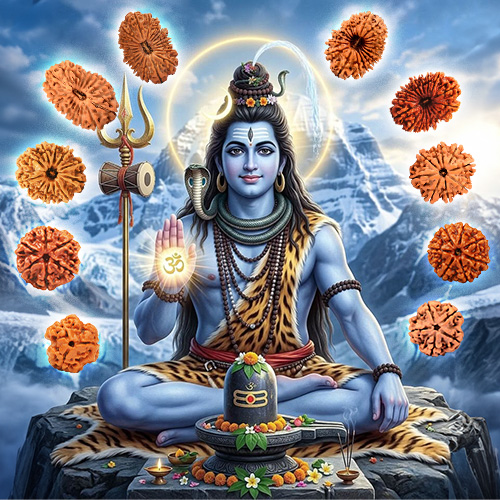
For Hindus, Mount Kailash is the eternal abode of Lord Shiva and Goddess Parvati. It is believed that Shiva, the Lord of Destruction and Regeneration, remains in deep meditation at the summit, surrounded by divine beings including:
- Devtas
- Ganas
- Yakshas
- Siddha Purushas
- Yogis
- Gandharvas
The mountain symbolizes ultimate stillness, transcendence, and liberation from the cycle of birth and death.
Many pilgrims describe a profound spiritual presence around Kailash and consider the pilgrimage a gateway to Moksha (liberation).
Mount Kailash in Buddhism
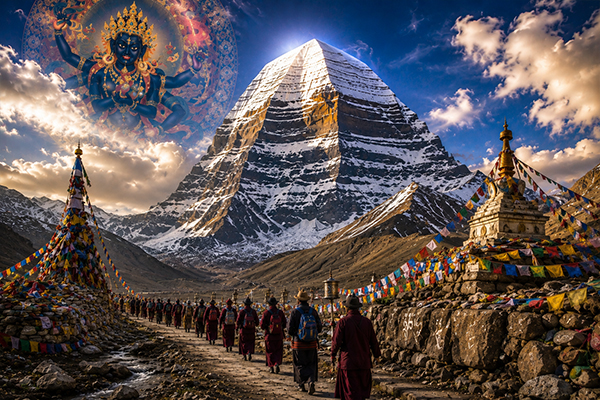
For Tibetan Buddhists, Mount Kailash is the residence of Demchok (Chakrasamvara), the deity who represents supreme bliss and enlightenment.
Buddhists regard the mountain as one of the most sacred power centers on Earth. Pilgrims perform the Kora (circumambulation) around Kailash, believing that it purifies negative karma accumulated over many lifetimes.
Mount Kailash in Jainism
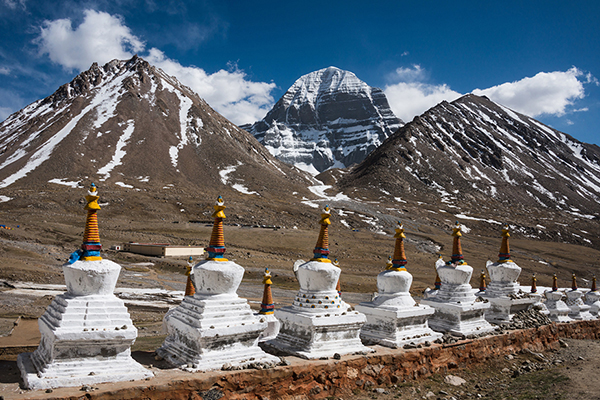
Jains know the sacred mountain as Ashtapada, meaning 'Eight Steps.'
According to Jain tradition, the first Tirthankara, Rishabhanatha (Adinath), attained liberation here.
For Jains, Kailash represents the ultimate path toward spiritual perfection and enlightenment.
Mount Kailash in the Bon Tradition
Long before Buddhism spread through Tibet, followers of the Bon religion worshipped Mount Kailash as a sacred spiritual center.
Even today, Bon practitioners continue to revere the mountain and perform pilgrimage rituals according to their ancient traditions.
The Four Sacred Faces of Mount Kailash
One of the most fascinating features of Mount Kailash is that its four faces are aligned almost perfectly with the cardinal directions.
Ancient traditions describe each face as being associated with a precious substance and spiritual quality.
East Face – Crystal
The eastern face represents purity, clarity, wisdom, and spiritual awakening.
South Face – Sapphire or Lapis Lazuli
Associated with compassion, grace, and the water element.
West Face – Ruby
Represents fire, transformation, strength, and divine power.
North Face – Gold
Linked with prosperity and the celestial palace of Kubera, the god of wealth.
The Puranas describe these four radiant faces as symbolic manifestations of cosmic energies that govern the universe.
The Source of Four Great Rivers
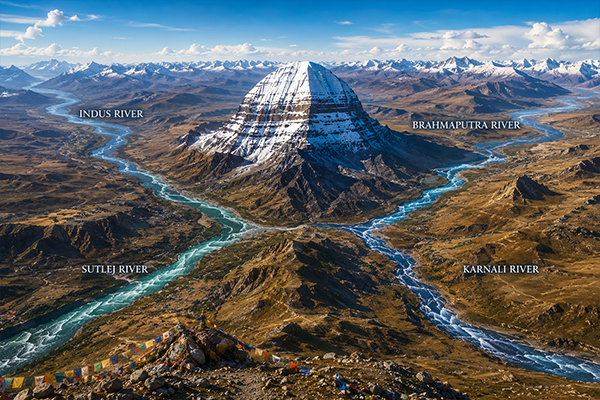
Another remarkable aspect of Kailash is its connection to some of Asia's most important river systems.
From the region surrounding Mount Kailash emerge four great rivers:
- Indus River
- Brahmaputra River
- Sutlej River
- Karnali River
Ancient traditions state that these rivers flow outward in four directions, symbolically dividing the world into four regions.
This unique geographical phenomenon further reinforces Kailash's reputation as the center of the world.
The Sacred Waters of Lake Mansarovar
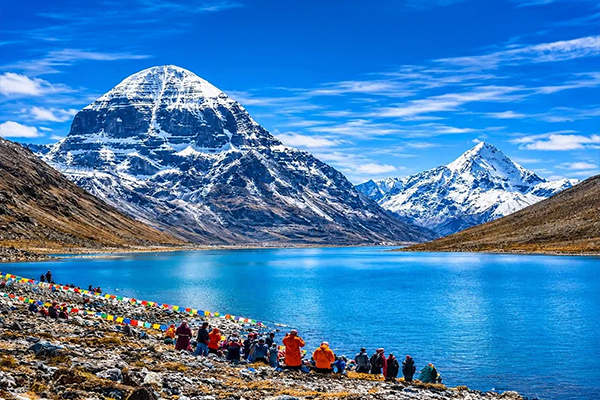
Near Mount Kailash lies Lake Mansarovar, one of the highest freshwater lakes in the world.
The name is derived from two Sanskrit words:
- Manasa (Mind)
- Sarovara (Lake)
Together, they mean 'Lake of the Mind.'
According to Hindu tradition, Lord Brahma first conceived the lake in his mind before manifesting it on Earth.
The lake is revered as:
- A source of purity
- A reservoir of divine consciousness
- A symbol of spiritual illumination
Many pilgrims believe that bathing in its waters washes away sins accumulated over countless lifetimes.
Mansarovar in Hindu Tradition
Several sacred legends are associated with Lake Mansarovar.
It is believed that:
- Goddess Parvati bathed in its waters.
- The Sarayu River originated from Mansarovar.
- The lake contains the essence of Lord Brahma's consciousness.
- Mansarovar is one of the 51 revered Shakti Peethas, where the hand of Goddess Sati is believed to have fallen.
Many pilgrims report experiencing deep inner peace while sitting beside the lake's tranquil waters.
Mansarovar in Buddhist Tradition
According to Buddhist belief, Queen Maya gave birth to Lord Buddha near the sacred lake.
This association further elevates Mansarovar's importance within Buddhist pilgrimage traditions.
Gauri Kund: The Birthplace of Ganesha
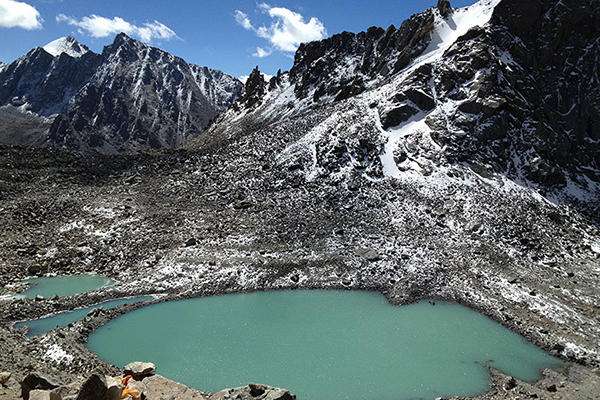
High on the eastern side of Mount Kailash lies Gauri Kund, an emerald-green lake revered as the Lake of Compassion.
According to Hindu mythology, Goddess Parvati fashioned a young boy from the turmeric paste on her body while bathing in these sacred waters.
She instructed the boy to guard the entrance.
When Lord Shiva returned and was denied entry, he severed the boy's head in anger.
Upon realizing the child's identity and witnessing Parvati's grief, Shiva replaced the head with that of an elephant, giving birth to Lord Ganesha—the beloved remover of obstacles.
The Pandavas' Final Journey to Heaven
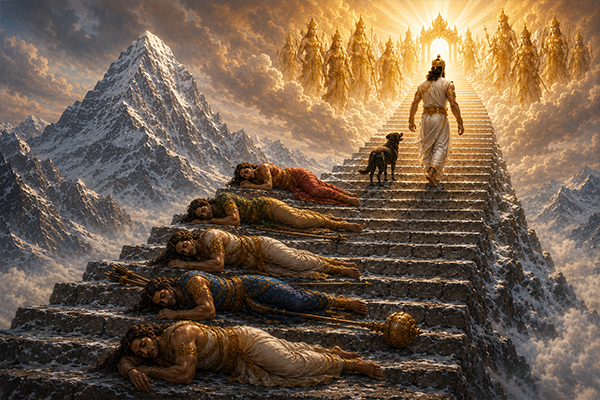
The Mahabharata recounts another profound connection with Mount Kailash.
At the end of their earthly lives, the five Pandava brothers and Draupadi embarked on their final pilgrimage toward the mountain.
Seeking entry into heaven, they began a difficult ascent.
One by one, the brothers fell due to subtle flaws such as pride and vanity.
Only Yudhishthira, who embodied truth and righteousness, continued.
Accompanied by a loyal dog—later revealed to be Dharma himself—Yudhishthira attained heaven in his mortal body.
The story symbolizes the spiritual truth that liberation requires complete purity of heart.
The Legend of Ravana and Mount Kailash
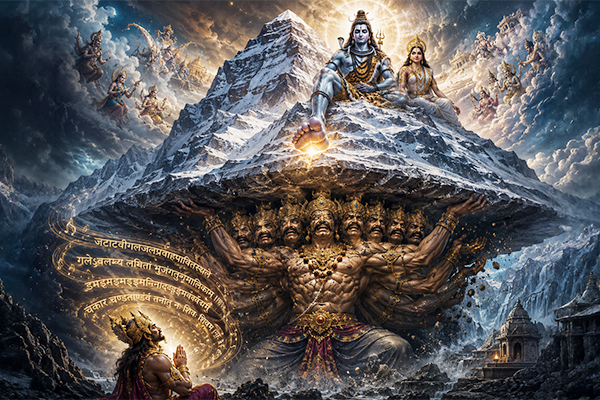
Among the most famous legends connected to Kailash is the story of Ravana.
A devoted worshipper of Lord Shiva, Ravana sought to take Shiva back to Lanka.
Filled with pride, he attempted to lift Mount Kailash itself.
Lord Shiva gently pressed his toe upon the mountain, trapping Ravana beneath its immense weight.
Realizing his arrogance, Ravana sang the magnificent Shiva Tandava Stotram in devotion and repentance.
Pleased by his surrender, Shiva forgave and blessed him.
The story remains a timeless lesson on humility before the divine.
The Legend of Milarepa
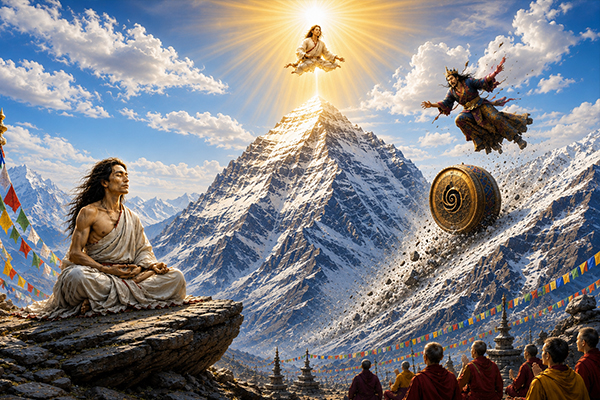
Tibetan tradition tells of an extraordinary contest between the Buddhist saint Milarepa and the Bon sorcerer Naro Bonchung.
The two agreed that whoever reached the summit first would claim spiritual authority over the mountain.
The sorcerer mounted a magical drum and flew upward.
Milarepa remained seated in meditation.
At the crucial moment, Milarepa rode a ray of sunlight directly to the summit and won the contest.
According to legend, the scar visible on the mountain's south face was created when the defeated sorcerer's drum crashed down the mountainside.
Milarepa is often regarded in Tibetan folklore as the only being ever to reach the summit.
Why Nobody Climbs Mount Kailash
Despite being significantly lower than Mount Everest, Mount Kailash remains unclimbed.
The reason is not technical difficulty alone.
For millions of devotees, climbing the mountain would be equivalent to stepping upon the body of the divine.
Various climbing proposals have been declined over the years out of respect for the mountain's sacred status.
This unique distinction has made Kailash perhaps the world's most revered unclimbed peak.
Mysteries of Mount Kailash
Mount Kailash has become famous for countless mysteries and unexplained stories.
Among the most discussed are:
The Perfect Pyramid Shape
The mountain's striking symmetry resembles a gigantic natural pyramid, inspiring speculation among researchers, explorers, and spiritual seekers.
The Cardinal Alignment
Its four faces align remarkably with the four cardinal directions, a feature often cited in sacred traditions.
The Pole Distance Theory
Some observers have noted that Kailash lies approximately 6,666 kilometers from the North Pole and about 13,332 kilometers from the South Pole—roughly double the distance. This unusual numerical relationship has contributed to the mountain's aura of mystery.
Satellite Image Interpretations
Various enthusiasts have interpreted satellite images as revealing symbolic patterns resembling Lord Shiva's face. Such interpretations remain matters of personal belief and spiritual reflection.
Reports of Unusual Energies
Pilgrims have long shared accounts of unusual experiences around Kailash, including altered perceptions of time, heightened awareness, vivid dreams, and profound spiritual awakenings.
While science has not validated many of these claims, they remain part of the mountain's enduring mystique.
How to Reach Kailash Mansarovar
The sacred journey to Kailash Mansarovar can be undertaken through several routes, each differing in duration, comfort level, and physical demands.
Pilgrims can choose between helicopter-assisted journeys, overland road expeditions, or traditional trekking routes.
1. Lucknow – Nepalgunj – Simikot Helicopter Route
Duration: Approximately 9–11 Days
This is one of the most popular and fastest routes for Indian pilgrims.
Route:
Lucknow → Nepalgunj → Simikot → Hilsa → Taklakot → Lake Mansarovar → Mount Kailash
Pilgrims travel from Lucknow to Nepalgunj and then fly to Simikot. From Simikot, helicopters ferry pilgrims to Hilsa near the Tibet border. After immigration formalities, the journey continues by vehicle to Taklakot, Mansarovar, and Mount Kailash.
This route minimizes trekking and is ideal for senior citizens and those with limited time.
2. Kathmandu Helicopter Route
Duration: Approximately 10–12 Days
This route begins in Kathmandu and includes visits to sacred sites such as Pashupatinath Temple and Jal Narayan Temple before proceeding towards Tibet.
The journey combines flights, helicopter transfers, and road travel, making it one of the most comfortable ways to reach Kailash Mansarovar.
3. Kathmandu Overland Route (By Road/Bus)
Duration: Approximately 13–16 Days
Pilgrims travel from Kathmandu into Tibet by road and continue across the spectacular Tibetan Plateau by bus or coach.
The route offers breathtaking views of:
- Himalayan mountain ranges
- Tibetan grasslands
- Ancient monasteries
- Sacred rivers and lakes
Though longer, it allows gradual acclimatization and is often preferred by those who wish to fully experience the landscape and spiritual atmosphere of Tibet.
4. Government of India Kailash Mansarovar Yatra
Duration: Approximately 22–25 Days
Organized by the Ministry of External Affairs, Government of India, this route is considered one of the most traditional pilgrimage experiences.
Pilgrims undergo medical screening and travel through designated Himalayan routes before entering Tibet.
The journey involves significant trekking and requires a good level of physical fitness, but many devotees consider it the most rewarding and immersive Kailash pilgrimage experience.
The Sacred Kailash Parikrama (Kora)
Regardless of the route chosen, the spiritual highlight of the Kailash Mansarovar Yatra is the sacred Kailash Parikrama, known in Tibet as the Kora.
This holy circumambulation covers approximately 52 kilometres around Mount Kailash and is usually completed over three days.
Pilgrims from Hindu, Buddhist, Jain, and Bon traditions undertake this journey as an act of devotion, surrender, and spiritual purification.
The Parikrama is believed to:
- Purify accumulated karma
- Remove inner negativity
- Bestow divine blessings
- Deepen spiritual awareness
- Bring one closer to Moksha or liberation
Hindus and Buddhists traditionally perform the Kora in a clockwise direction, while followers of the ancient Bon tradition perform it counterclockwise.
Unlike mountaineering, which seeks to conquer nature, the Kora is an expression of humility and reverence. Every step is considered an offering to the Divine.
The Outer Kora
The standard Parikrama is known as the Outer Kora and takes pilgrims around the sacred mountain through stunning valleys, prayer-flag-covered passes, monasteries, and high-altitude landscapes.
Most pilgrims complete the Outer Kora once in their lifetime, while many Tibetan devotees undertake it repeatedly as a spiritual practice.
Some even perform full-body prostrations throughout the entire 52-kilometre journey, a process that can take several weeks.
The Inner Kora
For advanced pilgrims, there exists a far more challenging pilgrimage known as the Inner Kora.
This route passes much closer to Mount Kailash and is considered one of the most sacred and demanding pilgrimages in Tibet.
Traditionally, pilgrims are encouraged to complete multiple Outer Koras before attempting the Inner Kora.
The Inner Kora includes visits to highly revered sites such as Nandi Parvat, Atmalingam, Saptarishi Caves, and other locations associated with ancient yogis and sages.
Due to its extreme difficulty, high altitude, and terrain, the Inner Kora is not undertaken by all pilgrims.
Charan Sparsh: Touching the Feet of Kailash
One of the most cherished aspirations of many devotees is Charan Sparsh, literally meaning 'touching the feet' of Mount Kailash.
This pilgrimage takes devotees as close as possible to the southern face of the sacred mountain, near the base of Kailash.
For devotees, this is the nearest one can come to physically offering pranams at the feet of Lord Shiva.
Pilgrims often describe Charan Sparsh as one of the most emotional and spiritually powerful moments of the entire yatra.
Current Restrictions
In keeping with the sacred nature of Mount Kailash, climbing the mountain itself is strictly prohibited.
Despite being lower than Mount Everest, Kailash remains one of the world's most revered unclimbed peaks.
Followers of multiple religions believe that the mountain is the divine abode of Lord Shiva and should not be conquered by human beings.
In recent years, access to certain portions of the Inner Kora and Charan Sparsh routes has been subject to restrictions and permissions imposed by local authorities.
Weather conditions, safety concerns, and government regulations may also affect access from year to year.
Pilgrims are therefore advised to verify current guidelines with their tour operators before undertaking the journey.
Dolma La Pass: The Spiritual Test
The most demanding part of the Outer Kora is the crossing of Dolma La Pass, situated at approximately 18,525 feet.
Named after Goddess Tara (Dolma in Tibetan), this high mountain pass is often described as a symbolic experience of death and rebirth.
The steep ascent, thin air, freezing temperatures, and physical exhaustion force pilgrims to confront fear, attachment, ego, and personal limitations.
Many devotees believe that crossing Dolma La signifies the shedding of old karmas and the beginning of a renewed spiritual life.
Emerging from this sacred pass, pilgrims often feel lighter, humbled, and profoundly transformed.
Choosing the Right Kailash Route
The duration of the yatra depends upon the route selected:
- 9–11 Days: Helicopter-assisted route via Lucknow, Nepalgunj, Simikot, and Hilsa.
- 10–12 Days: Kathmandu helicopter route with visits to Nepal's sacred sites.
- 13–16 Days: Overland road journey across the Tibetan Plateau.
- 22–25 Days: Traditional Government of India pilgrimage route.
Whichever route one chooses, the journey to Kailash Mansarovar is far more than a physical expedition. It is a sacred pilgrimage that leaves an indelible mark on the heart, mind, and soul.
Life Lessons from Kailash Mansarovar
The Kailash Mansarovar Yatra is not merely a physical journey.
It offers profound lessons:
Humility
Kailash teaches that some realities cannot be conquered.
Surrender
The pilgrimage encourages faith in forces greater than oneself.
Inner Strength
The harsh terrain reveals reserves of resilience that many never knew they possessed.
Letting Go
Physical hardship strips away attachment to comfort, pride, and ego.
Universal Harmony
The mountain unites four religions around a single sacred space, demonstrating that spiritual truth transcends boundaries.
Why 2026 Is Considered Especially Sacred
According to the Tibetan zodiac, 2026 is the Year of the Horse.
This period is regarded as exceptionally auspicious for pilgrimage.
A traditional belief states that completing one Parikrama during a Horse Year generates the spiritual merit of thirteen Parikramas performed in ordinary years.
As a result, Horse Years attract significantly larger numbers of pilgrims seeking blessings, purification, and spiritual transformation.
Kailash Mansarovar: A Journey Beyond the Physical World
There are mountains that inspire adventure, and there are mountains that inspire devotion. Mount Kailash belongs to the latter.
For thousands of years, saints, sages, pilgrims, monks, and seekers have journeyed across deserts, glaciers, and high mountain passes to stand before its sacred presence.
Whether viewed as the home of Lord Shiva, the seat of Chakrasamvara, the site of Rishabhanatha's liberation, or the spiritual center of the Bon universe, Mount Kailash remains one of humanity's most powerful symbols of transcendence.
The Kailash Mansarovar Yatra is ultimately not about reaching a destination. It is about discovering the stillness, purity, humility, and divine presence that lie within.
And perhaps that is why, despite all its mysteries, Mount Kailash continues to call millions of souls toward it—not as a mountain to conquer, but as a sacred path toward awakening.
-in-Astrology.jpg)
.jpg)
.png)


Comments 0
Leave your thought here