

Kushmanda Devi, the fourth form of Goddess Durga, embodies the cosmic creative force that formed the universe. Worshipped on Navratri’s fourth day, she is known as the Creator of the Cosmic Egg, her radiant smile dispelling primordial darkness. Her divine energy resides at the Sun’s core, sustaining creation with warmth and vitality. Depicted with eight hands holding symbols like a kamandalu, bow, arrow, lotus, and nectar jar, she grants health, strength, and prosperity. Devotees seek her blessings for harmony, growth, obstacle removal, spiritual progress, and heart illumination.
Who is Kushmanda Devi?
Kushmanda Devi is the fourth form of Navadurga, worshipped on the fourth day of Navratri, and is celebrated as the goddess of cosmic creation. Her name combines “Ku” (little), “Ushma” (warmth or energy), and “Anda” (egg), symbolizing the cosmic egg from which the universe emerged. According to Hindu tradition, she created the world with her radiant smile, filling the void with light and life. Kushmanda Devi’s divine energy reside at the core of the Sun, empowering it to sustain all creation, and she is revered as the source of vitality and the force behind the universe’s balance. In the Hindu pantheon, she is a manifestation of Goddess Parvati, and thus connected to Bhagwan Shiva as his consort.
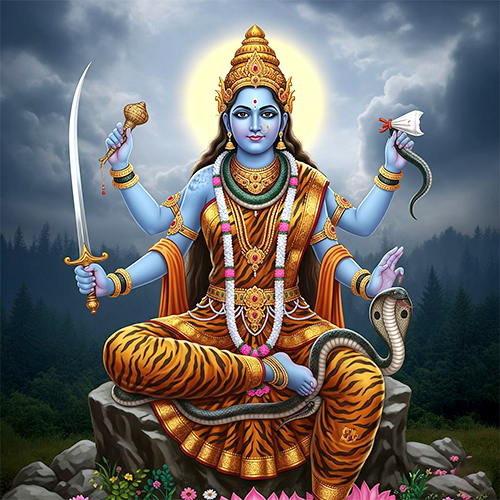
Kushmanda Devi is depicted with eight hands, earning her the title Ashtabhuja Devi. She rides a lion or tiger, symbolizing courage and the pursuit of dharma. In her right hands, she holds a lotus, bow, arrow, and kamandalu (water pot), while her left hands carry a discus (chakra), mace (gada), rosary (japa mala), and a pot of nectar (amrit kalash). The chakra represents the power to remove obstacles and the eternal cycle of time, the mace signifies strength, the lotus symbolizes peace, and the rosary is associated with granting spiritual and material boons. Her radiant golden complexion and presence within the Sun highlight her role as the bringer of light, knowledge, and cosmic energy. The pumpkin, known as “Kushmanda,” is also offered to her, reflecting her nurturing aspect and connection to nourishment and health.
Significance of Kushmanda Devi
Kushmanda Devi holds deep philosophical and spiritual significance as the cosmic creator and source of all energy in the universe. She represents the primordial force whose radiant smile dispelled darkness and brought the cosmos into existence, embodying the concept that creation itself is an act of divine joy and positivity. In Hindu philosophy, Kushmanda is associated with the Anahata (heart) chakra, symbolizing love, compassion, and emotional balance. Her energy pervade every particle of creation, manifesting as prana, the life force within all beings. Worship of Kushmanda Devi purify actions, elevate consciousness, and transform daily life into a sacred offering, guiding devotees toward inner illumination, peace, and the realization that spiritual and worldly pursuits are interconnected. She is also revered as the goddess of purification and tapasya, bestowing clarity, wisdom, and the power to overcome obstacles.
Kushmanda Devi is especially important in regions and sects that celebrate Navratri, where she is worshipped on the fourth day as the fourth form of Navadurga. Her veneration is widespread across North and Eastern India, and she is honored in various temples and local traditions. Rituals often include offerings of pumpkins, yellow or green foods, and red or yellow attire, reflecting her association with abundance and vitality. The color green or yellow is commonly worn by devotees, and special havans (fire rituals) and aartis are performed to invoke her blessings for health, prosperity, and emotional well-being. In some regions, unique customs such as “Deep Daan” (offering of lights) are observed at temple ponds, and only certain families may conduct the puja, preserving ancient traditions.
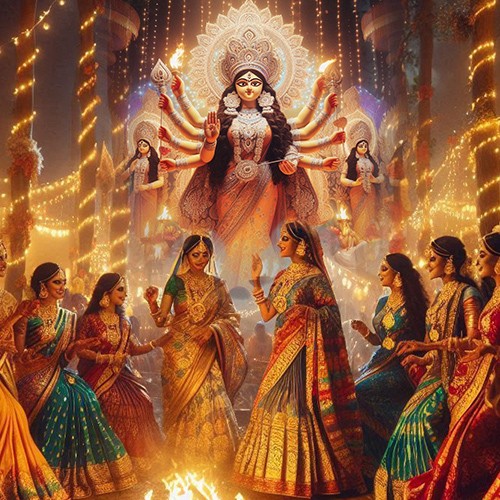
The principal festival dedicated to Kushmanda Devi is Navratri, particularly its fourth day, known as Chaturthi. During this time, devotees seek her blessings for vitality, creative energy, and the removal of negativity. The rituals and celebrations serve as a reminder of her power to nurture, heal, and illuminate, making her worship a key spiritual event that bridges personal growth, community harmony, and the timeless cycle of creation.
Iconography & Symbolism
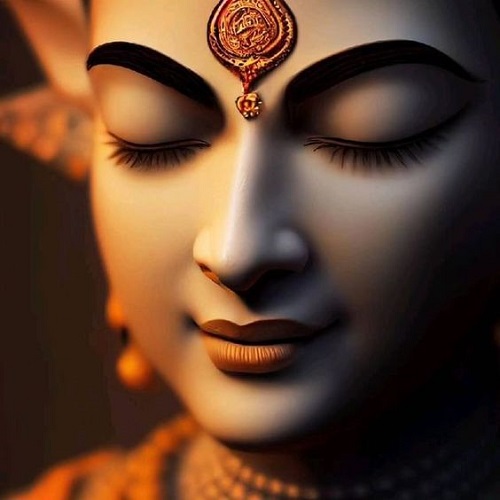
Kushmanda Devi’s iconography is rich with symbolism and cosmic meaning. She is depicted with a radiant golden complexion and a luminous, nurturing smile, embodying the energy that brings light to the universe. Known as Ashtabhuja Devi, she has eight hands, each holding a symbolic object: a kamandalu (water pot), bow, arrow, lotus, jar of nectar (amrit), discus (chakra), mace (gada), and a rosary (japa mala). The kamandalu signifies self-sufficiency, the bow and arrow represent focus and the balance of potential and kinetic energy, the lotus stands for peace and purity, the jar of nectar symbolizes immortality, the discus and mace denote protection and the removal of negativity, and the rosary is associated with the granting of spiritual and material boons. She is often shown riding a lion or tiger, signifying courage and the pursuit of dharma. One of her hands is always in the abhaya mudra, offering blessings and protection to her devotees.
In art, sculptures, and temple depictions, Kushmanda Devi is commonly portrayed seated on a lion or tiger, radiating light and surrounded by an aura that reflects her solar connection. Temples dedicated to her, such as the Durga Kund Temple in Varanasi, feature central icons painted in gold or red ochre, highlighting her role as the source of cosmic energy. Artistic representations emphasize her eight arms and the objects she holds, while temple architecture often includes intricate carvings and vibrant colors to convey her power and benevolence. During festivals like Navratri, her images are adorned with marigolds, yellow or green drapery, and offerings of pumpkin, reinforcing her nurturing and life-giving attributes.
Color symbolism plays an important role in her worship. Gold and yellow are most closely associated with Kushmanda Devi, reflecting her radiant, life-giving energy and her connection to the Sun. These colors symbolize joy, positivity, and enlightenment. Brown is also linked to her, representing stability, nourishment, and the grounding force of the earth. Green attire and decorations are used to signify growth, fertility, and prosperity during Navratri. Her posture is typically upright and regal, exuding confidence and authority, while her mudras, especially the abhaya mudra, convey reassurance and the dispelling of fear. The overall iconography of Kushmanda Devi encapsulates her role as the cosmic creator, the source of vitality, and the bestower of health, strength, and abundance.
Origin of Kushmanda Devi
Kushmanda Devi’s mythological origin centers on her unique role as the primordial creator. When the universe was engulfed in total darkness and devoid of form, she manifested her energy to produce the cosmic egg, or Brahmanda, which became the nucleus of all creation. This act is not just symbolic but is described in scriptural sources like the Devi Mahatmya as the literal beginning of time, space, and matter. Her name reflects this function, combining the Sanskrit words for “little,” “warmth,” and “egg,” underscoring her identity as the bringer of light and life.
She is regarded as the force behind the Sun’s radiance, dwelling at its core and empower it to sustain the universe. Without her presence, the Sun would lose its brilliance, and life would cease. This connection to solar energy highlights her importance in maintaining cosmic order and vitality. The Puranas further describe that from Kushmanda’s energy, the Tridevi, Mahakali, Mahalakshmi, and Mahasaraswati, emerged, each giving rise to the principal deities Shiva, Vishnu, and Brahma, along with their consorts. This narrative positions her as the Adi Shakti, the original source of all divine power and manifestation.
Kushmanda Devi’s creative act is not limited to myth but is invoked in rituals seeking renewal, vitality, and the removal of darkness in both literal and metaphorical forms. Her worship during Navratri, especially on the fourth day, honors her as the origin of creation and the sustaining force behind all existence, making her a central figure in the cycle of cosmic regeneration and spiritual illumination.
Legends and Stories
Creation of the Universe
Kushmanda Devi’s most celebrated legend describes her as the originator of creation. When the universe was shrouded in complete darkness and emptiness, she manifested her divine energy and, with a gentle smile, produced the cosmic egg or Brahmanda. This act filled the void with light, energy, and the foundation for all existence. Her power resides at the core of the Sun, sustaining its brilliance and enabling life throughout the cosmos.
Empowering the Sun
Another tale highlights Kushmanda Devi’s connection to the Sun. She is revered as the force that empowers Surya, the Sun God, to radiate heat and light. Without her presence, the Sun would lose its vitality, and the universe would return to darkness. This legend underscores her role as the sustaining energy behind all creation and the cycle of day and night.
Origin of the Tridevi
A further story describes how, after creating the universe, Kushmanda Devi generated Mahakali, Mahalakshmi, and Mahasaraswati from her own energy. These three goddesses then became the origins of Shiva, Vishnu, and Brahma, along with their consorts. This narrative establishes Kushmanda as the Adi Shakti, the original, primordial energy from which all divine forms and cosmic functions arise.
Spiritual Lessons from Kushmanda Devi
The tales of Kushmanda Devi impart profound moral and spiritual lessons rooted in creation, hope, and the transformative power of inner light. Her story begins in absolute darkness, where her radiant smile brings forth the universe, teaching that even a single spark of positivity or faith can dispel the deepest void. This symbolizes that new beginnings and creative solutions are always possible, regardless of circumstances. Kushmanda Devi’s ability to create with a smile encourages cultivating inner joy, optimism, and resilience, reminding us that true strength often lies in gentle, effortless energy rather than force.
Spiritually, she is revered as the goddess of purification and tapasya, elevating all actions into sacred offerings. Her grace transforms daily deeds into acts of devotion, blurring the line between spiritual and worldly life. This highlights the importance of sincerity, purity, and mindfulness, making every action meaningful and aligned with higher purpose. Her association with the heart chakra emphasizes the need for love, compassion, and emotional balance, guiding devotees to overcome fears and emotional blockages and to nurture life with warmth and courage.
Kushmanda Devi’s presence within the Sun and as the source of its energy illustrates the interconnectedness of all creation and the vital role of divine feminine power in sustaining the universe. Her legends inspire devotees to seek clarity, wisdom, and peace, and to use their creative energy for the benefit of themselves and others. Ultimately, her stories teach that with faith, inner light, and a nurturing spirit, one can overcome darkness, manifest dreams, and enjoy lasting contentment and harmony.
Kushmanda Devi Puja Vidhi at Home
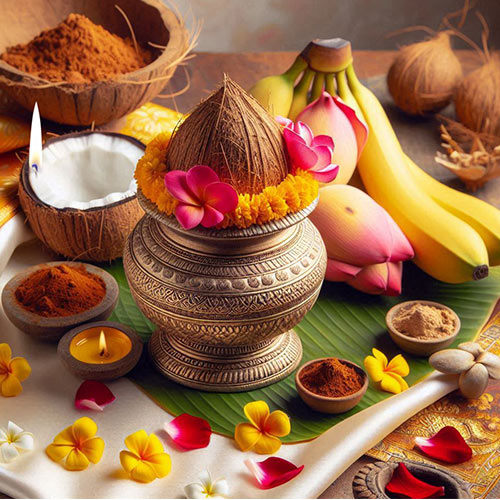
Required Materials
- Kushmanda Devi idol or picture
- Clean yellow or green cloth for altar
- Kalash (filled with water and mango leaves)
- Coconut
- Rice, turmeric, kumkum, sandalwood paste
- Fresh flowers and garlands (preferably marigold)
- Incense sticks (agarbatti) and oil lamp (diya)
- Betel leaves and betel nuts
- Fruits and sweets (preferably pumpkin-based or yellow sweets)
- Panchamrit (milk, curd, honey, ghee, and sugar)
- Ganga water (if available)
- Lotus seeds (optional)
- Red or yellow thread
- Bell
Step-by-Step Home Puja Guide
Purification and Setup:
Clean the house and especially the altar area. Take a bath before starting. Spread a yellow or green cloth on the altar and place the idol or image of Kushmanda Devi, preferably facing east.
Kalash Sthapana:
Set a filled kalash near the idol, decorate with mango leaves, and place a coconut on top. Apply kumkum and turmeric to the kalash.
Invocation (Avahanam):
Light the diya and incense. Offer fresh flowers and chant:
“Om Kushmandayai Namah”
Invite the goddess into your home with devotion.
Offerings (Upacharas):
Offer sandalwood paste, kumkum, turmeric, flowers, fruits, sweets, and rice. Place betel leaves and nuts before the idol. Sprinkle rice on the idol and altar.
Abhishekam (optional):
Bathe the idol with Panchamrit, then clean with water and wipe gently. Adorn the idol with fresh cloth and ornaments.
Mantra Chanting and Stotra:
Recite the Kushmanda Devi Stotra or chant:
“Om Kushmandayai Namah”
(108 times)
Maintain focus and reverence throughout.
Aarti Process:
Perform aarti with camphor or ghee diya while ringing the bell and singing the Kushmanda Devi Aarti. Move the diya in a circular motion before the idol.
Prasad Distribution:
Offer the sweets and fruits to the goddess and then distribute as prasad to all family members.
Final Prayer and Shanti Path:
Conclude with a prayer for health, vitality, and the removal of obstacles, seeking the goddess’s blessings for the entire household.
This puja may be performed daily during Navratri or on special occasions for invoking Kushmanda Devi’s grace and cosmic energy.
Mantras Dedicated to Kushmanda Devi
Om Kushmandayai Namah
Meaning: Salutations to Goddess Kushmanda.
Benefits: Invokes the goddess’s creative energy, brings vitality, removes obstacles, and attracts abundance and positivity into life. Regular chanting enhances energy, creativity, and confidence.
Om Hreem Kushmandayai Jagatprasootyai Namah
Meaning: O radiant Goddess Kushmanda, mother of the universe, I bow to you. Bless me to bring love and positivity to all I see.
Benefits: Cultivates compassion, unlocks creativity, and fosters a sense of oneness with the world. This mantra is especially effective for removing creative blocks and encouraging a joyful, optimistic mindset.
Benefits of Worshipping Kushmanda Devi
Spiritually, she is revered as the source of universal energy and the creative force behind existence. Her blessings illuminate the mind, dispel darkness, and foster a deep sense of inner peace and oneness with the world. Devotees experience heightened spiritual growth, clarity, and a connection to the heart chakra, which enhances compassion and emotional balance. Her worship is especially powerful for those seeking purification, fulfillment of desires, and a deeper purpose in life.
Mentally, Kushmanda Devi’s grace helps manage stress, anxiety, and emotional turmoil. Her energy instills confidence, stability, and resilience, enabling devotees to overcome fears and approach life’s challenges with optimism. Regular worship sharpens mental clarity, improves focus, and unlocks creativity, making it especially beneficial for students, professionals, and anyone facing creative blocks. Her presence is also known to foster harmony in relationships, resolve conflicts, and promote understanding within families and communities.
Materially, Kushmanda Devi is associated with abundance, prosperity, and robust health. Her blessings attract wealth, remove obstacles to financial growth, and ensure the well-being of devotees. She protects from negativity and harmful influences, providing a secure and supportive environment. Her worship is also linked to healing, longevity, and vitality, making her a powerful deity for those seeking overall wellness and success.
Most important benefits:
- Illuminates the mind and dispels darkness
- Enhances spiritual growth and inner peace
- Unlocks creativity and removes creative blocks
- Provides emotional stability and reduces stress
- Sharpens mental clarity and focus
- Attracts abundance, prosperity, and wealth
- Fosters harmony and understanding in relationships
- Offers protection from negativity and harmful influences
- Promotes robust health, healing, and longevity
- Boosts personal confidence and resilience
Temples Dedicated to Kushmanda Devi
Temples dedicated to Kushmanda Devi are significant centers of worship, especially during Navratri when her creative and sustaining energy is honored. One of the most prominent is the Durga Kund or Kushmanda Durga Mandir in Varanasi, Uttar Pradesh. Built in the 18th century by Rani Bhabani of Natore, this temple features classic Nagara style architecture with red sandstone, multiple shikharas, and an intricately carved entrance. The temple is set beside the Durga Kund, a sacred tank is connected to the Ganga, and is renowned for its vibrant Navratri celebrations, especially on the fourth day (Chaturthi), when thousands of devotees gather for ritual bathing and worship. The temple’s sanctum houses a self-manifested image of the goddess, and its spacious courtyard and colonnades reflect both spiritual and architectural grandeur.
Other major temples include the Kushmanda Temple in Kanpur’s Ghatampur, a focal point for devotees on the fourth day of Navratri, and the Kushmanda Mata Temple in Jodhpur, Rajasthan, known for its hilltop location and exquisite sculptures. In Himachal Pradesh, the Kushmanda Devi Temple in Bilaspur dated back to the Pandavas and is perched on a scenic hilltop. The Banda temple in Uttar Pradesh, situated by the Ken River, is a modern structure with a spacious hall and garden, hosting cultural events during festivals. Internationally, the Kushmanda Devi Temple in Edison, New Jersey, USA, serves the diaspora with regular pujas and Navratri celebrations, while Nepal’s Kushmanda Sarowar Triveni Dham in Hetauda stands as a major pilgrimage site, especially during Kushmanda Nawami, Makar Sankranti, and Teej, drawing thousands for ritual baths at the river confluence.
Architecturally, these temples often feature vibrant red or yellow hues, multi-tiered spires, and open courtyards. Many are built in the traditional Nagara style, with intricate carvings and sacred ponds or kunds for ritual purification. The temples are designed to facilitate large gatherings during festivals, especially Navratri, when special aartis, offerings of pumpkin and yellow foods, and community prayers are central practices.
Pilgrimages to these temples peak during Navratri, particularly on the fourth day dedicated to Kushmanda Devi. Worshipping at these sites brings health, strength, prosperity, and the removal of obstacles. In Nepal, the Kushmanda Sarowar Triveni Dham also hosts major events during Makar Sankranti and Teej, with rituals such as mass upanayan (sacred thread ceremonies) and holy baths in the Triveni. These temples, both in India and abroad, serve as vibrant spiritual hubs, preserving the traditions and stories of Kushmanda Devi for generations.
Presence in Other Traditions
Kushmanda Devi’s presence in other traditions is limited but notable. In Jainism, the term Kushmanda refers to a class of pisacha or vyantara deities, which are celestial beings in the Jain cosmological hierarchy. These Kushmandas are not worshipped as creators but are considered part of the lower world’s celestial order, with their own roles and domains as described in texts like the Samgrahaniratna and the Trisastisalakapurushacharitra. Their function is distinct from the cosmic creative role Kushmanda holds in Hinduism, and they are integrated into Jain temple iconography as protective or intermediary spirits rather than as supreme goddesses.
In Buddhist and Southeast Asian traditions, there is no direct counterpart or widespread worship of Kushmanda Devi as seen in Hinduism. The creative and solar aspects associated with Kushmanda in Hindu mythology are instead embodied by other deities or cosmic principles within these traditions. While the broader concept of a feminine creative force exists in Mahayana Buddhism and Southeast Asian spiritual narratives, it is not specifically personified as Kushmanda.
Comparative mythology shows that Kushmanda Devi’s role as the cosmic creator and the source of the Sun’s energy is unique to Hinduism. Her narrative as the originator of the universe through her smile and as the sustainer of solar power does not have a direct equivalent in Jain or Buddhist cosmology. However, the underlying theme of a primordial feminine energy responsible for creation and sustenance is a shared motif across many Indic traditions, though expressed through different deities and symbolic frameworks. This highlights both the uniqueness of Kushmanda’s worship and the universal reverence for creative feminine divinity in South Asian religions.
Rudra Centre’s Kushmanda Devi Puja Services
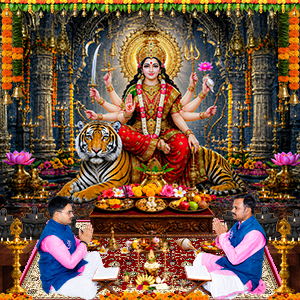
A comprehensive Vedic puja dedicated to Goddess Kushmanda, performed 11000 times by learned priests. This ritual aims to remove negativity, attract positive energy, fulfill desires, improve health, and bring harmony and prosperity. The puja includes Kalash Sthapana, Durga Saptashati recitation, mantra chanting, homa, aarti, and a puja basket with energized items, yantra, and prasad delivered to your address.
An elaborate ten-day Vedic puja and yajna honoring all nine forms of Goddess Durga, including Kushmanda Devi, performed during Navratri. This group ritual includes daily worship, mantra chanting, homa, and aarti, seeking blessings for health, protection, prosperity, and spiritual growth, with live streaming and personalized participation options.
Conclusion: The Enduring Power of Kushmanda Devi
Kushmanda Devi stands as the luminous source of all creation, embodying the cosmic energy that transforms darkness into light and possibility. Her presence in Hindu mythology as the creator of the universe and the force behind the Sun’s brilliance highlights her role as both nurturer and sustainer of life. Worship of Kushmanda Devi inspires spiritual awakening, resilience, and the courage to overcome obstacles with positivity and inner strength. Her blessings bring clarity, vitality, and harmony, guiding devotees toward a life of abundance, compassion, and creative fulfillment. Kushmanda Devi’s legacy endures as a beacon for those seeking renewal, balance, and the realization of their highest potential.
-in-Astrology.jpg)
.jpg)


Comments 0
Leave your thought here