
In the vast and timeless realm of Hindu cosmology, Lord Brahma holds the exalted position of the Creator of the Universe. As one of the Holy Trinity (Trimurti) alongside Lord Vishnu (the Preserver) and Lord Shiva (the Destroyer), Lord Brahma is believed to have manifested time, space, and all living beings through his divine will. Though worshipped less frequently in comparison to other deities, Brahma’s role is foundational, without creation, there can be no preservation or destruction.
He is often portrayed with four heads, symbolizing the four Vedas and the omniscient nature of his wisdom. Accompanied by Goddess Saraswati, the embodiment of knowledge, Lord Brahma governs the cosmic rhythm of birth, intellect, and truth. This article delves into the origins, iconography, mantras, and temples associated with Lord Brahma, helping us understand why he is revered as the divine architect of existence.
Who is Lord Brahma?
Lord Brahma is the Creator in the Hindu Trinity (Trimurti), which includes Lord Vishnu the Preserver and Lord Shiva the Destroyer. He is the divine originator who brought forth the universe, time, beings, and the laws that govern existence. As the fountainhead of knowledge and thought, he gave shape to creation through the power of speech, wisdom, and cosmic order.
While worship of Brahma is rare today, his foundational role in Sanatan Dharma as the initiator of all creation remains vital and profound.
Associated Elements of Lord Brahma:
Daughter: Goddess Saraswati, born from his mind, is the embodiment of wisdom, learning, music, and speech. She is said to inspire and guide his act of creation, making her an inseparable part of his cosmic function.
Vehicle (Vahana): The Hamsa or celestial swan, symbolizing purity and discrimination (Neera-Ksheera Viveka). The ability to separate truth from falsehood.
Symbols and Attributes:
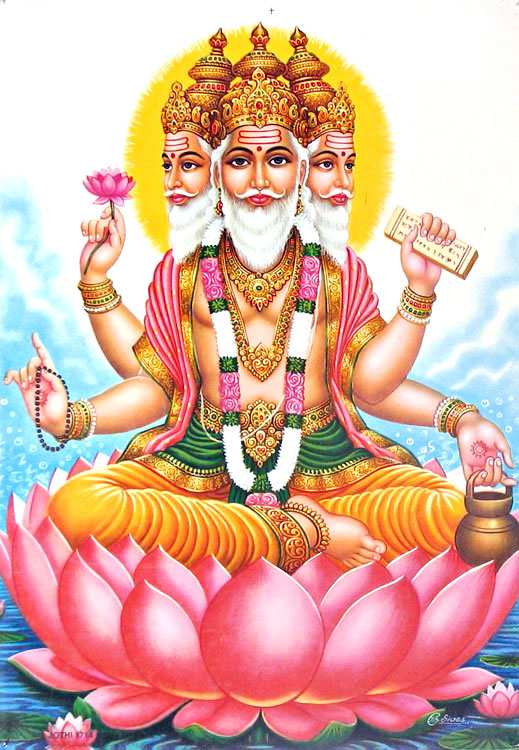
Four Heads: Facing the four directions, each head constantly chants one of the four Vedas, Rig, Yajur, Sama, and Atharva.
Four Arms:
- One hand holds a rosary (Akshamala), representing time and cyclicality.
- One holds a Vedic manuscript, signifying eternal knowledge.
- One carries a Kamandalu (water pot), symbolizing the source of life.
- One is shown in Abhaya Mudra, offering blessings and protection.
Appearance: Lord Brahma is depicted wearing red garments, with a serene face and a white beard, representing wisdom, age, and timeless consciousness.
Lord Brahma's presence is the beginning of all beginnings. The mind from which the cosmos was born and the voice through which knowledge flowed into the universe.
Significance of Lord Brahma
Though less worshipped in temples today, Lord Brahma’s importance in Hindu philosophy remains unmatched. As the creator among the Trimurti, his role is deeply symbolic and spiritually profound.
Philosophical and Spiritual Significance
Lord Brahma represents the cosmic intellect and creative force behind the universe. As the embodiment of consciousness that initiates creation, he symbolizes the potential that gives rise to form, life, and order. Philosophically, Brahma signifies:
- The universal mind (Brahman) that manifests into multiplicity.
- The power of will (Iccha Shakti), knowledge (Jnana Shakti), and action (Kriya Shakti) coming together to create the cosmos.
- The four heads of Brahma signify the awareness of space, time, direction, and spiritual knowledge, reflecting the four Vedas.
- His consort, Saraswati (as his divine energy or shakti), denotes that creation is not possible without knowledge, sound (Nada), and speech (Vāk).
In spiritual terms, Lord Brahma reminds the seeker that creation begins in the mind, and hence, purity of thought and discrimination are essential to manifest dharmic actions.
Importance in Specific Regions or Sects
While Brahma is not widely worshipped as an individual deity in modern Hindu practice, he holds high reverence among Vedic scholars and spiritual seekers, especially in traditions where the Trimurti doctrine is emphasized.
- In Vedantic thought, he is acknowledged as a symbolic representation of the Brahman. The eternal truth and supreme cosmic spirit.
- Shaiva and Vaishnava traditions respect Brahma as part of the divine hierarchy, though Lord Shiva and Vishnu receive more devotional attention.
Festivals Dedicated to Lord Brahma
Though not associated with many grand festivals like Vishnu or Shiva, a few observances mark Brahma’s cosmic role:
- Brahma Jayanti: Celebrated by some in northern India during Chaitra month (March–April), this day is said to mark Brahma's birth from the cosmic golden egg (Hiranyagarbha).
- Pushkar Mela (Rajasthan): Held in Pushkar, home to India’s most famous Brahma temple, this vibrant fair honours Brahma and includes rituals at Pushkar Lake, believed to have been formed by a petal of Brahma’s lotus.
- Navratri (in some traditions): On the first day, devotees invoke Brahma as the initiator of all creation and learning.
Iconography & Symbolism of Lord Brahma
Lord Brahma, the Creator among the Trimurti, is richly symbolic in his form and representation. Every element of his appearance communicates profound metaphysical and spiritual truths about creation, knowledge, and the cyclical nature of time.
Four Heads (Chaturmukha): Lord Brahma is depicted with four heads facing the four cardinal directions. These heads symbolize the four Vedas, Rig, Yajur, Sama, and Atharva, making him the embodiment of all sacred knowledge. They also represent the four yugas (cosmic time cycles), four varnas (castes), and the omniscience of the Creator.
Four Arms (Chaturbhuja): Each of Brahma’s arms holds a symbolic object:
Kamandalu (Water Pot): Signifies the origin of life, purity, and the element of water in creation.
Vedas or Manuscript: Symbol of wisdom, scriptural knowledge, and learning.
Rosary (Akshamala): Represents time, cosmic rhythm, and the continuous process of creation.
Lotus (Padma): A symbol of purity, divine unfolding, and spiritual awakening.
White Beard: His long white beard denotes his eternal wisdom and timeless nature, indicating his role as the primordial Creator.
Seated on a Lotus (Padmasana): The lotus symbolizes purity arising from the formless cosmic waters. It also emphasizes that the universe is created while rooted in the unmanifest.
Crown and Red Garments: Lord Brahma wears a crown (mukut), indicating sovereignty over creation. His red or pink attire reflects the Rajo Guna, the quality of activity and dynamism necessary for creation.
Art, Sculptures, and Temple Depictions
Temple Niches: Brahma is usually not the central deity of temples but appears in architectural reliefs, especially on the northern walls of Vishnu or Shiva temples, in keeping with Agama and Shilpa Shastras.
Rare Dedicated Shrines:
Pushkar Brahma Temple (Rajasthan): Built in Nagara style, it is one of the few temples solely dedicated to Lord Brahma. The idol here is four-headed and sits on a lotus with his swan nearby.
Tirupattur Brahmapureeswarar Temple (Tamil Nadu): Here, Brahma is worshipped as a fate-altering deity, enshrined alongside Lord Shiva. The temple follows the Dravidian style.
Kumbakonam and Other South Indian Temples: Often contain smaller shrines or sculptural depictions using Chola-era artistic sensibilities.
Depictions in Vishnu Iconography: Brahma frequently appears in Vaikuntha imagery, emerging from Lord Vishnu’s navel on a lotus, symbolizing the birth of cosmic order from divine consciousness.
Colour Symbolism, Posture, and Mudras
Colour: Red or pink robes symbolize passion, vitality, and the creative force of the universe. The golden or radiant complexion emphasizes divine light and brilliance.
Posture: Often depicted in a seated yogic posture (Padmasana) or standing with grace, Brahma's posture exudes calmness, focus, and creative stability.
Mudras:
Abhaya Mudra: In some depictions, one hand is raised in blessing or fearlessness, assuring protection and divine grace.
Jnana Mudra or Chin Mudra: Occasionally seen to represent knowledge and spiritual instruction.
Birth or Origin of Lord Brahma
Lord Brahma’s birth is deeply symbolic of the cosmic act of creation. The moment unmanifest potential transforms into a structured universe. Across Hindu scriptures, his origin is depicted as a divine emergence that sets time and existence into motion.
- From the Lotus of Vishnu: The Bhagavata Purana describes how Lord Brahma appeared on a lotus that sprouted from the navel of Lord Vishnu, who was resting in cosmic slumber upon the serpent Ananta in the Kshira Sagara (Ocean of Milk). Brahma, emerging from this lotus, found himself alone in the vast expanse of existence. Guided by a divine voice (tapasya instruction), he performed penance and was empowered with knowledge to begin creation.
- As Hiranyagarbha: In the Rig Veda, he is alluded to as Hiranyagarbha, the golden cosmic seed or womb that held the essence of all creation. This symbolic egg split into two, heaven and earth, ushering in duality, form, and life.
- Self-born and Eternal: Some texts refer to him as Svayambhu (self-born), not emerging from another being but from the very will of the Supreme Absolute (Para Brahman). In this view, Brahma symbolizes the impulse of creation arising spontaneously from stillness.
- Beyond Linear Time: The origin of Brahma also marks the beginning of Kalpa (cosmic time cycle). Each day of Brahma is called a Kalpa and lasts 4.32 billion years, highlighting that Brahma is not just a deity but a force governing vast epochs of creation.
Thus, the origin of Brahma is not merely a birth story, it is a metaphysical truth pointing to the emergence of form, space, and intellect from the timeless void.
Legends and Stories of Lord Brahma
Though Lord Brahma is one of the Trimurti, his role in legends often underscores the complexity of ego, creation, and dharma. He appears across multiple scriptures not just as a creator, but as a symbol of knowledge tested by illusion (Maya).
1. The Fifth Head and Shiva’s Intervention
One of the most significant legends is about Lord Brahma originally having five heads. As per the Shiva Purana, Brahma became increasingly egoistic after creation, claiming supremacy. He lied to Lord Vishnu during a debate on who was the greatest, falsely asserting that he had found the top of an infinite pillar of light (Lingodbhava). Lord Shiva, angered by Brahma’s deceit and pride, manifested as a fiery column and severed Brahma’s fifth head. From then on, Brahma was denied widespread worship, serving as a lesson against ego.
2. Brahma and Saraswati – The Creation Dilemma
In some versions of the Brahma Vaivarta Purana, Brahma created Saraswati (a form of Shakti) from himself, and she became the goddess of speech and wisdom. Fascinated by her beauty and creative power, Brahma is said to have developed multiple heads to keep gazing at her. This story is not literal but is interpreted symbolically, showing the pursuit of beauty, knowledge, and the need for detachment in the act of creation.
3. The Creation of Dharma and Adharma
According to the Manu Smriti and other texts, Dharma (righteousness) and Adharma (unrighteousness) also sprang from Brahma, emphasizing the duality of creation. Along with them came Krodha (anger), Lobha (greed), Kama (desire), foundational drives of human existence. This tale reflects how even divine creation carries inherent tension between order and chaos.
4. Brahma’s Yajna Interrupted
In some Puranic stories, Lord Brahma’s yajnas (sacrifices) are said to have been interrupted by demons or tested by Devas. These stories highlight that even the Creator must abide by cosmic laws and is subject to tests of devotion and balance, reinforcing that creation without discipline leads to downfall.
Moral and Spiritual Lessons:
- Brahma’s stories symbolize the birth of intellect, ego, and the mind, which can uplift or mislead depending on one’s spiritual grounding.
- They teach the impermanence of creation, the pitfalls of pride, and the importance of aligning knowledge with humility.
- While creation is divine, self-realization requires transcendence of the very mind that creates a key teaching embedded in Brahma’s mythology.
Mantras Dedicated to Lord Brahma
Mantras devoted to Lord Brahma invoke his qualities as the Creator, the embodiment of knowledge, and the source of the Vedas. Chanting these mantras promotes clarity of thought, wisdom, and creative inspiration. Below are key mantras along with their meanings and benefits:
1. Brahma Gayatri Mantra
ॐ चतुर्मुखाय विद्महे हंसवाहनाय धीमहि। तन्नो ब्रह्मा प्रचोदयात्॥
Om Chaturmukhaya Vidmahe Hamsavahanaya Dhimahi
Tanno Brahma Prachodayat
Meaning:
'We meditate on the Four-Faced One, who rides the celestial swan. May Lord Brahma illuminate our intellect.'
Benefits:
- Sharpens memory and intellect
- Aids students and scholars in learning
- Invokes divine creativity and focus
2. Brahma Beej Mantra
ॐ ऐं ह्रीं श्रीं क्लीं सौः सतचित् एकं ब्रह्मा॥
Om Aim Hrim Shrim Klim Sauh Satchit Ekam Brahma
Meaning:
'I invoke the Supreme Consciousness that is Lord Brahma—one with truth, existence, and bliss.'
Benefits:
- Aligns the practitioner with higher consciousness
- Awakens inner wisdom
- Clears confusion and mental blockages
3. Brahma Stuti (Guru Mantra)
गुरु ब्रह्मा गुरु विष्णुः गुरु देवो महेश्वरः।
गुरु साक्षात् परब्रह्म तस्मै श्री गुरवे नमः॥
Guru Brahma Guru Vishnu Guru Devo Maheshwarah
Guru Saakshat Para Brahma Tasmai Shri Gurave Namah
Meaning:
'The Guru is Brahma, Vishnu, and Shiva, the supreme divine. I bow to such a teacher who is the embodiment of the Absolute.'
Benefits:
- Instils humility and reverence for the Guru
- Ideal for spiritual seekers
- Enhances devotion and surrender
4. Mantra from Rigveda (for Universal Creation)
ॐ ब्रह्मा जज्ञानं प्रथमं पुरस्ताद्।
Om Brahma Jajnanam Prathamam Purastad
Meaning:
'Om, Brahma was the first to emerge in the cosmic order.'
Benefits:
- Deepens understanding of cosmic truths
- Encourages inner stillness and reflection
- Invokes blessings for fresh beginnings
How to Please Lord Brahma
Worship of Lord Brahma is rare in comparison to other deities, but when done with sincerity and awareness, it brings profound spiritual and intellectual upliftment. Here is a concise guide based on deep research and scriptural mentions:
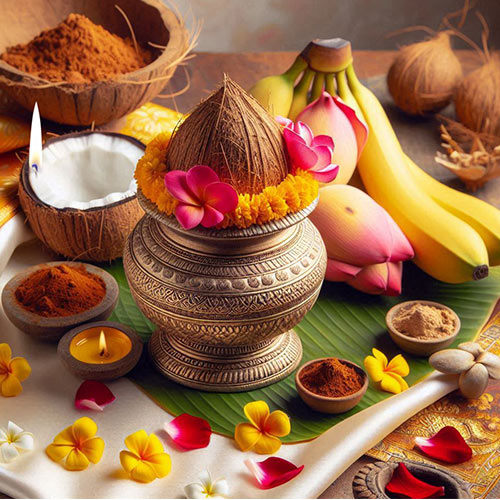
Offerings:
- Fresh white lotus, jasmine, or sandalwood paste
- Ghee lamps and incense
- Books or scriptures as a symbolic offering to the Lord of knowledge
Worship Practices:
- Begin with meditative chanting of the Brahma Gayatri Mantra (mentioned previously)
- Light a diya (lamp) and offer flowers while reciting praises from Vedas or Brahma Stotram
- Read or listen to stories from the Brahmanda Purana, which glorifies his role
Preferred Time:
Brahma Muhurta (approx. 4:00–6:00 AM), the early morning hours dedicated to spiritual practice and divine creation, is the most ideal for worshipping Lord Brahma
Do’s and Don’ts
Do’s:
- Maintain a clean, quiet space for prayer
- Approach with a sattvic (pure) mindset focused on learning, creativity, and humility
- Honor your Guru, as the Guru is seen as a living embodiment of Brahma
Don’ts:
- Avoid worship in places filled with distraction or impurity
- Do not treat the worship as a ritualistic obligation, it must be done with inner yearning for knowledge and truth
- Avoid idol worship of Brahma with expectations of material gains; his blessings are more aligned with jnana (wisdom) and Vedic learning
Puja Vidhi at Home for Lord Brahma
Worshipping Lord Brahma at home is a rare but spiritually enriching practice. Here’s a crisp, practical guide to help you conduct a simple puja.
Materials Required
(As mentioned earlier)
- Idol or image of Lord Brahma
- White or red flowers, incense, diya (lamp), sandalwood paste
- Sacred texts or a copy of the Vedas
- Clean cloth, fruits, and sweets for offering
Step-by-Step Puja Guide
Purify the Space: Clean the puja area and bathe before beginning.
Invoke Lord Brahma: Light a diya and incense while chanting the Brahma Gayatri Mantra or Brahma Stuti (as mentioned earlier).
Offer Flowers and Water: Gently offer flowers, sprinkle water, and apply sandalwood paste on the idol or photo.
Chanting: Recite the selected mantra 108 times using a japa mala.
Scriptural Reading: Read a small passage from the Vedas or offer prayers to your Guru as a representation of Brahma.
Aarti: Perform a simple aarti with a lit camphor or diya in a circular motion, concluding with folded hands in prayer.
This puja, when performed during Brahma Muhurta (pre-dawn), deepens one's intellect and fosters spiritual clarity.
Benefits of Worshipping Lord Brahma
Worship of Lord Brahma, though not as widespread as that of Vishnu or Shiva, carries immense philosophical depth and spiritual merit. It is especially beneficial for those seeking intellectual clarity, creativity, and spiritual direction.
Unlocks Higher Knowledge: As the embodiment of Vedas and cosmic wisdom, Brahma’s worship sharpens memory, focus, and spiritual insight.
Enhances Creative Energy: Ideal for writers, scholars, teachers, and artists, Brahma inspires original thinking and divine creativity.
Strengthens the Intellect: Chanting Brahma mantras refines the discriminative intellect (Viveka), essential for making dharmic life choices.
Stabilizes the Mind: Regular worship brings steadiness of thought and inner discipline, vital for meditation and higher learning.
Connects with the Guru Principle: Since Brahma represents the Guru Tattva, his worship honors the lineage of divine teachers and opens the path to enlightenment.
This worship is not just an act of devotion but a spiritual alignment with the cosmic creative force that governs all beginnings.
Presence in Other Traditions: Lord Brahma in Southeast Asia & Beyond
Buddhism: In Theravāda and Mahāyāna Buddhism, Brahmā is regarded as a protector of the Dharma rather than the supreme creator. He is believed to have requested the Buddha to teach after enlightenment. The term Brahmavihāras (divine abodes like compassion, equanimity, loving-kindness, etc.) stems from this association.
Thailand: Lord Brahma is highly respected and popularly worshipped as Phra Phrom. The Erawan Shrine in Bangkok is one of the most famous Brahma shrines, where devotees offer incense, flowers, and even classical dance performances for blessings.
Indonesia (Bali): In Balinese Hinduism, Brahma is one of the Trimurti gods. He is worshipped in temples like Pura Ulun Danu Batur and is associated with fire (Agni). Balinese iconography depicts him with red garments and multiple faces, aligning closely with Indian tradition.
Cambodia & Angkor Architecture: Ancient Khmer temples such as Angkor Wat depict Lord Brahma in bas-reliefs, typically alongside Vishnu and Shiva, indicating his significance in the region’s syncretic religious landscape.
Vietnam & Laos: Influences of Hindu deities including Brahma are found in Cham and ancient Lao architecture, although not as prominently as in Thailand or Cambodia.
Products and Services from Rudra Centre for Lord Brahma
For devotees seeking to connect with the cosmic creative force of Lord Brahma, Rudra Centre offers a carefully curated range of spiritual tools and rituals. These offerings help invoke Brahma’s blessings for knowledge, creativity, mental clarity, and spiritual awakening.
Brahma Chalisa Paath: A sacred recitation service invoking the divine presence of Lord Brahma to gain wisdom and spiritual merit.
Click on the link to buy Brahma Chalisa Paath.
https://www.rudraksha-ratna.com/buy/brahma-chalisa-paath
Brahma Gayatri Puja in Brahma Muhurta: Conducted during the auspicious early morning hours, this powerful puja aligns one with Brahma’s creative energy and fosters divine knowledge.
Click on the link to buy Brahma gayatri Puja in Brahma Muhurta
https://www.rudraksha-ratna.com/buy/brahma-gayatri-puja-in-brahma-muhurta
Shree Brahma Yantra (Gold Polish, 3 inches): A sacred geometrical diagram energised to attract the blessings of Brahma, ideal for homes, study spaces, or altars.
Click on the link to buy Shree Brahma Yantra
https://www.rudraksha-ratna.com/buy/shree-brahma-yantra-in-gold-polish-3-inches
Brahma Gayatri Mantra Kada: A wearable spiritual tool engraved with the sacred Gayatri mantra, enhancing intellect and connecting the wearer to divine consciousness.
Click on the link to buy Brahma Gayatri Mantra kada
https://www.rudraksha-ratna.com/buy/brahma-gayatri-mantra-kada
4 Mukhi Brahma Mala with Red Sandalwood Beads: A mala made of Rudraksha associated with Brahma and sandalwood for calming vibrations, ideal for mantra chanting and meditation.
Click on the link to buy 4 Mukhi Brahma Mala with Red Sandalwood Beads
https://www.rudraksha-ratna.com/buy/4-mukhi-brahma-mala-with-red-sandalwood-beads
-in-Astrology.jpg)
.jpg)


Comments 0
Leave your thought here