

The Swastika is one of the most revered and ancient symbols in Hinduism, representing prosperity, good fortune, purity, and the eternal cycle of life. Derived from the Sanskrit word “Su-asti” meaning “let there be well-being,” the Swastika is drawn in homes, temples, yantras, and rituals as a mark of auspicious beginnings.
With its four arms pointing in right angles, the Swastika reflects the balance of cosmic forces, the four directions, the four Vedas, and the eternal cycle of creation, preservation, and dissolution. Unlike its unfortunate distortion in modern history, within Sanatan Dharma the Swastika has always symbolized divine order, harmony, and the victory of dharma over chaos.
Recognized in scriptures and used for millennia in Hindu ceremonies, it remains a timeless reminder that life, when aligned with truth and righteousness, leads to peace, prosperity, and spiritual upliftment.
Origins and Meaning of the Swastika in Vedic Tradition
The word Swastika comes from the Sanskrit root “Su-asti” (सु+अस्ति), which literally means “all is well” or “may there be auspiciousness.” Over time, this symbol became synonymous with blessings, prosperity, and harmony.
Archaeological findings reveal that the Swastika has been used in India for over 5,000 years, with its presence discovered on seals from the Indus Valley Civilization. Its enduring use across Hindu rituals, temple carvings, and sacred texts underlines its role as a universal mark of positivity and divine energy.
In Hinduism, the Swastika is often drawn at the start of pujas, marriages, festivals, and important ventures, signifying the invitation of prosperity and protection. It is also painted on ledgers, entrances, vehicles, and yantras, reaffirming its role as a powerful charm against negativity.
Beyond India, variations of the Swastika appear in Buddhism, Jainism, and other ancient cultures, but its deepest roots remain in Vedic tradition, where it is praised as a symbol of cosmic order and spiritual well-being.
Symbolism and Spiritual Meaning of the Swastika
The Swastika is not just a decorative motif; it is a sacred diagram of cosmic truth. Each of its four arms carries profound meaning, reflecting the completeness and harmony of life.
Four Directions & Elements — The arms point to north, south, east, and west, symbolizing balance across the universe. They also represent the five elements (with the centre as space), showing that creation is held together by divine order.
Four Vedas & Stages of Life — The Swastika stands for the Rig, Yajur, Sama, and Atharva Vedas, the spiritual foundation of Hindu knowledge. It also echoes the four ashramas of life: brahmacharya (student), grihastha (householder), vanaprastha (retired), and sannyasa (renunciate).
Cycle of Time — Its continuous shape mirrors the eternal cycle of creation, sustenance, dissolution, and rebirth, emphasizing that dharma holds the world together.
Lord Ganesha's Auspicious Presence — In many rituals, the Swastika is drawn to invoke Lord Ganesha, remover of obstacles and giver of success. The symbol's stable, grounded structure is seen as his protective blessing at the start of all endeavours.
Well-Being and Good Fortune — In households, the Swastika is marked on doors, utensils, and books of accounts, signifying prosperity, growth, and protection from negativity.
In this way, the Swastika embodies both cosmic law and practical blessings, reminding devotees that divine order is present in every action, from daily chores to sacred ceremonies.
Types of Swastika in Hinduism: Right-Facing vs Left-Facing
The Swastika in Hindu tradition appears in two distinct forms, each with its own symbolic weight and ritual context:
Right-Facing Swastika Symbol (Uttaramukha): Meaning & Auspicious Significance
- This is the predominant and auspicious version, universally associated with prosperity, divine auspice, and well-being.
- It symbolizes Surya (the Sun) and is connected with Lord Vishnu, embodying creative energy and stability.
- The motion of the arms, from east, turning right, represents the sun's journey across the sky, reinforcing cosmic order.
Left-Facing Swastika (Sauvastika): Symbol of Transformation & Inner Power
- This variant is much less common in daily worship and is regarded as esoteric, often linked with specific spiritual traditions.
- It is associated with Goddess Kali, tantric practices, and the process of dissolution or inward transformation.
- Historically, in Hindu cosmology, this form has represented involution, complementing the outward energy of the sun with cycles of internal change.
Together, these two orientations symbolize the eternal cycle of creation and transformation, balancing external prosperity with spiritual depth.
Scriptural and Historical References of the Swastika in Hinduism
The sanctity of the Swastika is well established in Hindu scriptures and rituals, making it one of the most enduring sacred symbols in Indian tradition.
Scriptural Mentions
- Rig Veda — While the exact word “Swastika” is not directly mentioned, the root term “Su-asti” appears in Vedic hymns as a blessing of well-being and auspiciousness.
- Atharva Veda — Contains references to auspicious symbols drawn to protect homes and invite prosperity, which later traditions explicitly associate with the Swastika.
- Puranas — In texts like the Padma Purana and Kalika Purana, the Swastika is recommended to be drawn during rituals, on vessels, and at thresholds to invoke blessings of health, wealth, and harmony.
- Smriti Literature — Grihya Sutras prescribe marking the Swastika on doors, walls, and ritual implements as an act of consecration and protection.
Association with Deities
- The right-facing Swastika is linked with Lord Vishnu and Lord Ganesha, embodying sustenance, balance, and the removal of obstacles.
- The left-facing Sauvastika is connected with Goddess Kali and certain tantric traditions, symbolizing transformative power and dissolution.
Archaeological and Historical Evidence
- The Indus Valley Civilization (c. 2500 BCE) shows Swastika motifs inscribed on seals, confirming its antiquity in Indian culture. (en.wikipedia.org)
- Later dynasties, including the Mauryas and Guptas, used the Swastika in coinage, architecture, and inscriptions, reinforcing its role as a state and spiritual emblem.
- Beyond Hinduism, the Swastika was also embraced in Buddhism and Jainism as a sign of peace, eternity, and spiritual evolution.
Through these references, the Swastika is revealed not as a mere geometric figure, but as a cosmic seal of auspiciousness, deeply embedded in Vedic thought, daily rituals, and historical practice.
Cultural and Ritual Significance of the Swastika in Hinduism
The Swastika is not only revered in scriptures, it is a living tradition, woven into the daily and ceremonial practices of Hindus across the world. Wherever it is drawn, it announces the presence of auspicious energy and divine blessings.
Swastika Symbol in Homes and Daily Worship Practices
- Families often mark the Swastika on entrances, walls, and puja rooms, welcoming prosperity and protection into the household.
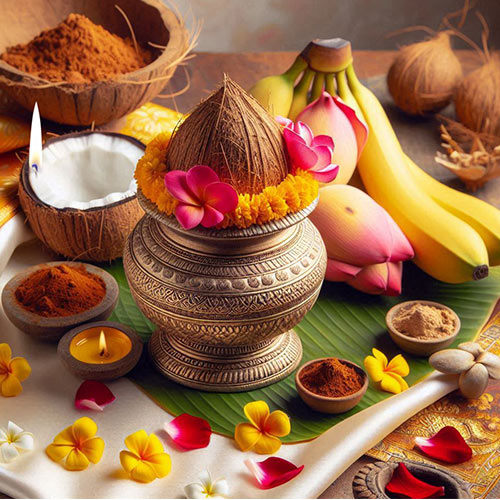
- It is inscribed on kalash (sacred pots), lamps, and puja thalis, ensuring purity and sanctity before any offering is made to the Divine.
- Business ledgers, new account books, and valuable possessions are often blessed with a Swastika to invoke success and safeguard wealth.
Swastika Symbol in Hindu Weddings and Festivals
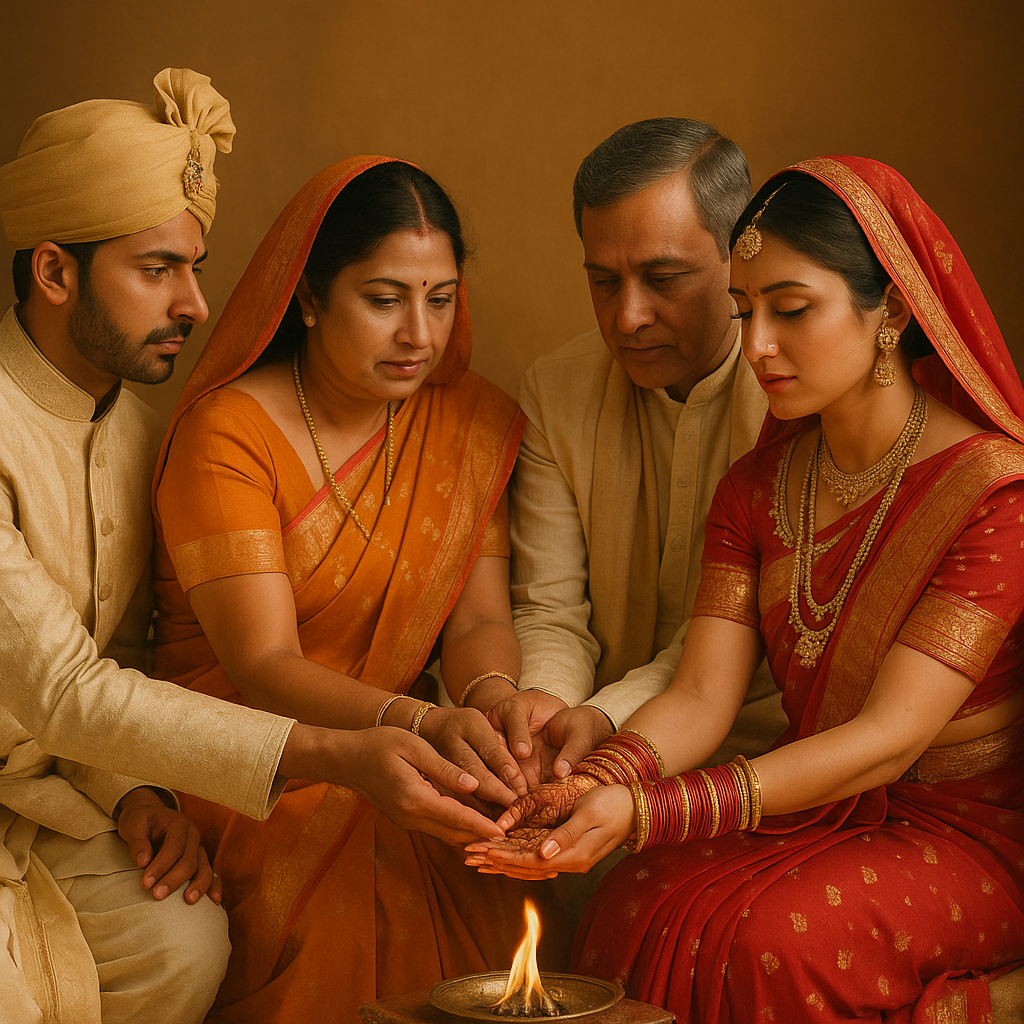
- The Swastika is a central motif in wedding mandaps, invitations, and rituals, symbolizing the couple's union under divine order and auspicious fortune.
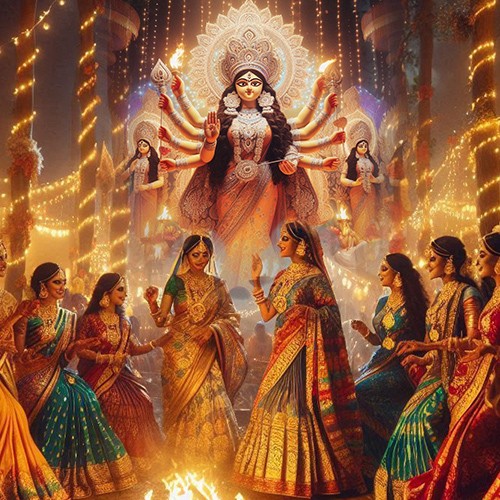
- During Diwali and Navratri, rows of Swastikas are drawn near doors, diyas, and rangolis to welcome Goddess Lakshmi, who is believed to bless homes that are pure, lit, and adorned with sacred symbols.
- In Ganesh Chaturthi celebrations, the Swastika is closely tied with Lord Ganesha, reinforcing his role as Vighnaharta (remover of obstacles).
Swastika Symbol in Hindu Temples and Sacred Rituals
- Priests mark Swastikas on temple floors, sanctum thresholds, and yantras before puja, seeing it as a seal of divine presence.
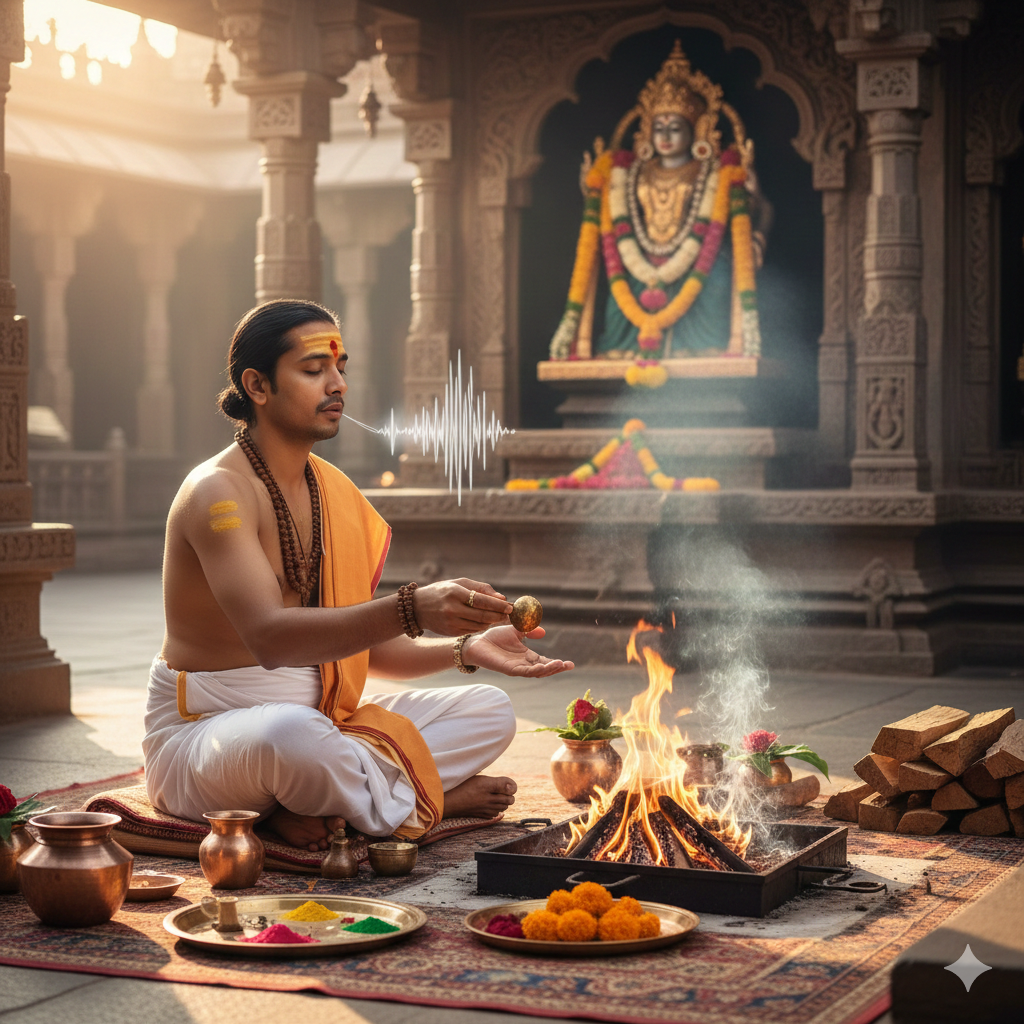
- In Vedic yajnas and homas, it is drawn at the start of the altar design to ensure that the sacrificial fire is surrounded by auspicious energy.
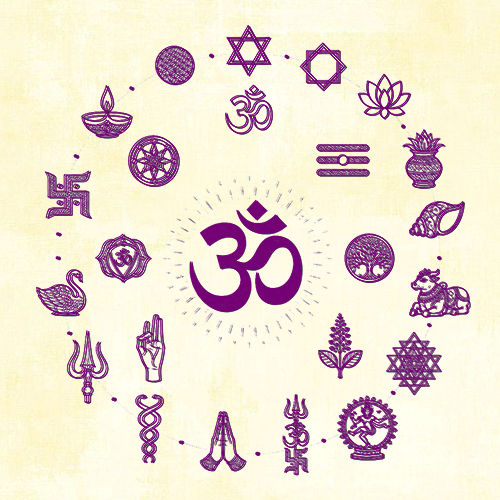
- In some traditions, the symbol is also combined with Om or Shree, amplifying its spiritual power.
Through these practices, the Swastika continues to be a universal sign of well-being and divine alignment, connecting everyday life with eternal truth.
Modern Significance and True Meaning of the Swastika Symbol in Hinduism
The Swastika remains one of the most widely used sacred symbols in Hinduism, yet outside India it is often misunderstood due to historical misuse. In the 20th century, the symbol was appropriated in the West and associated with ideologies of hatred creating confusion and fear around its meaning. However, within Sanatan Dharma, the Swastika has never represented division or violence. It has always been a mark of auspiciousness, prosperity, and universal well-being.
Reclaiming the True Spiritual Meaning of the Swastika Symbol
- For Hindus, the Swastika continues to be drawn during pujas, weddings, festivals, and new beginnings, embodying positivity and divine order.
- Scholars and cultural leaders emphasize the importance of educating the world about its authentic spiritual roots, which long predate its misuse.
- The symbol is also prominent in Jainism and Buddhism, representing peace, harmony, and the eternal flow of life, further proving its universality across dharmic traditions.
Spiritual and Cultural Relevance of the Swastika in Modern Life
- Many practitioners see the Swastika not just as tradition, but as a mindful reminder of balance and well-being in everyday life.
- In Vastu Shastra, it is used to harmonize spaces, bringing prosperity and stability to homes and workplaces.
- As modern seekers rediscover ancient practices, the Swastika is regaining recognition worldwide as a symbol of light, positivity, and resilience.
- By reclaiming its original essence, the Swastika continues to guide humanity back to its timeless message: well-being, prosperity, and spiritual harmony for all.
Swastika Symbol in Other Religions and Ancient Cultures
Although the Swastika is most strongly identified with Hinduism, its sacred geometry has also appeared in several other religions and ancient cultures, underscoring its universal spiritual appeal.
Jainism
- In Jain tradition, the Swastika is a fundamental symbol, representing the four states of existence- heavenly beings, human life, animal life, and hellish existence.
- It reminds devotees of the constant cycle of rebirth (samsara) and the ultimate goal of liberation (moksha).
- Every Jain temple and scripture prominently features the Swastika, and it is often drawn with rice grains before offering prayers.
Buddhism
- In Buddhism, the Swastika (often left-facing) is seen as a symbol of eternity, dharma, and the footprints of the Buddha.
- It is widely used in Tibetan and East Asian traditions, adorning statues, scriptures, and temples as a representation of good fortune and the eternal nature of truth.
Swastika Symbol in Ancient Global Civilizations
- Archaeologists have discovered Swastika motifs in Greek, Roman, Celtic, and Native American artifacts, often associated with the sun, fertility, and the cycles of nature.
- In ancient China, the Swastika was used to denote infinity and the balance of opposites, while in early European cultures it was linked with prosperity and protection.
The widespread presence of the Swastika across world cultures demonstrates that it is a universal archetype of harmony, order, and well-being a symbol that transcends geography, religion, and time.
Shop Authentic Swastik Symbols and Spiritual Products from Rudra Centre
Swastik Symbol (Divine Mark of Prosperity):
A timeless emblem to invite auspicious vibrations and spiritual harmony into your sacred space.
Click on the link to buy Swastik Symbol (Divine Mark of Prosperity)
.
Ashtadhatu Swastik Diya — Set of 2:
Crafted from the sacred Ashtadhatu alloy, these Swastik diyas radiate purity, timeless resonance, and holistic auspiciousness.
Click on the link to buy Ashtadhatu Swastik Diya
.
Silver Swastik Incense Stand:
A graceful addition to your puja setup, this sterling silver stand holds incense with divine clarity and calm.
Click on the link to buy Silver Swastik Incense Stand
.
Navratna Pendant with Swastik Design:
Blending nine celestial gems with the sacred Swastik, this pendant aligns cosmic energies for balance and spiritual protection.
Click on the link to buy Navratna Pendant with Swastik Design
.
Swastik-Aligned Puja Altar Cloth:
An altar cloth adorned with the Swastik to enhance sanctity and invoke divine presence in your rituals.
Click on the link to buy Swastik-Aligned Puja Altar Cloth
.
-in-Astrology.jpg)

.jpg)


Comments 0
Leave your thought here