

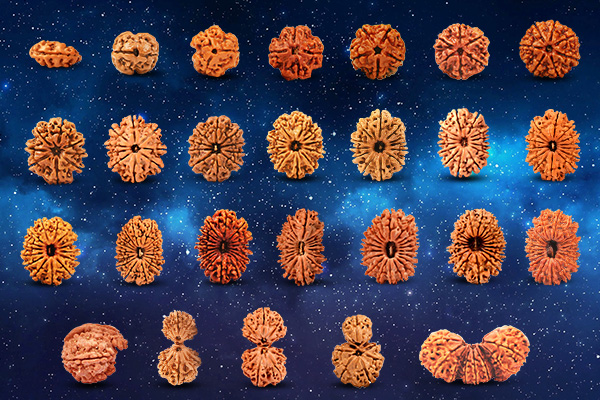
As the first ISO 9001:2015 certified Rudraksha organisation in the world, we always strive hard to educate our customers about the best quality of Rudraksha and how it works. Through our articles, we try and spread as much knowledge as we can about Rudrakshas, Chakras, Rudraksha Ratna Chakra Therapy (RRCT) and so on.
In our previous article named “ Everything about Rudraksha Beads ,” we imparted knowledge about the origin, benefits and religious mentions, healing significance and how the Rudraksha plant is grown. Apart from this, we also covered topics like ‘where we get original Rudraksha’, ‘FAQs’ and so on.
Today, through this article, we will be shedding light on the most crucial and important topics, which include the identification of original Rudraksha, selection of Rudraksha, checking the purity of Rudraksha and generic information about the fake Rudrakshas. The purpose of presenting this topic is to inform you all about the fake Rudrakshas and to create awareness instead of generating fear in you all.
Understanding Authentic Rudraksha
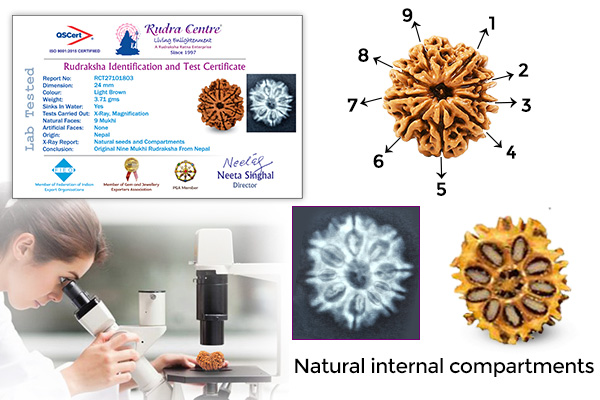
A genuine Rudraksha bead is defined not just by its external appearance, but by its internal structure and natural formation. True authenticity lies within the bead, not on its surface.
- Each Rudraksha contains natural internal compartments (mukhis), which correspond exactly to the number of lines visible on its surface.
- These internal compartments can only be accurately verified through X-ray analysis or examination by a knowledgeable expert.
- While external lines (mukhis) can be artificially carved or manipulated, the internal structure cannot be artificially created or altered.
Key Characteristics of an Authentic Rudraksha
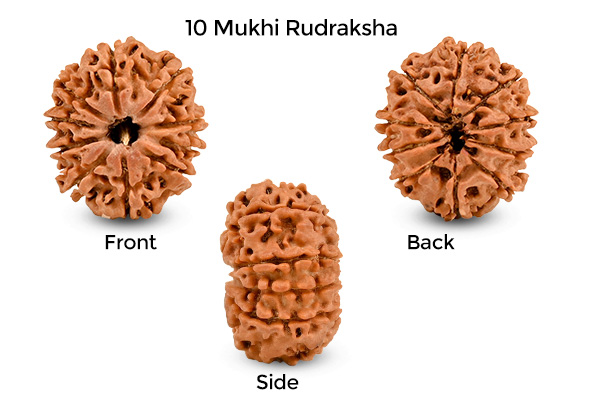
- All Mukhi lines must run continuously from one end (head) to the other (tail)
- Lines should be natural, well-defined, and not artificially sharp or cut
- The bead should be healthy, well-formed, and free from cracks, holes, or damage
Important Truths Buyers Must Know
-
Certificates are not a guarantee of authenticity
Many certificates are issued by sellers themselves or by laboratories that do not thoroughly verify the bead. Even manipulated beads are often sold with “certificates.” -
Higher Mukhi beads are more frequently faked
Due to their rarity and high price, beads above common mukhis are often carved, altered, or artificially created. -
Unrealistic pricing is a major red flag
If a rare Rudraksha is being offered at a surprisingly low price, it is almost certainly fake or manipulated. -
Emotional or mystical selling stories should be treated with caution
Claims such as:- “This bead has been in our family for generations”
- “A sadhu gifted this rare Rudraksha”
are commonly used tactics to build trust and justify high prices. In most cases, these stories are fabricated to influence the buyer.
Common Methods Used to Fake Rudraksha
-
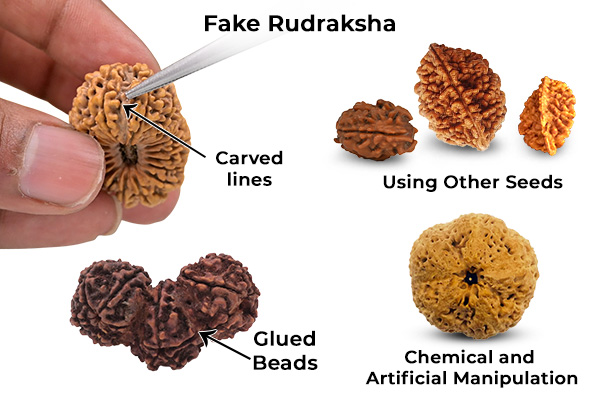
Carving Extra Lines
Lower mukhi beads are altered by carving additional lines to increase their value (e.g., converting 12 mukhi into 14 mukhi). -
Gluing Beads Together
Natural beads are cut and glued to form:- Gauri Shankar
- Trijuti
- High mukhi beads
-
Using Other Seeds
Seeds from other trees (like Bhadraksha or Ber seeds) are shaped and sold as Rudraksha. -
Chemical and Artificial Manipulation
Some producers use:- Chemicals
- Hormones
- Genetic modification
WHAT ARE FAKE RUDRAKSHA BEADS?
The Reality of Round One Mukhi (Gol Ek Mukhi), Half Moon (Kaju Dana) & Nepali One Mukhi (Savar Dana)
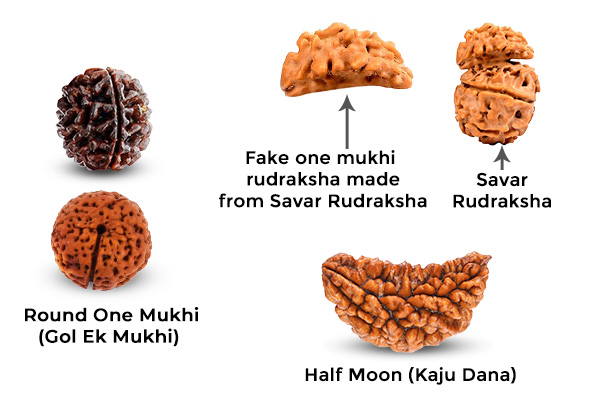
Authentic Rudraksha beads ranging from 2 Mukhi to 14 Mukhi are commonly available in the market. However, the so-called round (Gol) One Mukhi Rudraksha is a complete myth and does not exist in nature.
The natural structure of a Rudraksha bead is determined by its internal compartments and Mukhi lines, and based on this formation, a One Mukhi can never be round.
Despite this, many unscrupulous sellers manufacture and sell fake “round 1 Mukhi” beads using:
- Modified 5 Mukhi Rudraksha
- Betel nuts
- Areca nuts
- Other seeds or berries
These are artificially altered and sold at high prices by misleading buyers.
Similarly, the half-moon shaped bead (Kaju Dana), often marketed as a Nepali One Mukhi Rudraksha, is actually Bhadraksha, a completely different species.
It:
- Does not grow in Nepal
- Does not have a natural hole
- Does not possess the energetic or healing properties of Rudraksha
These fake variants—both Gol One Mukhi and Kaju Dana—are widely sold in temple towns, online platforms, and retail stores, taking advantage of the buyer’s faith and lack of awareness.
In recent times, one of the most commonly circulated fake “Nepali One Mukhi” beads comes from a Savar (twin bead), where one side of the bead is separated and sold as a single unit.
Since this portion naturally has a hole, it appears convincing to an untrained eye and is often passed off as an authentic One Mukhi.
X-ray of such a bead either shows no seed or shows twin seeds. However, this is not a naturally formed One Mukhi Rudraksha and such beads do not possess the structure or energy required to deliver any genuine results.
Buyers must be extremely cautious of this practice, as it has become increasingly common in the market.
Understanding the Natural Shape of Rudraksha
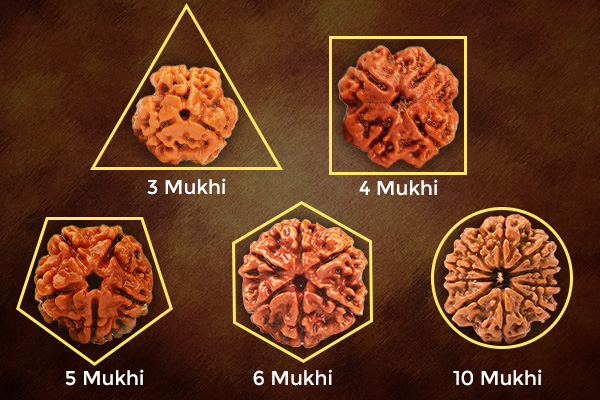
The shape of a Rudraksha bead is not random. It is defined by the number of Mukhi lines, which correspond to the number of internal seeds and compartments:
- 3 Mukhi → triangular
- 4 Mukhi → squarish
- 5 Mukhi → pentagonal
By this natural principle, a genuine One Mukhi, having a single compartment, appears half-elliptical in shape, not round.
Rarity of Nepali One Mukhi
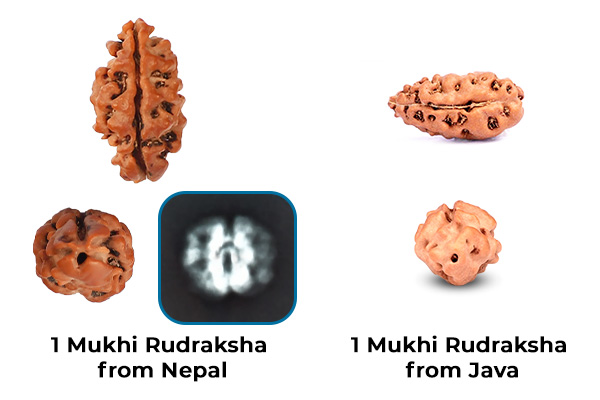
A true Nepali One Mukhi Rudraksha is extremely rare, so rare that even generations of farmers may never encounter one.
Due to this rarity, most beads sold under this category are fake or manipulated.
Instead, the Java (Indonesian) One Mukhi Rudraksha is relatively more accessible and, when authentic, is equally effective.
Java beads, though smaller and subtler in appearance, are known for their consistent energy and suitability for long-term wear, making them a practical and reliable choice.
Other Types of Fake and Manipulated Rudraksha
The Rudraksha market today is filled with various forms of manipulation. Buyers should be aware of the following:
-
Artificial Carvings
Rudraksha beads engraved with symbols such as:
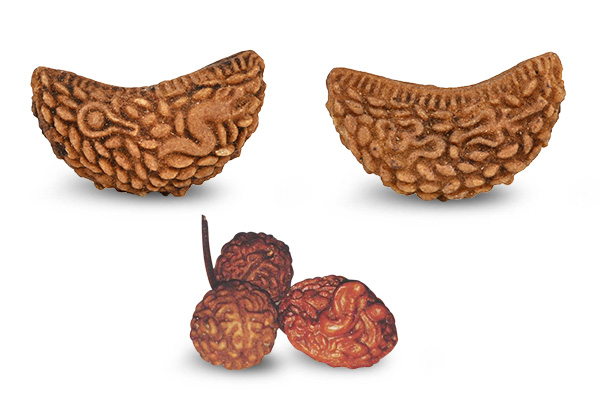
- Om
- Trishul
- Shivling
- Serpent
-
Artificially Created Higher Mukhi
Lower Mukhi beads (commonly 2 to 7 Mukhi) are often:
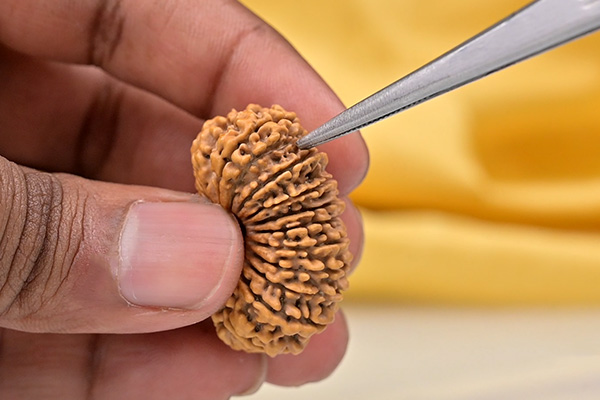
- Carved with extra lines
- Sold as rare higher Mukhi beads
-
Glued or Combined Beads
Some sellers glue multiple beads together to imitate rare types such as:
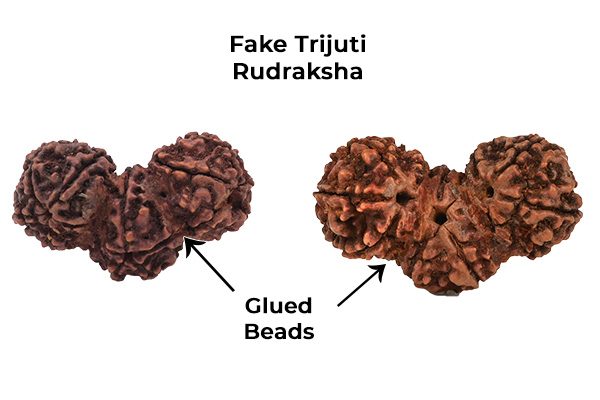
- Gaurishankar
- Trijuti
- Savar
-
Artificial Enhancement and Deception
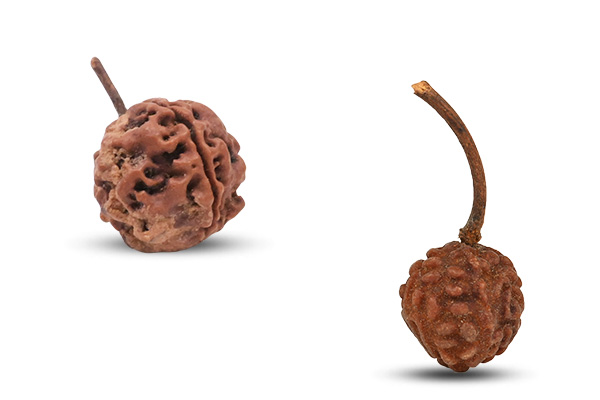
- False stems may be attached to make beads appear natural
- Demand for rare beads is exploited by manipulating lower Mukhi beads
- Fear-based selling (planetary dosha, Mahadasha) is used to influence buyers
Unfortunately, such practices have become common, and even long-time traders may deal in counterfeit beads as part of regular business.
Final Guidance
With the increasing demand for Rudraksha, the market today is flooded with fake, manipulated, and misrepresented beads. It is therefore essential for buyers to approach this space with awareness and discernment.
It is important to remember that:
- Not everything rare is powerful
- Not everything expensive is authentic
- Not everything promoted by influencers is genuine
True Rudraksha does not rely on marketing, storytelling, or fear-based selling. Its value lies in its natural formation, authenticity, and correct usage.
Any bead that is exaggerated, artificially modified, or sold through unrealistic claims is unlikely to deliver real benefits.
Always purchase from a trusted and knowledgeable source to ensure authenticity and correctness.
HOW TO IDENTIFY THE ORIGINAL RUDRAKSHA? (RUDRAKSHA ORIGINALITY TEST)
An original Rudraksha is very easily identified by an experienced eye. If you are planning to purchase a Rudraksha for the first time, it is advisable to purchase it from a renowned and genuine source.
Let us now understand how to check the original Rudraksha.
X-ray Test
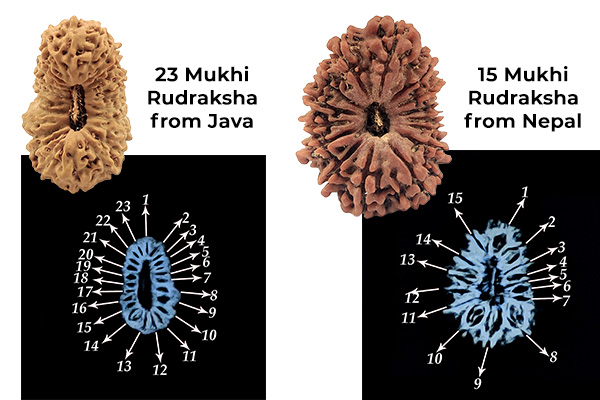
The X-Ray test is the only conclusive scientific method to assess the internal structure of a Rudraksha bead and determine whether it is original, fake, or manipulated.
A genuine Rudraksha will always have the same number of internal compartments as the number of Mukhi lines visible on its surface, with each compartment ideally containing a seed.
However, it is important to understand that an X-Ray alone does not prove authenticity.
In many cases, buyers are shown X-Ray images as “proof,” but:
- The internal compartments are often very close to each other and appear blurred
- The structure can be difficult for an untrained eye to interpret
- Even manipulated beads may appear convincing in an X-Ray without proper analysis
Additionally, not all Rudraksha beads are perfectly developed. In some cases, the seeds inside may be very thin or underdeveloped, and therefore may not be clearly visible in the X-Ray, even though the compartments exist.
For example, a genuine 15 Mukhi Rudraksha will have 15 compartments, but all 15 seeds may not be distinctly visible due to natural variations in development. This is why expert interpretation is essential.
True authentication is not based on X-Ray alone, but on a combination of:
- Careful external examination (natural Mukhi lines, surface integrity, formation)
- Detailed analysis of the internal structure through X-Ray
Only when both these aspects are studied together can an expert accurately determine whether a Rudraksha is genuine, manipulated, or fake.
Copper Coin Test
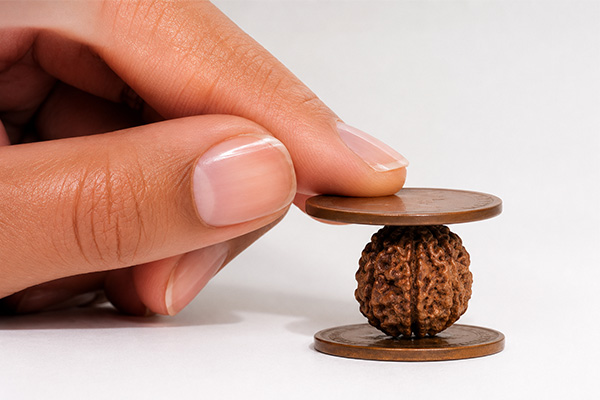
The Copper Coin Test suggests that a Rudraksha bead will rotate between two copper coins if it is genuine. However, this has no scientific basis and is not a reliable method of identification.
Even a manipulated Rudraksha (where extra Mukhi lines are carved) can pass this test, because it is still originally a Rudraksha bead.
This makes the test misleading, as it cannot distinguish between natural and altered beads.
At best, such a test may differentiate beads made from wood or other seeds, but it cannot confirm true authenticity.
Milk Test
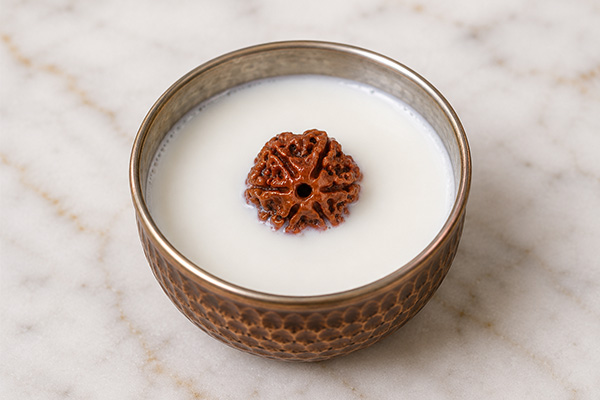
The Milk Test claims that if a Rudraksha is soaked in milk and the milk does not spoil for a few days, the bead is genuine. This claim has no scientific validity and is highly misleading.
Even a fake or manipulated Rudraksha can show the same result, as the freshness of milk depends on external conditions, not the bead itself.
Water Test
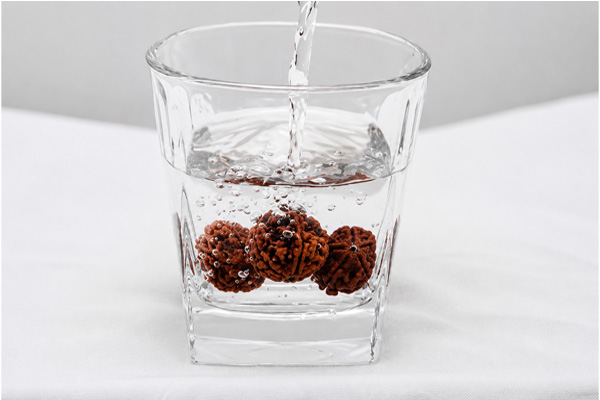
The Water Test suggests that a Rudraksha is genuine if it sinks in water and fake if it floats. This method is unreliable and misleading.
A fake Rudraksha made from wood or other materials can be made to sink by adding weight, while a genuine Rudraksha may float when fresh and sink later as it absorbs moisture over time.
Additionally, even a manipulated Rudraksha (with carved or altered Mukhi lines) will behave like a normal bead in water.
How to Identify Manipulated Rudraksha
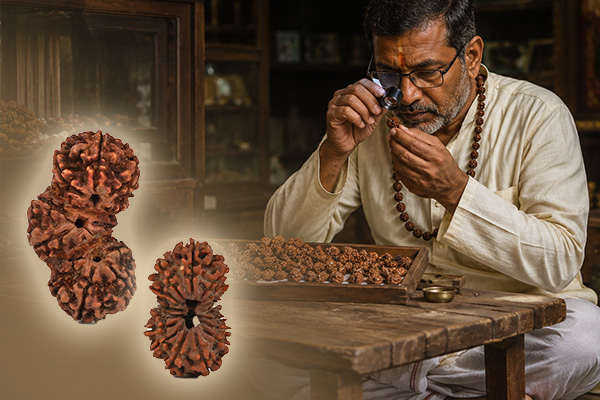
The Rudraksha market today has a significant presence of manipulated, altered, and misrepresented beads, designed to mislead buyers into paying high prices for what appear to be rare or higher Mukhi Rudraksha.
Both Nepal and Java beads are subject to such manipulation, especially when demand for rare beads increases.
Buying Rudraksha is similar to buying gemstones—authenticity, knowledge, and trust in the source are critical.
Common Methods of Manipulation & How to Identify Them
Carving Extra Mukhi Lines
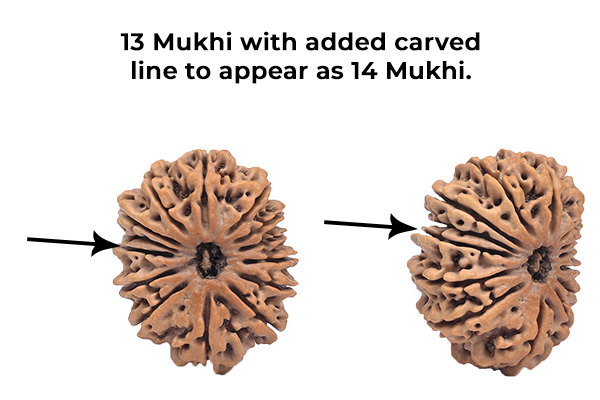
Lower Mukhi beads are carved to appear as higher Mukhi.
How to identify:
- Lines appear too sharp, straight, or artificially cut
- Grooves may not run naturally from head to tail
- Depth of lines may be uneven or inconsistent
- Under magnification, carving marks may be visible
Internally, the compartments will not match the number of outer Mukhi lines (visible in X-ray).
Gluing or Combining Beads (Gaurishankar, Trijuti, Savar)
.jpg)
Two or more beads are artificially joined to imitate rare formations.
How to identify:
- Look for fine joint lines or unnatural seams
- Slight gap or bonding marks between beads
- Different texture or color variation across the joint which becomes visible with time
- On soaking (in doubtful cases), glue lines may become visible
Breaking or Separating Natural Beads
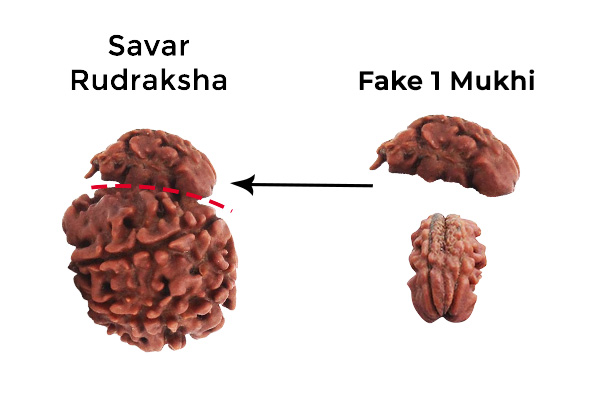
Naturally joined beads (such as Savar or twin Rudraksha) are sometimes broken apart, and one portion is sold as a rare bead—most commonly as a One Mukhi.
How to identify:
- Surface may show breakage marks, rough or uneven edges
- X-ray may reveal irregular structure, showing either no clear compartment or more than one compartment instead of the expected single compartment
While such pieces may appear convincing due to a natural hole or partial structure, they are not independently formed Rudraksha beads and therefore do not carry the intended properties or effects.
Creating Fake Rare Forms (e.g., Round One Mukhi)
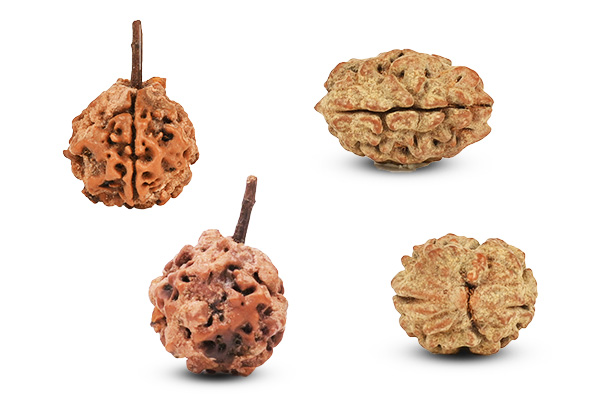
Common beads are modified to imitate rare types.
How to identify:
- Shape does not match natural Mukhi logic
- Hidden or masked lines may be visible on close inspection
- Surface may show patchwork or filled areas
- Too many “rare” beads available in the market is itself a red flag
Artificial Carvings (Om, Trishul, etc.)
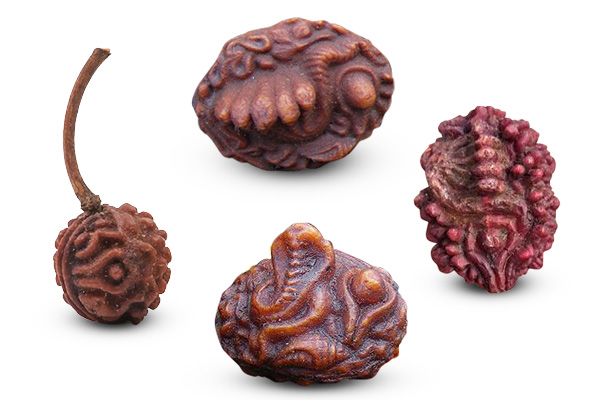
Symbols are engraved to increase appeal.
How to identify:
- Engravings look etched or cut, not naturally formed
- Edges of symbols are too clean and defined
- No natural Rudraksha has such markings
Surface Treatment & Polishing
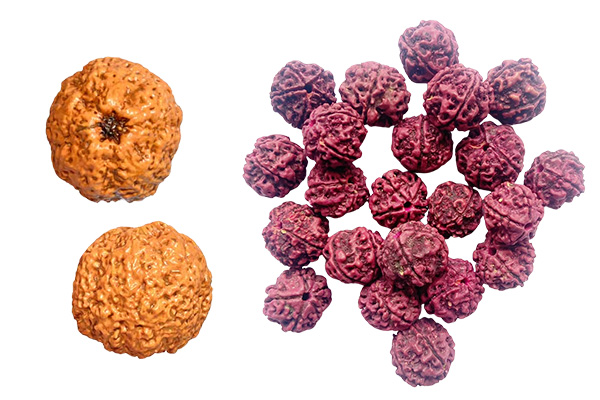
Beads are polished or chemically treated to improve appearance.
How to identify:
- Surface looks too smooth, shiny, or artificially finished
- Natural roughness is missing
- Color appears uniform or artificially enhanced
Misrepresentation of Origin (Nepal vs Java)
.jpg)
Java beads sold as Nepali to inflate pricing.
How to identify:
- Nepali beads: larger, deeper Mukhi lines
- Java beads: smaller, finer lines, more compact
- Price mismatch (Java sold at Nepali rates)
Why Expert Opinion is Essential (Even After X-Ray)
.jpg)
As explained earlier, the X-Ray test helps reveal internal compartments, but:
- Compartments may appear too close or blurred
- Seeds may not always be clearly visible
- Even manipulated beads may come with X-Rays
Only an expert can correlate:
- Outer structure (visible Mukhi lines)
- Inner structure (X-Ray compartments)
Key Warning Signs
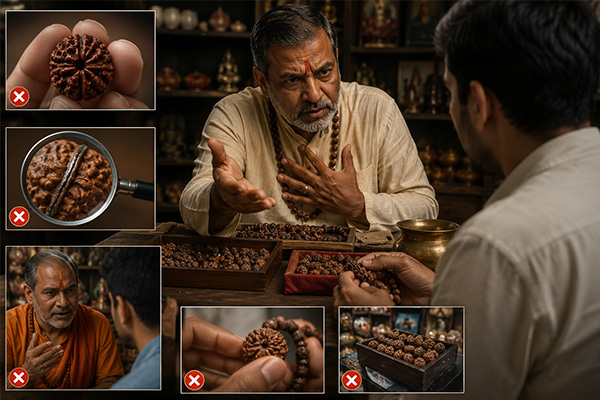
Be cautious if:
- The bead looks too perfect or artificial
- Mukhi lines appear cut or unnatural
- Seller uses emotional stories, spiritual legacy or urgency
- Rare beads are easily available or underpriced
Selection of a Healthy Original Rudraksha
Rudraksha is a natural and organic product, and like all natural elements, it is available in varying qualities—from low and medium to high and collector-grade beads.
Selecting a healthy and authentic Rudraksha is essential, as the quality of the bead directly impacts its effectiveness.
Below are key guidelines to help you make the right choice:
Do’s
- Choose a bead that feels well-balanced and has a good natural weight, indicating proper formation
- Ensure that the Mukhi lines are complete, continuous, and clearly defined, running from one end (mouth) to the other (tail); the lines should appear natural and not overly sharp or etched, as artificial carving often creates unnaturally sharp grooves
- Examine the bead carefully for any cracks, damage, or fungal growth. A healthy Rudraksha should be intact and clean
- Look for a bead that appears naturally lustrous and vibrant, not dull, lifeless, or showing stark and uneven colour variation across its surface
Don’ts
- Avoid lightweight or low-quality beads with broken, chipped, or uneven surfaces
- Do not purchase manipulated or artificially altered Rudraksha, even if they appear visually appealing
- Avoid beads that appear excessively dry, brittle, or lifeless, as this indicates poor quality or improper preservation
- Do not select beads with unnatural holes, cracks, or structural weakness
- Be cautious of beads that look overly polished, chemically treated, or unnaturally perfect, as this may indicate artificial enhancement
Final Insight
A high-quality Rudraksha is one that is naturally formed, structurally sound, and energetically balanced. Such beads are typically well-shaped, properly weighted, clear in their Mukhi lines, and visually healthy.
Always prioritize quality over appearance or price, as only a healthy and authentic Rudraksha can deliver its true potential.
Why Buy Rudraksha from Rudra Centre?
At Rudra Centre, authenticity, quality, and trust form the foundation of everything we offer. We provide a wide range of genuine and original Rudraksha beads, each of which is carefully handpicked and thoroughly evaluated before reaching our clients.
As the first ISO 9001:2015 certified Rudraksha organization in the world, we follow strict quality standards and processes to ensure that every bead meets the highest levels of authenticity and integrity.
Every Rudraksha—whether sourced from Nepal or Java (Indonesia)—is selected based on key parameters such as health, weight, natural formation, and clarity of Mukhi lines.
Our in-house team of trained and experienced experts meticulously examines and sorts each bead, ensuring that only the finest quality reaches you.
We follow multiple levels of testing and verification, combining both external examination and internal analysis, to maintain complete transparency and reliability.
In addition, our experts are always available to guide and consult, helping individuals select the right Rudraksha based on their specific needs.
All Rudraksha beads at Rudra Centre are stored under controlled conditions—in a cool, dry environment—to preserve their natural integrity.
Before dispatch, each bead is properly energised, ensuring it is ready for use.
When you choose Rudra Centre, you are not just purchasing a product—you are investing in authenticity, expertise, and a trusted legacy.
-in-Astrology.jpg)



.jpg)
-Rudraksha-Beads---Thumbnail.jpg)


T.sandhiya
|April 15, 2025
I want real 5 mukhi rudhraksha to wear
Satish bhosle
|August 24, 2024
Original rudraksha
Andrea Maria Albrecht
|February 21, 2024
Corresponding to my birth time and my Intentions I have thought to have braught one 1 face Rudraksha and one 3 face Rudraksha at Magh Mela Prayagraj, but now I think that both of them are Badhrakshas. I think for you this is easy to tecognize. May I send a photo?
Miss Anila Gunchala
|December 31, 2023
Namaste, I got Rudraksha Bracelet with Spatic Beads from you some time ago, I originally wanted to give it my mother. Unfortunately, it arrived late and can't give it to her as she us no longer with us. She passed away in November of this year. What do I do with the Rudraksha Bracelet now? Suggestions please. Dhanya vaar. Anilaji. Jai Sri Krsna ane Jai Mahadev 🙏
Pradeep Acharya
|December 14, 2023
I want original 5 Mukhi Rudrashak Beads to wear
RAVINDRA SHINDE
|November 27, 2023
I want genuine natural untreated Nepali Rudraksha with X ray and certification. 1) 3 Mukhi 1 no, 2) 8 Mukhi 2 no. I want to wear all three in neck. So please suggest appropriate size for results.