

Bhagwan Kubera is the divine treasurer and guardian of wealth in Hinduism, serving as the king of Yakshas and the regent of the north, responsible for the protection and distribution of earthly riches. He is depicted with a potbelly, adorned in jewels, and carrying a money bag or pomegranate, symbolizing abundance and material prosperity. Worshipped during festivals like Dhanteras alongside Goddess Lakshmi to invoke wealth, Kubera’s presence is acknowledged not only in Hindu temples but also in Buddhist and Jain traditions across Asia. In the Tirupati temple, devotees donate money in his name, recognizing his role in the divine loan given to Bhagwan Venkateshwara. Kubera remains central to rituals seeking financial growth and success.
Who is Bhagwan Kuber?
Bhagwan Kubera is the Hindu god of wealth and prosperity. He serves as the divine treasurer and guardian of the world's riches. Kubera is the king of the Yakshas, semi-divine beings associated with nature and wealth, and is one of the Lokapalas, the guardians of the cardinal directions, specifically presiding over the north. He is also known as Vaishravana, a name derived from his father Vishrava.
Kubera's lineage traces back to the sage Vishrava and his wife Ilavida, making him the half-brother of Ravana, the demon king of Lanka, born to Vishrava and the Rakshasa princess Kaikesi. Despite this connection, Kubera is revered for his righteousness and devotion to dharma. His consort is Bhadra, also known as Kauberi or Charvi, and their children include Nalakuvara, Manigriva, Mayuraja, and Meenakshi.
Kubera is depicted as a dwarf with a plump body, adorned with jewels, and carrying a money-pot or a bag of gold coins. He often holds a mace (gada), symbolizing authority and the administration of justice, and sometimes a pomegranate, representing fertility and abundance. Kubera's mount, or vahana, is unique among Hindu deities; he rides a human figure, known as Nara-vahana, symbolizing the idea that wealth can dominate human nature if not controlled. In some depictions, he is also shown riding the elephant Sarvabhauma. Additionally, Kubera is associated with the mongoose, a symbol of his victory over the nāgas, the guardians of treasures.
Significance of Bhagwan Kuber
As the guardian of wealth and material prosperity, he represents the disciplined and rightful use of abundance. His presence underscores the principle that wealth should be acquired through ethical means and utilized in the service of dharma. Kubera is also invoked to remove financial obstacles, stabilize income, and protect resources, making him central to rituals that seek not only prosperity but also balance and responsibility in material life.
He plays a vital role in various regional traditions and sects. In South India, he is closely associated with the temple of Bhagwan Venkateshwara at Tirupati, where devotees offer money symbolizing repayment of the celestial loan Kubera gave for the divine marriage of Venkateshwara and Padmavati. In Himalayan and Tibetan traditions influenced by Vajrayana Buddhism, Kubera appears as Vaishravana, a protector deity. His presence is also strong in Jain and Southeast Asian cultures, where he is worshipped in temples and sacred art for his role as a benefactor and guardian of riches.
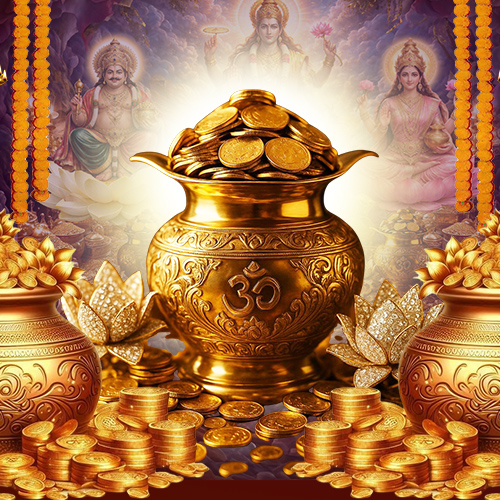
Festivals dedicated to Bhagwan Kubera include Dhanteras, the first day of the Diwali festival. On this day, devotees worship Kubera along with Goddess Lakshmi to invite wealth and auspiciousness into their homes and businesses. His worship during this time emphasizes orderly financial management, divine favor, and lasting prosperity.
Iconography & Symbolism
Physical Appearance and Symbolic Elements
Bhagwan Kubera is depicted as a dwarf with a plump body, symbolizing abundance and prosperity. He has a fair or lotus-like complexion and is adorned with rich garments and jewelry, reflecting his association with wealth. Kubera is often shown holding a money bag, a pot of jewels, or a pomegranate, each representing material wealth and fertility. He carries a mace, symbolizing authority and the administration of justice. His mount is typically a human figure, referred to as Nara-vahana, indicating that wealth can dominate human nature if not controlled. In some depictions, he rides the elephant Sarvabhauma, and is sometimes accompanied by a mongoose, symbolizing his victory over the nāgas, the guardians of treasures.
Art, Sculptures, and Temple Depictions
In Hindu art and iconography, Kubera is frequently portrayed seated on a throne, holding his symbols of wealth. His potbelly and three legs have become iconic symbols of abundance and prosperity . Sculptures and paintings often depict him with a jovial demeanor, emphasizing his role as the provider of wealth. In some temple depictions, he is shown with four arms, holding various attributes such as a mace, a pomegranate, a money bag, and a club. The nidhi treasures Padma and Shankha are sometimes represented beside him in human form, with their heads emerging from a lotus and a conch respectively.
Color Symbolism, Posture, and Mudras
Kubera's iconography includes specific color symbolism and postures. He is associated with golden hues, signifying wealth; green, representing growth; and red, symbolizing energy . His posture is typically seated, reflecting stability and the accumulation of wealth. In some depictions, he is shown with four arms, each holding different items that symbolize his powers and responsibilities. His facial features may include a beard and mustache, with two small tusks protruding from the ends of his mouth, representing his powers to punish and to bestow favors.
Origin of Bhagwan Kuber
Bhagwan Kubera originates from the ancient Vedic and Puranic traditions. He is the son of the sage Vishrava and Ilavida, making him a member of the esteemed Pulastya lineage. This ancestry places him among the descendants of Brahma through the mind-born sage Pulastya. Kubera’s role was established as the original ruler of Lanka before his half-brother Ravana, born to Vishrava and the Rakshasi Kaikesi, forcefully seized the kingdom. Following this displacement, Kubera moved his abode to the celestial city of Alaka, located in the Himalayas near Mount Kailash, where he governs the Yakshas and oversees the distribution and guardianship of wealth.
Kubera is prominently mentioned in several scriptures. In the Ramayana, he appears as the dispossessed but righteous elder half-brother of Ravana. In the Mahabharata, Kubera is one of the eight Vasus and is counted among the Lokapalas, the directional guardians, where he presides over the north. The Puranas further define his cosmological position as the treasurer of the gods and the king of Yakshas. His association with divine wealth connects him to the guardian of the earthly and celestial treasures, including the Nidhis or hidden treasures. He does not take avatars in the traditional sense like Vishnu but holds a consistent divine role across time and texts, maintaining order over material resources within the cosmic framework.
Legends and Stories
Origin and Divine Elevation
Kubera is recognized as the god of wealth and the guardian of the North in Hindu mythology. His origin traces back to Sage Vishrava and Ilavida, making him the elder half-brother of Ravana. Kubera’s penance to Brahma resulted in his elevation to the status of divine treasurer, granting him authority over all forms of wealth and the city of Lanka. This marked his transformation from a mortal into a revered deity, distinct from his Rakshasa siblings due to his virtue and devotion.
Conflict with Ravana
The conflict with Ravana is a pivotal episode. Kubera’s rule over Lanka ended when Ravana, driven by ambition, overpowered him and seized the city. Kubera then relocated to Alakapuri in the Himalayas, where he continued his role as the Bhagwan of wealth. Despite losing his kingdom, Kubera’s divine responsibilities remained intact, and he maintained his position as the treasurer of the gods.
Devotion to Shiva
Kubera’s unwavering devotion to Shiva is another significant aspect of his legend. Through intense austerities, he gained Shiva’s favor, which solidified his role as the guardian of the North and the king of the Yakshas. This relationship underscores the importance of spiritual discipline and humility in attaining divine blessings.
Lesson in Humility
A notable story illustrates Kubera’s lesson in humility. Intending to display his wealth, Kubera hosted a lavish feast for Shiva and Parvati, who sent Ganesha instead. Ganesha consumed everything and demanded more, forcing Kubera to seek Shiva’s guidance. Shiva advised him to serve with humility rather than pride. When Kubera followed this advice, Ganesha’s hunger ceased, reinforcing the value of humility over ostentation.
The Famous Feast of Kubera
Numerous legends are associated with Kubera. The Feast of Kubera is worth mentioning for the lesson it conveys to those with great wealth. Once Kubera, to show off his riches, organized a grand feast and invited Shiva and Parvati. They declined but sent Ganesha in their place. Confident, Kubera claimed he could feed thousands like Ganesha. At the feast, Ganesha consumed all the food and remained unsatisfied, eventually eating the dishes and furniture. Alarmed, Kubera sought Shiva’s help. Shiva gave him a handful of rice, instructing him to offer it with humility. When Kubera did so, Ganesha’s hunger was finally appeased, teaching Kubera the importance of humility over pride.
Spiritual Lessons from Bhagwan Kuber
The tales of Bhagwan Kuber offer a layered set of moral and spiritual lessons that address both the blessings and responsibilities of wealth. His journey from mortal to divine treasurer highlights the importance of gratitude and responsible stewardship. Kuber’s transformation, achieved through penance and devotion, demonstrates that spiritual discipline and humility can elevate one’s status and bring lasting fulfillment, not just material gain. The shift from ruling Lanka to establishing Alakapuri underscores that true prosperity is not limited to possessions but is deeply connected to personal growth and spiritual richness.
Kuber’s conflict with Ravana reveals the dangers of unchecked ambition and greed. The loss of Lanka to his half-brother illustrates how the pursuit of power without ethical grounding leads to instability and loss. This story serves as a warning that wealth acquired or managed without virtue is always at risk, while resilience and ethical conduct can restore balance and open new paths to abundance.
The famous feast with Ganesha delivers a direct lesson on humility. Kuber’s pride in his riches leads to embarrassment when Ganesha’s hunger cannot be satisfied by opulence alone. Only when Kuber offers food with humility does Ganesha’s hunger cease, teaching that true satisfaction and harmony come from sincerity and compassion, not from displays of wealth or arrogance. This story also emphasizes that love and humanity cannot be replaced by material offerings.
Kuber’s unwavering devotion to Shiva and the lessons learned from his relationship with the divine further reinforce the need for humility, gratitude, and balance between material and spiritual pursuits. His role as a divine mentor in the Mahabharata, guiding Yudhishthira and Bhima on ethical management of wealth, highlights the value of generosity, prudent stewardship, and the importance of supporting community welfare.
Kuber’s legends teach that wealth is a tool to be managed with wisdom, humility, and compassion. They remind us that prosperity is best enjoyed when shared, that pride and greed can lead to downfall, and that spiritual growth and ethical living are the true sources of lasting abundance.
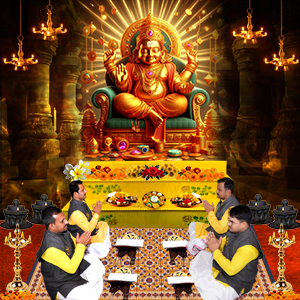
Puja Vidhi at Home
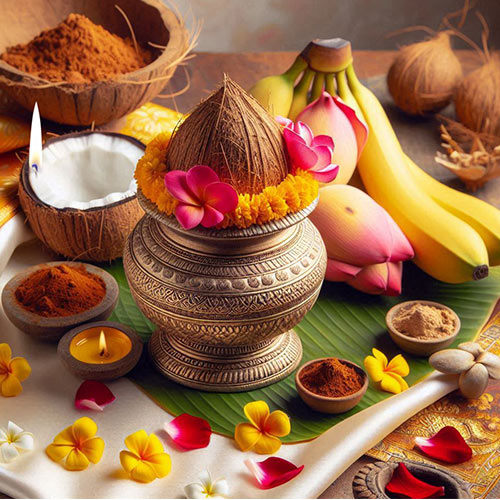
Required Materials
- Idol or picture of Bhagwan Kuber
- Clean altar or puja place
- Kalash (water vessel)
- Fresh flowers and garlands
- Incense sticks
- Diya (oil lamp) with ghee or oil
- Camphor for aarti
- Fruits and sweets (especially yellow or dry fruits)
- Rice grains
- Betel leaves and nuts (optional)
- Sandalwood paste and Kumkum
- Clean cloth for altar decoration
- Water in a small bowl for offering
- Coins or currency notes (symbol of wealth)
- Turmeric and akshata (unbroken rice mixed with turmeric)
- Bell
Step-by-Step Puja Guide
Preparation and Purification
Clean the puja area and arrange the altar.
- Place the Kuber idol or picture on the altar, decorate with clean cloth and flowers.
- Light the diya and incense sticks.
- Sprinkle water around the altar for purification.
Invocation
Begin by invoking Bhagwan Ganesha with the mantra:
Om Gan Ganapataye Namah
to ensure the removal of obstacles.
Invite Bhagwan Kuber by offering flowers and water, chanting:
Om Yakshaya Kuberaya Vaishravanaya Dhanadhanyadhipataye Dhanadhanya Samriddhim Me Dehi Dapaya Swaha
Offering and Worship
- Apply sandalwood paste and kumkum to the idol or picture.
- Offer fresh flowers and garlands.
- Place coins or currency notes before the deity as a symbol of wealth.
- Offer fruits, sweets, and dry fruits as Naivedya.
- Offer water for washing the feet, hands, and for a symbolic bath by sprinkling water.
- Offer rice grains, turmeric, and akshata for prosperity.
- Place betel leaves and nuts if available.
Chanting and Mantra Recitation
Chant the Kuber mantra:
Om Hreem Shreem Hreem Kuberaya Namah
Repeat the mantra 108 times using a mala for maximum benefit.
Recite Kuber Ashtottara Shatanamavali or listen to Kuber stotras for deeper devotion.
Aarti Ceremony
Light camphor and wave it in circular motions before the deity while ringing the bell.
Sing or play Kuber aarti, such as:
Jai Kuber Dhanadhipati Jai Jai
Offer the aarti plate to all present for blessings.
Conclusion
Bow down and seek Bhagwan Kuber’s blessings for prosperity and well-being. Distribute prasad among family members and guests. Maintain gratitude and reflect on responsible use of wealth throughout the day.
Mantras Dedicated to Bhagwan Kuber
Om Yakshaya Kuberaya Vaishravanaya Dhana-Dhanyadi, Pataye Dhana Dhanyadi Samruddhim Me,Dehi Dapaya Swaha
Meaning: I offer my humble obeisance to Bhagwan Kuber who is the custodian of all the wealth in the world and the Bhagwan of success.
Om Shreem Hreem Kleem Shreem Kleem Vitteshvaraya Namah
Meaning: We offer obeisance to Bhagwan Kuber, who chastises the evil and blesses fame and wealth.
Om Yaksha Rajaya Vidhmaya Vaishravnaayaa Deemahe Tanna Kubera Prachodayath
Meaning: We meditate on Bhagwan Kuber, who is the king of Yakshas and the son of Vishravana. May the God of wealth illumine our intellect and inspire us.
Watch Kuber Yantra Meditation by Sakhashree
Kuber Chalisa
Kuber Chalisa is a devotional hymn composed of forty verses and introductory and concluding dohas, designed to honor and invoke Bhagwan Kuber. Its recitation is considered a direct and accessible practice for devotees seeking peace, prosperity, and favorable conditions for wealth accumulation. The Chalisa highlights Kuber’s status as the guardian of the North and the divine treasurer, entrusted with the protection of material riches and essentials like food and water. He is depicted as Bhandari, the provider and sustainer, reinforcing his role as a benefactor of abundance and well-being.
The hymn emphasizes Kuber’s unique position among the Yakshas, serving as the chief attendant of Bhagwan Shiva and maintaining a close association with the celestial order. The verses describe his guardianship over the northern direction and his stewardship of the heavenly treasury, underscoring his significance in both the material and spiritual realms. The Chalisa assures that sincere meditation and recitation, especially during the auspicious hours of early morning and evening, lead to the removal of obstacles, fulfillment of stalled tasks, and a continuous supply of essentials, particularly food grains.
Chanting the Kuber Chalisa daily cultivates a mindset of gratitude and abundance. It brings not only material wealth but also inner peace, clarity, and the ability to overcome financial and personal challenges. The practice encourages determination, faith, and a disciplined approach to worship, reflecting the broader spiritual principle that devotion and focus yield tangible and intangible rewards. The Chalisa’s structure and content make it suitable for regular home worship, offering a balanced blend of praise, supplication, and meditation that aligns with traditional Hindu devotional practices.
Click Here for Booking it: Kuber Chalisa Paath - 51 times
Kubera and Lakshmi: Balancing Material Wealth and Divine Auspiciousness
Kubera stands as the king of the Yakshas, who are guardians of hidden treasures and natural wealth. As the treasurer of the gods, he presides over Alakapuri, a legendary city near Mount Kailas in the Himalayas, symbolizing the abundance and security of divine riches. Kubera’s consorts, Riddhi and Nidhi, personify the principles of growth and accumulation, reinforcing his association with both the expansion and preservation of material wealth.
Worship of Kubera is often paired with the veneration of Goddess Lakshmi. While Kubera embodies tangible wealth and material prosperity, Lakshmi represents auspiciousness, divine grace, and spiritual fulfillment. The Rig Veda and hymns like the Sri Suktam clarify that Lakshmi is not merely the goddess of riches but the very source of auspiciousness and spiritual abundance. She is the divine energy of Vishnu, bestowing fortune and well-being, and her presence sanctifies material wealth managed by Kubera.
The distinction is clear: Kubera is the custodian and distributor of material riches, while Lakshmi is the origin of divine fortune and spiritual prosperity. Kubera’s name, derived from roots meaning “to hide” or “earth hero,” highlights his role as the protector and dispenser of earthly wealth. In spiritual practice, invoking both deities together harmonizes material and spiritual aspirations, ensuring that prosperity is accompanied by auspiciousness, ethical use, and inner fulfillment. This dual worship reflects the holistic Hindu view that true abundance integrates both material success and spiritual grace.
Benefits of Worshipping Bhagwan Kuber
Worshipping Bhagwan Kuber offers a blend of spiritual, mental, and material advantages that go beyond mere accumulation of wealth. Spiritually, it fosters a sense of peace, gratitude, and satisfaction, helping devotees cultivate a mindset of abundance and contentment. Regular prayers and rituals remove negative energies, promote inner calm, and support spiritual growth. Mentally, Kuber’s worship inspires financial wisdom, teaching responsible management, prudent spending, and the importance of generosity. This guidance encourages clarity in decision-making and the ability to overcome obstacles related to prosperity. Materially, Bhagwan Kuber’s blessings are sought for financial stability, new opportunities, business growth, and the protection of wealth. His role as the divine treasurer ensures that devotees not only attract riches but also safeguard and multiply them through wise actions and ethical means.
Most important benefits:
- Attracts wealth and prosperity, opening new avenues for income and financial growth
- Removes obstacles and difficulties in financial matters, supporting stability and progress
- Protects assets and prevents loss or misuse of wealth
- Ensures success in business, investments, and career advancement
- Inspires prudent financial management and responsible use of resources
- Promotes generosity, gratitude, and a positive mindset toward abundance
- Brings peace, satisfaction, and spiritual fulfillment alongside material gains
- Shields against negative energies and fosters a harmonious environment
- Opens doors to new opportunities and sources of wealth
- Supports overall well-being by balancing material and spiritual aspirations
Temples Dedicated to Bhagwan Kuber
The Kuber Bhandari Temple in Gujarat, located on the banks of the Narmada River near Karnali, is the most significant shrine dedicated to Bhagwan Kuber. This ancient temple, over 2500 years old, features robust stone architecture and detailed carvings. The site attracts pilgrims especially during Amavasya and Maha Shivaratri, when special rituals and aarti are performed for prosperity.
Other important temples include the Kuber Temple at Jageshwar in Uttarakhand, part of an ancient complex, and the Mahakaleshwar Temple at Pushkar Lake in Rajasthan, which houses a shrine for Bhagwan Kuber. The Dhopeshwar Mahadev Temple in Madhya Pradesh and the Kuber temple in Khilchipur, Mandsaur, also feature rare icons of the deity.
Internationally, Kuber is honored as Vaisravana in Buddhist regions like Tibet, where temples and statues depict him as a guardian of wealth.
Key festivals at these temples are Dhanteras and Sharad Purnima, marked by special pujas, offerings, and large gatherings. The architecture of Kuber temples ranges from intricate carvings to spacious courtyards, reflecting regional styles and serving as important centers of spiritual and cultural heritage.
Presence in Other Traditions
In Buddhism, Kubera appears as Vaisravana, the chief of the Four Heavenly Kings and guardian of the north. He is depicted with symbols of wealth and authority, such as a jewel-spitting mongoose, and is invoked for prosperity and protection of the Buddhist teachings.
In Jainism, Kubera is known as Sarvanubhuti or Sarvahna, a Yaksha guardian who grants material benefits. Jain temples often feature him as a protector, reflecting his association with worldly prosperity for lay followers.
In Southeast Asia, Kubera is recognized in countries like Thailand and Indonesia, where he is honored as a deity of fortune and wealth. He is depicted in local styles and integrated into regional spiritual practices.
Comparative mythology shows Kubera consistently as a guardian of wealth and the north, with his attributes adapted to fit the spiritual needs of each tradition. His role bridges material prosperity and ethical stewardship across cultures.
Rudra Centre’s Kuber Products & Puja Services
Finely crafted brass idols of Bhagwan Kuber, designed to attract wealth and new opportunities. Best placed in the North direction to invite prosperity and success.
Rare idols of Bhagwan Kuber crafted from natural gemstones, each offers unique healing energies and blessings for family wealth and prosperity. Ideal for home altars, especially when placed in the recommended direction.
Lord Kuber Maharaj Brass Murti
A heavy, beautifully carved brass idol of Bhagwan Kuber, symbolizing protection and conservation of wealth. Suitable for home or office to enhance good luck and financial stability.
A sacred geometric instrument etched on premium brass, available in various sizes and finishes. Worshipped to attract money, open new income sources, and safeguard existing wealth.
The rarest rudraksha bead, ruled by Bhagwan Kuber. It bestows immense wealth, prosperity, protection, and fulfillment of material desires. Highly sought after for those seeking rapid financial growth and security.
Kubera Puja, Mantra Japa and Yajna
A comprehensive Vedic ritual dedicated to Bhagwan Kuber, performed by expert priests to invoke wealth, prosperity, and liberation from debts. The service includes Kalash Sthapana, Kuber Yantra and idol worship, mantra japa, homa, aarti, and donation rituals, with energized items and prasad shipped to your address. Ideal for those seeking financial growth, business success, and material abundance.
A comprehensive Vedic ritual invoking Goddess Lakshmi in her eight forms and Bhagwan Kuber to attract wealth, prosperity, and holistic well-being. The puja includes personalized mantras, live participation options, and delivery of energized prasad and spiritual items for lasting abundance.
Guardian of Prosperity: The Enduring Power of Bhagwan Kuber
Bhagwan Kuber stands as the eternal symbol of wealth, abundance, and responsible stewardship. His presence in Hinduism and other spiritual traditions highlights the balance between material prosperity and ethical living. Worship of Kuber not only attracts financial growth and security but also inspires gratitude, humility, and wise management of resources. Through devotion, rituals, and the power of sacred mantras, devotees invite not just riches but also inner peace and lasting fulfillment. Bhagwan Kuber’s legacy endures as a guiding force for those seeking both worldly success and spiritual harmony.
-in-Astrology.jpg)


.jpg)




Kenneth Okonkwo
|December 13, 2024
Please I need Lord kuber most powerful ring for wealth promotion, and protection please how much in naira