

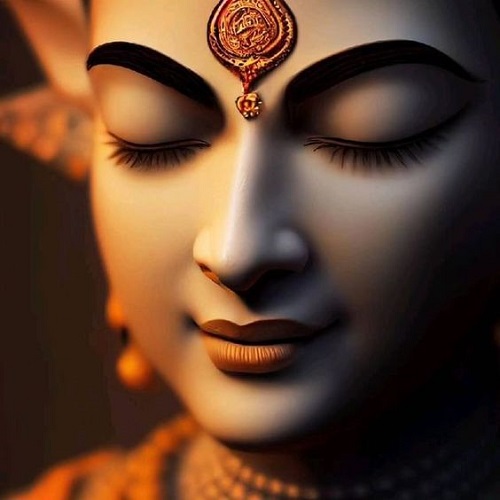
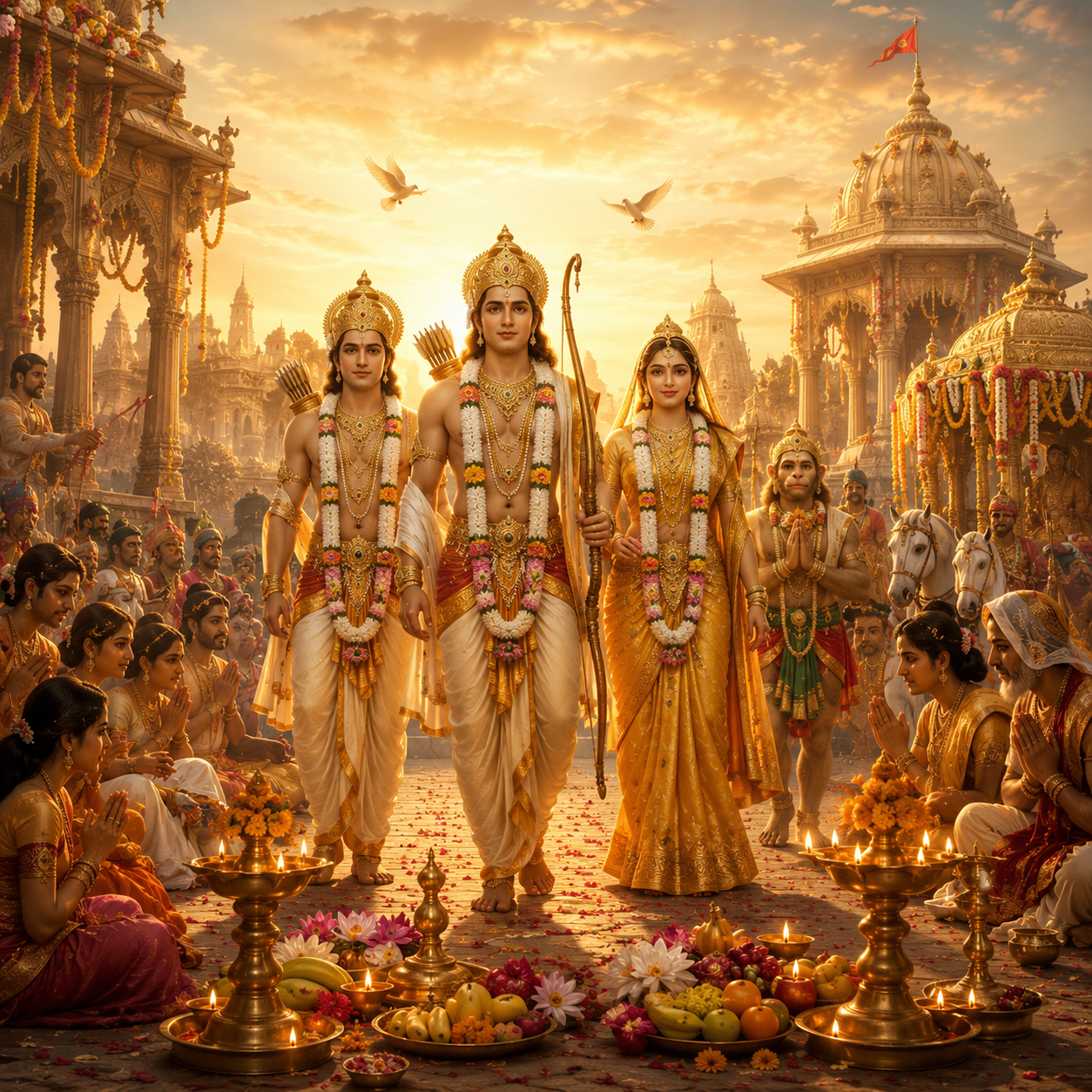
Sita Navami, one of the most revered festivals in Hindu tradition, celebrates the divine birth of Sita Devi, the eternal consort of Bhagwan Rama, and a symbol of purity, virtue, and resilience. In 2026, this sacred occasion will be observed on Friday, April 24th as devotees across the globe come together to honor her life and teachings. Sita, born to King Janaka and Queen Sunaina in the city of Mithila, represents the ideal woman-embodying strength, grace, unwavering devotion, and commitment to dharma.
The festival holds profound significance, not only as a reminder of Sita's birth but also as a day to reflect on her pivotal role in the epic Ramayana . Her journey, from being found in the earth to her trials during exile, her selfless love for Bhagwan Rama, and her embodiment of sacrifice and righteousness, continues to inspire millions.
On Sita Navami, temples are adorned with flowers, and prayers are recited to seek blessings for harmony, virtue, and prosperity. It is a day for devotees to connect with the values Sita upheld: courage, devotion, and the triumph of good over evil.
As families and communities come together in worship, Sita Navami serves as a reminder of the timeless lessons imparted through her life, lessons of faith, resilience, and the power of love. This vibrant celebration fills the air with spirituality and devotion, fostering a deep sense of reverence and connection to the divine feminine force that Sita represents.
Sita Navami 2026 Festival Date, Time, Muhurat & Tithi
Sita Navami will be observed on Friday, April 24, 2026
Nava (9th) Tithi of the Vaishakha month as per the lunar calendar.
Key Timings for Sita Navami 2026:
Sita Navami Madhyahna Muhurat - 11:53 AM to 02:39 PM
Duration - 02 Hours 46 Mins
Rama Navami on Thursday, March 26, 2026
Sita Navami Madhyahna Moment - 01:16 PM
Navami Tithi Begins - 09:51 AM on Apr 24, 2026
Navami Tithi Ends - 08:57 AM on Apr 25, 2026
Lord Rama was born on the same tithi (Navami) in the Chaitra Month (April-May) and His birth anniversary is known as Rama Navami which is celebrated before the Sita Navami. In 2026, Rama Navami was celebrated on Thursday, March 26 th .
Note: Sunrise and sunset vary by region and date due to India's geographical diversity. For exact timings, please refer to local astronomical data.
Significance & Importance of Sita Navami
Sita Navami holds deep spiritual and cultural significance for Hindus, as it celebrates the divine birth of Sita Devi, one of the central figures in the Ramayana and a paragon of virtue, strength, and devotion. Her life reflects unwavering commitment to dharma (righteousness), and the festival serves as a reminder of the timeless values she embodied. Sita represents ideal womanhood, encompassing qualities like purity, patience, compassion, and selflessness. Her story is a profound example of the strength and resilience of women, making Sita Navami an important occasion for women to seek blessings for strength, protection, and prosperity.
Sita’s life is also marked by her unshakable devotion to Bhagwan Rama, her husband. Her faith, even in the most trying circumstances, offers an example of unconditional love and loyalty. Sita’s patience during her exile, her trials by fire (Agni Pariksha), and her steadfastness in the face of adversity remind devotees of the importance of staying true to one’s principles and faith, even in the toughest of times. The festival encourages individuals to reflect on her dedication to dharma and the importance of faith and devotion in daily life.
Sita’s character is synonymous with sacrifice and virtue. She chose to live in the forest for 14 years, enduring hardship for the sake of her husband, Bhagwan Rama. Her decision to leave the comforts of the palace to accompany Rama during exile reflects her commitment to family and her role as a supportive partner. Sita Navami is an opportunity to reflect on the importance of selfless service and dedication to the well-being of others, especially those we love. The festival calls for embracing the values of sacrifice, humility, and service that Sita personified throughout her life.
The day is also a time for devotees to engage in spiritual reflection, offering prayers, chants, and devotion to Sita Devi. It is believed that by observing the festival and reflecting on Sita’s virtues, one can seek her blessings for a life filled with peace, love, and prosperity. Sita Navami allows people to cleanse their minds and hearts, focusing on the pursuit of dharma and righteousness in their own lives. As such, it’s a moment of spiritual renewal, helping individuals grow in their connection with the divine.
Sita Navami also plays a significant role in reinforcing the connection to the rich cultural and religious heritage of India, providing a bridge to the ancient epic Ramayana . By observing the festival, devotees reconnect with the moral lessons of the epic, where Sita’s character is portrayed as the epitome of virtue and devotion. Through these observances, the festival strengthens cultural ties, passing on these timeless teachings from one generation to the next.
It is believed that offering prayers to Sita Devi on this day brings blessings of prosperity, health, and happiness. As the embodiment of prosperity and harmony, her blessings are sought to foster success in one’s endeavors and bring balance to both material and spiritual aspects of life. The festival serves as a source of spiritual enrichment and a reminder of the divine presence that governs the universe.
Sita Navami emphasizes the importance of family, love, and mutual respect—core values seen in Sita's relationship with Bhagwan Rama and her family. Celebrating Sita Navami can strengthen familial ties, encourage love and respect between spouses, and promote the ideal of supporting and standing by family members in times of need.
In essence, the festival celebrates not just the birth of a divine figure, but the eternal values she represents, which continue to guide individuals and communities toward living lives filled with integrity, compassion, and devotion. Through this celebration, the enduring legacy of Sita Devi continues to inspire and uplift the hearts of millions around the world.
Story of Sita Navami
The role that Sita Devi played in the life of Bhagwan Rama was one of a silent yet devoted partner, offering unwavering support and devotion. Sita’s love for Bhagwan Rama transcended mere affection; it was a deep and unshakable bond of faith, duty, and sacrifice. When Bhagwan Rama was commanded to go into exile for 14 years, Sita chose to accompany Him, despite knowing the challenges that awaited. Although Bhagwan Rama suggested that She remain in the palace, living in comfort and safety, Sita Maa refused. She listened to her inner voice, her conscience, and firmly decided to stay by Bhagwan Rama’s side.
Despite Bhagwan Rama’s concerns about the dangers of the forest, including the absence of luxuries and the threat of wild animals, Sita remained resolute. She believed that being with Him, even in hardship, was her greatest joy. She promised to embrace a life of austerity and discipline, sharing in the simplicity of the life Bhagwan Rama would lead. Her immense sense of duty towards her husband triumphed, and without hesitation, she gave up her ornaments and precious possessions to follow Bhagwan Rama into exile.
Sita, the Princess of Mithila and the Queen of Ayodhya, knew that life in the forest would be vastly different from the royal comforts she had known. However, her devotion to Bhagwan Rama was so deep that she embraced her new life with grace and acceptance. In the forest, she lived in harmony with nature, eating whatever food was available, such as fruits, nuts, and simple fare, just as her husband did. Her dedication to Bhagwan Rama only grew stronger through the trials they faced together.
One of the greatest tests of Sita’s devotion came when she was abducted by the demon king Ravana. Despite being held captive in Ravana’s palace, Sita's inner strength remained unshaken. Ravana, in his attempts to win her over, made advances toward her, but Sita remained steadfast. Fearless, she boldly told Ravana that his end would come at the hands of Bhagwan Rama. In the face of adversity, Sita kept her mind focused on Bhagwan Rama, trusting that He would rescue her and restore righteousness. Her devotion and unwavering faith became a beacon of strength during this dark period.
Sita’s marriage to Bhagwan Rama is one of the most beautiful stories in the Ramayana . King Janaka, Sita’s father, organized a grand Swayamvara (a ceremony to choose a husband) when Sita reached adulthood. The challenge was to lift and break the mighty Pinaka, the divine bow of Bhagwan Shiva. King Janaka, desiring the best and most virtuous man for his daughter, set this task to ensure only the purest, most capable suitor would win her hand. When the time came for the Swayamvara, many princes and warriors tried to lift the bow, but none succeeded.
Bhagwan Rama, accompanied by his brother Lakshmana and the sage Vishvamitra, was also present at the ceremony. Upon hearing that Bhagwan Rama, the son of King Dasharatha, would be attending, King Janaka’s joy knew no bounds. When Rama approached the bow, He effortlessly lifted it and strung it, breaking the Pinaka in a moment of divine strength. This miraculous act astonished everyone and confirmed Bhagwan Rama’s worthiness as Sita’s husband. King Janaka, overwhelmed with happiness, considered himself blessed to have found such a perfect match for his daughter. The entire kingdom of Mithila rejoiced at the union of Sita and Rama, knowing that Sita, the princess who had been sought by many, would now be with the man who embodied all virtues.
This marriage, one of divinity and perfection, is celebrated by devotees as Vivah Panchami, observed on the fifth day of the Shukla Paksha in the Margashirsha month (typically in November or December). The day marks the sacred union of Bhagwan Rama and Sita Devi and is commemorated with grandeur in temples and sacred places, where devotees come together to honor their divine love and the ideals they represent.
Together, the marriage of Sita and Rama signifies the union of virtue, strength, and righteousness. The love between them was not only romantic but also grounded in mutual respect, shared values, and a commitment to dharma. Their story continues to inspire millions, showing that true devotion transcends trials and hardships and is rooted in the strength of unwavering faith and love.
The Birth of Maa Sita
There are several fascinating legends surrounding the birth of Maa Sita, each adding depth and mysticism to her story. One of the most widely believed tales places her birthplace in Sitamarhi , a district in Bihar, India, which is considered a holy pilgrimage site by locals. According to this tradition, Sita was found as a baby in a field, discovered by the farmers who were plowing the land. This version of her birth is closely tied to the region of Mithila , which stretches across parts of Bihar and Nepal's Province No. 2. In this area, it is said that Sita was born from the Earth itself, making her a divine child, deeply connected to Mother Earth or Bhumi Devi.
In the Ramayana, the narrative of Sita's discovery is told through a heartwarming account of King Janaka and his wife Queen Sunaina. The story goes that one day, while King Janaka was plowing a field as part of a religious ritual, he unearthed a baby girl lying in the furrow of the land. He and his wife adopted her as their own, naming her Sita. Over time, this event became symbolic of Sita’s purity, as well as her divine connection to the Earth.
An alternate version of the legend, found in some later texts like the Ramayana Manjari, presents a more celestial tale. In this account, King Janaka once saw the celestial nymph Menaka in the heavens. After expressing a deep longing for a child, Menaka appeared to him again, delivering a message from the gods, claiming that she had granted him a divine daughter, and that he should adopt her. This version suggests that Sita was divinely sent to King Janaka by the gods themselves.
There are also reincarnation legends that provide intriguing insight into Sita’s origins. One popular version comes from the story of Vedavati, a woman of great purity and devotion, who was performing severe penance with the desire to become Bhagwan Vishnu’s consort. Ravana, the demon king, attempted to violate her chastity, which led Vedavati to curse him, vowing that she would return in a future life to be the cause of Ravana’s downfall. In this story, it is believed that Vedavati was reincarnated as Sita, thus fulfilling her curse and becoming the key figure in Ravana's destruction.
A similar legend also speaks of Manivati, a woman who lived an austere life. Ravana, once again, is said to have disturbed her penance, leading Manivati to vow that she would bring about his end. According to this version, Manivati was later reborn as Ravana’s daughter, a child who, according to astrologers, would ultimately lead to his demise. Fearing the prophecy, Ravana sought to eliminate his daughter by burying her in the Earth in Mithila. She was later discovered by the farmers, who unearthed the child and presented her to King Janaka, who adopted her as his own daughter. This tale further adds to the mystery of Sita’s divine origins and ties her fate to Ravana's eventual defeat.
Each of these stories contributes to the rich and layered mythology of Sita Devi, showcasing her as a figure of profound purity, divine intervention, and ultimate destiny. Whether through her birth from the Earth, her celestial origins, or her reincarnations, Sita’s life remains a symbol of strength, virtue, and the triumph of righteousness over evil.
The Meaning and Significance of Sita’s Names
Sita, the revered wife of Bhagwan Rama and the beloved daughter of King Janaka, is known by various names that reflect her virtues, divine origins, and unique role in the great epic Ramayana . Each name of Sita carries deep meaning, highlighting different aspects of her identity.
- Sita - Derived from the Sanskrit word 'seet' meaning 'furrow,' this name signifies Sita’s discovery in a ploughed field in the kingdom of Mithila. It symbolizes her connection to the Earth and her divine emergence from the soil.
- Janaki - This name means 'daughter of King Janak,' as Sita was lovingly raised by King Janaka. It is one of the most widely used and beloved names, emphasizing her noble lineage.
- Janakatmaja - Combining Janak (her father) with Atmaja (meaning 'part of the soul'), this name refers to Sita as the 'part of Janak’s soul,' indicating the deep emotional and spiritual bond between her and her father.
- Janaknandani - Translating to 'Janak's daughter,' this name also implies the one who brought joy to King Janak’s life. The word nandini means 'one who brings joy,' making it a fitting tribute to Sita's role as the source of happiness for her father.
- Bhumija and Bhoomiputri - These names mean 'daughter of Bhoomi' or 'daughter of the Earth.' They reflect the belief that Sita emerged from the Earth itself, reinforcing her divine and earthly connection.
- Maithili - This name signifies 'Princess of Mithila,' the kingdom of her birth. It highlights her royal heritage and association with the ancient region of Mithila, where she was found and raised.
- Rama (Rama’s wife) - As Bhagwan Rama's wife, she is often referred to simply as Rama, indicating her close bond with her husband and her central role as his consort.
- Vaidehi - Derived from the name Vaideh , which refers to King Janak’s ability to transcend physical consciousness, Vaidehi means 'daughter of Janak.' It underscores her divine birth and connection to the spiritual wisdom of her father.
- Siya - A popular and affectionate name for Sita, Siya is used in many parts of India to refer to the goddess with reverence and love.
- Bhusuta - This name is another lesser-known yet significant reference to Sita, often used in the context of her divine essence and purity.
Each of these names highlights different qualities of Sita Devi, from her birth and divine origins to her relationship with King Janak, Bhagwan Rama, and the Earth itself. They serve as powerful reminders of her character: her purity, strength, devotion, and her profound impact on the world.
How to celebrate Sita Navami
Sita Navami is a significant occasion celebrated to honor the birth of Sita Devi, the divine consort of Bhagwan Rama. Observed on the ninth day (Nava Tithi) of the Vaishakha month, it is a day to reflect on her virtues of purity, devotion, and strength. Here are some ways to celebrate Sita Navami:
Fasting and Prayer
Many devotees observe a fast on Sita Navami, staying away from food and water to purify themselves. The fast is typically broken in the evening after performing prayers. During the fast, devotees often recite prayers or hymns dedicated to Sita Devi and Bhagwan Rama, seeking blessings for peace, prosperity, and spiritual growth.
Recite the Ramayana
Sita Navami is an ideal time to read or listen to the sacred epic, the Ramayana . Devotees may gather in temples or at home to chant verses from the Ramayana, especially the parts that highlight the life and virtues of Sita. Stories of her birth, marriage to Bhagwan Rama, and her trials and triumphs are recounted to inspire others to live a life of devotion and righteousness.
Offer Prayers at Temples
On this day, many visit temples dedicated to Bhagwan Rama and Sita Devi. Special prayers, havans (fire rituals), and kirtans (devotional singing) are organized in temples. Offerings of flowers, fruits, and sweets are made to the deities, and devotees seek divine blessings for their well-being and the well-being of their families.
Decorate the Home
Devotees clean and decorate their homes to create a sacred atmosphere for the celebration. Lights, flowers, and rangolis (colorful patterns) are used to adorn the place. It is a way to invite positive energy and the divine presence of Sita Devi and Bhagwan Rama.
Charity and Acts of Kindness
Sita Navami is also a time for selfless acts of charity and kindness. Donating food, clothes, or money to those in need is considered a noble gesture and a way to follow the example set by Sita Devi’s compassion and generosity. It is a day to perform good deeds and help others without expecting anything in return.
Engage in Bhakti (Devotion)
Devotees often engage in bhakti practices such as singing devotional songs (bhajans) or performing aarti (ritual worship) dedicated to Sita Devi. This creates a spiritually uplifting environment and strengthens the bond of devotion with the divine.
Celebrate with Family
Sita Navami can also be celebrated as a family event. Families may come together to offer prayers, perform rituals, share festive meals, and recount the stories of Bhagwan Rama and Sita Devi. The day serves as a reminder of the importance of family values, righteousness, and devotion in everyday life.
Pujas and Rituals
Special pujas (rituals) may be performed at home or in temples to honor Sita Devi. These rituals may include chanting mantras, offering flowers, and lighting lamps or diyas. Some devotees may even perform Sita Kalyanam (a mock wedding ceremony) to symbolize the union of Bhagwan Rama and Sita Devi.
By following these practices, devotees honor the divine qualities of Sita Devi and renew their devotion to dharma, righteousness, and compassion.
Sita Navami Puja Vidhi (Puja Procedure)
Step-by-step guide for performing Sita Navami Puja:
- Clean the Puja Space
Begin by thoroughly cleaning the area where the puja will be performed. A clean environment is essential for invoking divine energy. Ensure the place is well-lit and decorated with flowers, rangolis, and diyas (oil lamps).
- Prepare the Puja Items
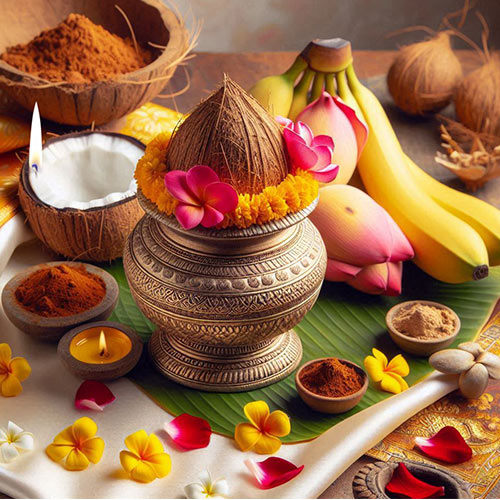
Gather all the necessary puja items, such as:
- A clean cloth or red cloth for the altar
- Fresh flowers
- Incense sticks
- A diya (lamp)
- Coconut, fruits, and sweets (such as ladoos)
- Water and a silver or brass vessel
- Prasad (offerings) to distribute later
- Establish the Idol or Picture of Sita Devi
Place an idol or picture of Sita Devi and Bhagwan Rama on the altar. You can also keep the images of King Janaka and Queen Sunaina if you wish to honor the entire family.
- Light the Lamp and Incense
Start the puja by lighting a lamp (diya) and incense sticks to create a sacred atmosphere. These symbolize the removal of darkness and the presence of divine light.
- Offer Water and Flowers
Offer water (aachman) to purify yourself before starting the rituals. Then, present fresh flowers to Sita Devi as an expression of reverence and devotion.
- Recite the Sita Ashtakshara Mantra
Chant the Sita Ashtakshara Mantra or other mantras dedicated to Sita Devi.
'Om Sita Ramaya Namah'
This mantra invokes the divine blessings of Sita Devi and Bhagwan Rama.
- Recite Sita Kalyanam or Ramayana Verses
Recite or listen to verses from the Ramayana that highlight the divine virtues of Sita. You can also read the Sita Kalyanam story, which celebrates the marriage of Sita and Rama, or chant Sita Stotra.
- Offer Fruits and Sweets
Offer fruits, sweets, and other prasad to the deities as a symbol of gratitude and devotion. These offerings should be placed in front of the idols or images with respect and care.
- Perform Aarti
After the recitations, perform an aarti (ritual of waving the lit lamp) around the idols of Sita Devi and Bhagwan Rama. Sing devotional songs or bhajans, invoking their divine presence.
- Distribute Prasad and Conclude the Puja
Finally, conclude the puja by distributing the prasad (offerings) among family members, friends, and neighbors as a way to share the divine blessings. Express gratitude and pray for the well-being of yourself, your loved ones, and the world.
By following these steps with devotion and purity of heart, you can honor Sita Devi and seek her blessings for peace, prosperity, and spiritual growth.
Sita Navami Puja Mantras
Mantras are an essential part of the Sita Navami Puja as they help to invoke divine blessings and create a spiritual connection with Sita Devi and Bhagwan Rama.
Here are some powerful mantras that can be recited during the puja:
Sita Ashtakshara Mantra
This is a simple and powerful mantra dedicated to Sita Devi:
'Om Sita Ramaya Namah'
Meaning: 'Salutations to Sita Devi and Bhagwan Rama.' It invokes blessings of peace, prosperity, and purity.
Sita Stotra
The Sita Stotra is a hymn that praises the virtues of Sita Devi and asks for her divine grace.
A portion of this stotra goes as:
'Tvam Sita Raghunathapriya, Ramya, Ramana Sundari, Lokaika Pujita, Patim, Prasanna, Sita, Bhavani.'
Translation: 'You are Sita, the beloved of Bhagwan Rama, the most beautiful and virtuous, revered by all and the consort of Bhagwan Rama.'
Sita Gayatri Mantra
The Sita Gayatri Mantra is a powerful mantra to seek the blessings of Sita Devi for peace and wisdom:
'Om Sita Devyai Vidmahe, Ramapriyai Dhimahi, Tanno Sita Prachodayat.'
Translation: 'We meditate on Sita Devi, who is the beloved of Bhagwan Rama, and seek her blessings for enlightenment and wisdom.'
Ram Sita Vandana Mantra
This mantra is a devotion to both Bhagwan Rama and Sita Devi:
'Jai Sita Ram, Jai Sita Ram, Jai Ram, Jai Sita Ram'
Translation: 'Hail Sita and Rama, Hail Sita and Rama, Hail Ram, Hail Sita and Rama.'
This chant is often repeated during prayers to invoke the divine presence of both deities.
Sita Kalyanam Mantra
This mantra can be recited to honor the marriage of Bhagwan Rama and Sita Devi:
'Sita Ram Kalyanam, Adivari Lakshman, Raghukula Nandhanam,
Sita Ram Kalyanam.'
Translation: 'The divine marriage of Sita and Rama, with the blessings of Bhagwan Lakshmana, the joy of the Raghu dynasty.'
Sita Raksha Mantra
This is a protective mantra that invokes Sita Devi’s blessings for safety and protection:
'Om Sita Devi Rakshakari, Prasanna Bhava, Vighna Vinashini, Patni Ramapriya,
Namah.'
Translation: 'Salutations to Sita Devi, the protector, who removes obstacles and is the beloved consort of Bhagwan Rama.'
Reciting these mantras with devotion and focus during Sita Navami Puja helps to deepen the connection with Sita Devi, invoking her divine blessings for peace, prosperity, and spiritual strength.
Sita Navami Vrat Vidhi (Fasting Procedure)
Sita Navami Vrat is a sacred fasting ritual observed by devotees to honor Sita Devi and seek her blessings for peace, prosperity, and devotion. The vrat is observed with devotion and purity, and it is a way to show respect for the virtues of Sita Devi, such as her strength, purity, and unwavering dedication to Bhagwan Rama.
Here's the procedure for observing the fast:
- The fast begins early in the morning on Sita Navami day. Devotees should wake up early, preferably before sunrise, and take a holy bath to cleanse themselves.
- After bathing, they should wear clean, simple clothes, usually in white or yellow, symbolizing purity. Cleanliness is essential for both the body and the surroundings. Ensure that the place where the puja will be conducted is also neat and tidy.
- Once clean and ready, devotees set up a small altar with the idols or pictures of Sita Devi and Bhagwan Rama. It is traditional to place flowers, incense sticks, a diya (lamp), and fruits or sweets as offerings. If possible, a red cloth or a special piece of cloth can be spread on the altar as a base for the deities. Light the diya and incense sticks to purify the surroundings.
- Devotees can begin the vrat by offering prayers to Sita Devi and Bhagwan Rama, seeking their blessings. Chanting mantras such as “Om Sita Ramaya Namah” or the Sita Ashtakshara mantra is encouraged. If a specific prayer or wish is in mind, devotees can silently pray for its fulfillment while meditating on the deities. It's also an ideal time to read or listen to verses from the Ramayana that narrate the virtues of Sita, especially her devotion and purity.
- During the fast, devotees refrain from eating any food or drinking water throughout the day. The vrat is kept strict, and one is expected to remain focused on the divine qualities of Sita Devi. However, in some traditions, a light meal consisting of fruits, nuts, or milk may be allowed, especially for those who are not accustomed to fasting. It is important to avoid consuming grains, salt, or cooked food.
- As the day progresses, devotees should maintain a calm and meditative state. They can engage in quiet prayers, sing bhajans, or chant mantras dedicated to Bhagwan Rama and Sita Devi. The focus of the vrat is on devotion and inner reflection, rather than on worldly distractions.
- In the evening, after sunset, the fast is concluded with an offering of prasad (blessed food). This prasad may include fruits, sweets, and other offerings placed in front of the deities during the puja.
- Before breaking the fast, devotees should offer a final prayer, expressing gratitude to Sita Devi and Bhagwan Rama for their blessings.
- The fast concludes with a small celebration, where prasad is shared with family members or friends. Many devotees also engage in charitable acts, such as donating food or helping those in need, as a way to reflect the selfless and compassionate qualities of Sita Devi.
By observing the Sita Navami Vrat with devotion, discipline, and reverence, devotees honor the life and virtues of Sita Devi and invite her divine blessings into their lives.
Sita Navami Vrat Katha (Traditional Fasting Story)
The Sita Navami Vrat Katha is a beautiful and powerful traditional fasting story that highlights the importance of devotion, purity, and the strength of Sita Devi. The story is shared during Sita Navami to inspire devotees and explain the significance of observing the fast.
Once upon a time, in the kingdom of Mithila, there was a king named Janaka and his queen Sunaina. They were a noble couple, but despite many years of marriage, they had no children. Deeply saddened by their childlessness, King Janaka prayed fervently to the Earth Goddess, asking for a child.
In response to his sincere prayers, the Earth Goddess appeared before King Janaka and blessed him with a divine child. The Earth Goddess then revealed that the child would be born from a furrow in the land, as she had been plowing the field. Soon after, a beautiful baby girl was found in the field, radiant and pure. King Janaka, overjoyed by the miracle, named the child Sita, meaning 'one who is found in the furrow.'
King Janaka and Queen Sunaina adopted the divine child as their own, and Sita grew up to be an incredibly virtuous, loving, and wise princess. She embodied purity, grace, and compassion, captivating all who came in contact with her. She became the pride of Mithila and was cherished by all.
As Sita matured into a beautiful young woman, King Janaka decided to host a grand Swayamvara (a ceremony where a princess chooses her husband from among many suitors). To find a suitable prince for his daughter, King Janaka set a challenge: the suitors had to string and break the divine bow of Bhagwan Shiva called Pinaka. The bow was so powerful that it could only be lifted by someone of exceptional strength and divine nature.
Many princes and kings tried their best but failed to even lift the bow. Finally, Bhagwan Rama, the son of King Dasharatha of Ayodhya, arrived at the ceremony. With divine grace and strength, Bhagwan Rama not only lifted the bow but also strung it, breaking it effortlessly. The entire kingdom was awestruck, and Sita, who had been waiting for the right prince, joyfully chose Bhagwan Rama as her husband. Their marriage was celebrated as a divine union, and Sita and Rama became the epitome of love and devotion.
After her marriage to Bhagwan Rama, Sita Devi faced many trials and tribulations. One of the most significant events was during the time of their exile in the forest, where Sita was abducted by the demon king Ravana. Despite being kept in captivity, Sita remained unwavering in her devotion to Bhagwan Rama. Ravana made several attempts to sway her, but Sita, with her firm faith in Bhagwan Rama, never wavered.
During her captivity, Sita is said to have prayed and meditated constantly, remembering Bhagwan Rama's virtues and awaiting his rescue. The trial of fire (Agni Pariksha), where Sita was tested to prove her chastity after her rescue from Ravana, is one of the most poignant moments in the Ramayana. However, Sita Devi's purity and devotion were never in question, and Bhagwan Rama accepted her with honor.
The Significance of Sita Navami Vrat
The Sita Navami Vrat (fast) is observed by devotees to invoke the blessings of Sita Devi. It is believed that those who observe this vrat with devotion and sincerity will be blessed with strength, peace, harmony in relationships, and prosperity. Sita Devi's life is a beacon of purity, loyalty, and strength in the face of adversity. By observing the fast, devotees seek to imbibe her divine qualities and attain spiritual growth.
The Sita Navami Vrat Katha teaches us that, like Sita Devi, one must remain devoted to their principles, irrespective of the challenges faced. It also shows that devotion, righteousness, and inner strength are more powerful than any external circumstance. It is a story of unwavering faith, purity, and devotion.
By observing the vrat, devotees honor the life and virtues of Sita Devi, who remains an eternal symbol of love, devotion, and strength. Those who follow the vrat with dedication are blessed with spiritual growth, peace, prosperity, and the strength to face life's challenges with grace, just as Sita Devi did.
Benefits of Sita Navami Festival
Mata Janki Jayanti (Sita Navami) is primarily observed by married women, who dedicate the day to worshiping Sita Devi, believed to be an incarnation of Lakshmi Mata, the goddess of wealth and prosperity.
- Observing a fast and praying to Sita Devi on this day is said to bring the combined blessings of Sita Devi and Goddess Lakshmi, granting peace, happiness, and spiritual abundance.
- Married women meticulously observe the Sita Navami Vrat, praying for the safety, long life, happiness, and well-being of their husbands. Those who faithfully perform the vrat are believed to have their wishes fulfilled and receive blessings for a prosperous marital life.
- Sita Navami is especially significant for women seeking the blessings of motherhood. It is believed that worshiping Sita Mata on this day can help overcome challenges in conceiving and childbirth, offering blessings for fertility and a safe childbirth.
- Mother Earth (Bhumi Devi), who is closely associated with Sita Devi, is also worshipped on this day. Devotees believe that by worshiping Sita Devi, they receive the blessings of Mother Earth, including prosperity, wealth, and abundance in life.
- Devotees who perform prayers and puja to both Bhagwan Rama and Sita Devi together on Sita Navami are said to receive blessings for marital bliss , ensuring a harmonious relationship filled with love, trust, and mutual respect, similar to the bond between Bhagwan Rama and Sita Devi.
- Following the Sita Jayanti rituals and fasting with devotion is believed to bestow virtues such as modesty, sacrifice, and spiritual growth . The fast encourages not only physical endurance but also the cultivation of purity and devotion.
- Observing Sita Navami is also said to bring the blessings of Bhagwan Rama, ensuring that devotees receive divine support for both marital happiness and personal growth . The day offers a chance to seek strength and resilience to face challenges, just as Sita Devi did throughout her life.
Sita Navami is a powerful day of worship, where married women and those about to marry can receive the blessings of an ideal marriage and the virtues of an ideal wife, just like Sita Devi.
Puja Utensils, Essentials
Rudra Centre brings an extensive collection of Puja Articles which caters to all that is required for daily and special Puja Vidhis. We offer variants of designs and sizes in each category. The list includes handcrafted Puja Mandirs, Puja Pedestals, offering Bowls, Panchpatra, intricately carved Puja Thalis, Abhishek Vessels, in different materials, Pure Silver/German Silver articles like Kalash, set of Shodash Upachara and Several other Puja Articles, which we deliver at your doorstep.
Visit the complete collection: https://www.rudraksha-ratna.com/p/puja-articles
Sundarkand at Sitaram das Temple
Sundarkand is the 4th Chapter of Ramcharitmanas, the great scripture devoted for telling the story of Bhagwan Ram. In Sunderkand, there is a beautiful narration of Bhakti of Bhagwan Hanuman towards Ram. This is the chapter that is dedicated to the ventures of Hanuman and talks about his victory over the evil, his miracles and wonders. Friendship of Ram and Sugreev takes place and Bhagwan Hunuman reaches Lanka in search of Sita Mata after flying over the sea and his deeds are beautifully narrated. He meets Sita Mata in Ashok Vatika and later burns Lanka, the kingdom of demon king Ravan who had abducted Sita earlier. He returns back and joyfully informs the well being of Sita Mata.
The path is done with a team of 5 pundits at Sitaram das temple who use musical instruments to sing and chant praises of Bhagwan Rama during the entire duration of the Paath. A Homa is done at the end of the paath.
Majestic Ram Parivaar Superfine Brass Idols Set
The 'Ram Parivaar Brass Idols Set' features intricately crafted brass idols depicting the divine family of Bhagwan Rama. This set typically includes idols of Bhagwan Rama, Sita Devi, Bhagwan Lakshmana, and Bhagwan Hanuman, portraying a harmonious and revered family ensemble.
Sita Devi Brass Idol (A Woman of Virtue)
Devi Sita, lies untouched in Her pristine beauty behind the Ten headed Ravana. Sita is one of the principal characters in The Ramayana, the great epic of India. Her entire life constitutes an example of idealism. Sita is a perfect example of loyalty and morality. Sita is regarded as the role model of wifely love and adherence to duty.
Sita Rama Engraved Tulsi Beads Bracelet
This Sita Rama Engraved Tulsi Beads Bracelet showcases delicate engravings of Sita and Rama on natural white Tulsi beads, strung in durable elastic thread, eliminating the need for clasps or closures. The beads are shaped round for a comfy fit, and the stretchable design makes wearing effortless.
Sita Rama Engraved Tulsi Beads Mala With Sitarama Pendant
Made from premium quality Tulsi and Red Sandalwood beads, this kantha mala has an elegant ‘Radhe Radhe’ pendant. This mala is designed with designer Tulsi beads, round and drum shape Tulsi beads astringed to create a beautiful piece. The pendant is carved with beautiful lotus design in a square shaped pendant.
Conclusion
Sita Navami, the celebration of the divine birth of Sita Devi, is a deeply significant and beautiful festival that holds a special place in the hearts of devotees. It is not just a day to honor a revered deity but a celebration of virtues that are timeless and universally admired—purity, devotion, sacrifice, and unwavering strength. Sita Devi’s life, filled with love and loyalty towards Bhagwan Rama, exemplifies the essence of a righteous and devoted heart. Through her trials and triumphs, she has become a symbol of resilience, grace, and moral strength.
As devotees observe this sacred day with fasting, prayers, and rituals, they seek not only the blessings of Sita Devi but also the divine grace of Mother Earth, Goddess Lakshmi, and Bhagwan Rama. The festival serves as a reminder of the eternal power of devotion and the importance of cultivating virtues like humility, sacrifice, and devotion in our lives.
The blessings of Sita Navami extend beyond spiritual peace. For married women, it offers prayers for the well-being and longevity of their husbands. For those seeking motherhood, it brings hope and divine intervention. Above all, it fosters unity and happiness in relationships, much like the beautiful bond between Bhagwan Rama and Sita Devi, inspiring devotees to live with love, respect, and harmony.
By observing Sita Navami, devotees connect with the profound teachings of Sita Devi, channeling her qualities into their own lives. The festival isn’t just a celebration of her birth, but a reflection on the lessons she imparts: to be steadfast in faith, to uphold righteousness, and to love unconditionally. It is a day to celebrate not only the divine presence of Sita Devi but also to reflect on her eternal influence in guiding us towards a life of virtue, love, and peace.
Sita Navami is much more than a festival; it is a celebration of love, devotion, and the eternal connection between the soul and the divine. By embracing the spirit of Sita, we open ourselves to a life filled with grace, blessings, and divine wisdom.
-in-Astrology.jpg)
.jpg)


Comments 0
Leave your thought here