

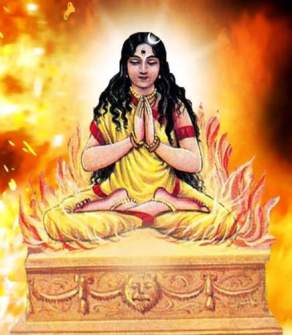
Goddess Sati, also known as Dakshayani, is the first consort of Lord Shiva and the earliest human embodiment of Adi Shakti. The eternal cosmic force of creation and destruction. Her story is one of fierce devotion, self-sacrifice, and divine power that continues to inspire spiritual seekers across time. As the daughter of King Daksha and Queen Prasuti, Sati was born from the boon of Adi Parashakti Herself, with the purpose of restoring balance and dharma in the cosmos. Her sacred union with Shiva and her ultimate self-immolation in the Daksha Yagna mark pivotal events in the evolution of Shaivism and Shaktism. More than a mythological figure, Sati symbolizes spiritual commitment, the sacredness of divine union, and the soul’s eternal journey toward liberation.
Who Is Goddess Sati?
Goddess Sati, also known as Dakshayani, is the first earthly incarnation of Adi Shakti, the eternal Divine Feminine. As the consort of Lord Shiva, she plays a pivotal role in shaping the cosmic balance between ascetic detachment and divine engagement with the material world. Her story is one of deep devotion, fierce resolve, and the ultimate sacrifice that gave rise to sacred Shakti Peethas across India.
Sati’s divine identity is closely tied to her spiritual role and symbolic presence in the Hindu pantheon:
Pantheon Identity:
First incarnation of Adi Shakti, the divine feminine energy
Divine Consort:
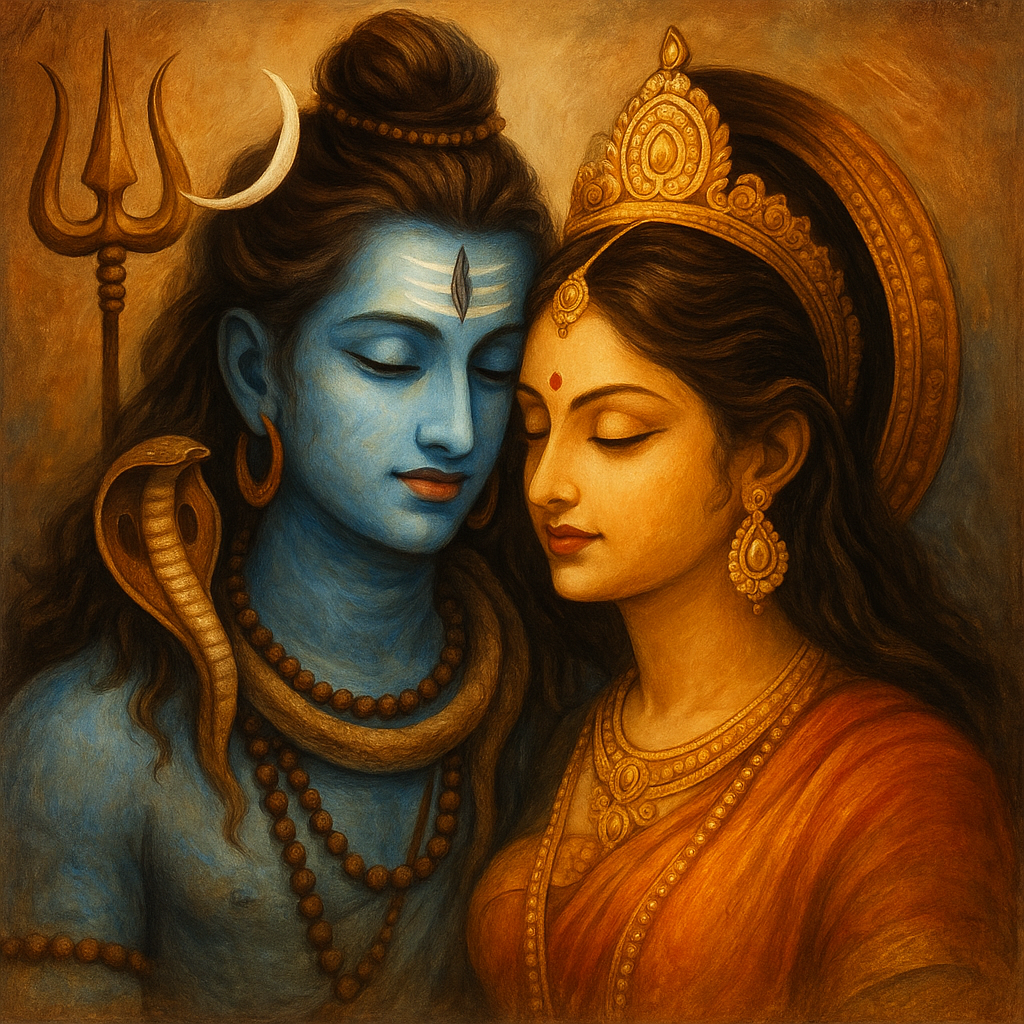
Wife of Lord Shiva, symbolizing the union of consciousness (Shiva) and energy (Shakti)
Family Lineage:
Daughter of King Daksha (son of Lord Brahma) and Queen Prasuti
Associated Symbols:
Lotus flower, trident (trishul), and sacred fire
Vehicle (Vahana):
Often associated with Nandi the bull when depicted alongside Lord Shiva
Key Role:
Her self-immolation at Daksha Yagna led to the manifestation of 51 sacred Shakti Peethas, symbolizing the divine feminine’s imprints on Earth
Sati’s legacy is not only spiritual but deeply symbolic of the eternal truth that ego must burn for dharma to rise.
Spiritual and Religious Significance of Goddess Sati
Goddess Sati is one of the earliest manifestations of the Divine Feminine in Hindu tradition, representing purity, devotion, and righteous defiance. Her story is more than a myth. It is a philosophical reflection of how truth, love, and dharma must prevail over ego, disrespect, and pride.
Philosophical and Spiritual Significance
- Sati symbolizes absolute devotion (pativrata dharma) and the soul’s longing to unite with the divine, transcending worldly judgments.
- Her self-immolation is a spiritual metaphor, when dharma is insulted, divine energy withdraws, leaving chaos in its absence.
- She embodies the cyclical nature of creation, where destruction (her sacrifice) becomes the seed for transformation (her rebirth as Parvati).
- The Shakti Peethas formed from her dismembered body signify the spread of divine energy across the Earth, each spot a centre of spiritual power.
Importance in Specific Regions or Sects
- Sati is revered deeply in Shaivism and Shakta traditions, especially in Eastern India and the Himalayan regions.
- Major Shakti Peethas, such as Kamakshi (Kanchipuram), Maya Devi (Haridwar), and Katyayani (Vrindavan), are places of continuous worship.
- In Nepal, Guhyeshwari Temple in Kathmandu is one of the most sacred Shakti Peethas dedicated to Sati.
Festivals Dedicated to the Deity
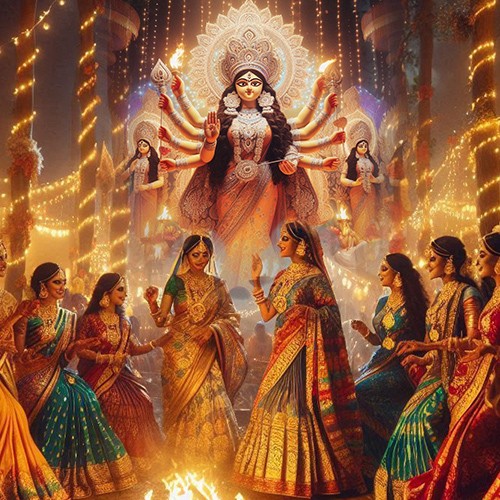
- Navratri: On the first day of Navratri, devotees worship Shailaputri, an incarnation of Sati born as Parvati, symbolizing her divine return.
- Kottiyoor Vysakha Mahotsavam (Kerala): A 27-day ritual believed to be the site of Sati’s self-immolation.
- Mahashivratri: Celebrated in honour of Shiva, also commemorates the eternal bond between Shiva and Shakti, first established with Sati.
Goddess Sati's significance lies in how her sacrifice gave birth to sacred geography and divine remembrance. She is not just a story but a force that anchors the feminine power in Hindu consciousness.
Iconography and Symbolism of Goddess Sati
The imagery of Goddess Sati reflects both her serene divinity and her fierce inner power. Though few temples are solely dedicated to her due to her early self-immolation, the iconography that exists, especially within Shakti Peethas and tantric traditions carries profound spiritual meaning.
Physical Appearance and Symbolic Elements
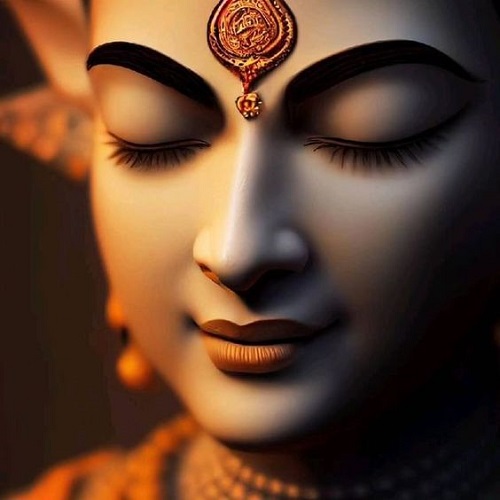
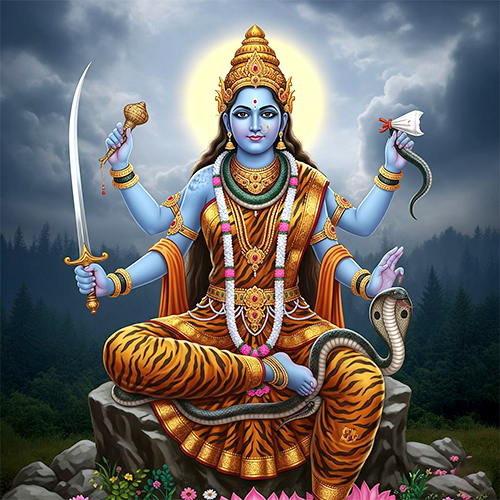
- Sati is often depicted as youthful and radiant, with a serene face symbolizing inner strength and unwavering devotion.
- Her countenance combines grace and fire, representing her ability to embody both love and spiritual defiance.
- She is shown with two or four arms, holding a lotus (purity), a trident (power), and a vessel of sacred fire (symbol of her sacrifice).
Art, Sculptures, and Temple Depictions
- Sati is commonly represented in temples as part of Shiva-Parvati depictions, particularly in those with a Shaivite focus.
- In some tantric shrines and murals, she appears in a meditative pose or engulfed in divine flames, expressing her transformative power.
- Her presence is also honoured through symbolic yantras and Shakti Peetha shrines, where her energy is invoked through mantras and mudras.
Color Symbolism, Posture, and Mudras
The dominant colours associated with Sati are:
- Red – symbolic of Shakti, courage, and self-offering.
- White – purity of heart and soul.
- Gold – spiritual brilliance and divinity.
- Her posture is often either standing in a calm, assertive stance or seated in a meditative yogic posture, reflecting balance between worldly and ascetic energies.
- Mudras such as Abhaya (fearlessness) and Varada (blessing) are sometimes shown to convey protection and grace.
The iconography of Sati is not widespread in classical art, but where it appears, it serves as a spiritual reminder of the soul’s power to transcend insult and injustice with dignity, sacrifice, and unshakable devotion.
Birth and Origin of Goddess Sati
Goddess Sati, also known as Dakshayani, is one of the earliest manifestations of Adi Parashakti, the primordial cosmic energy. Her birth was not ordinary but divinely orchestrated to uphold dharma and establish the sacred union with Lord Shiva.
Mythological Origins and Avatar Story
According to the Puranic scriptures, King Daksha and Queen Prasuti desired a daughter who would be a divine blessing. On the advice of Lord Brahma, they undertook intense penance to please Adi Parashakti, the Supreme Goddess. Moved by their unwavering devotion, the Devi granted their wish but gave a condition: if ever disrespected or dishonoured, she would withdraw her incarnation immediately.
Thus, Sati was born as a human embodiment of Adi Parashakti, bearing immense beauty, strength, and spiritual resolve. From childhood, she was drawn toward Lord Shiva and eventually undertook severe austerities to win his love, leading to their sacred marriage.
Connections to Cosmic Events and Scriptures
The Shiva Purana, Linga Purana, and Bhagavata Purana chronicle Sati’s story as a pivotal cosmic event that set the stage for the origin of Shakti Peethas and the eventual reincarnation of Sati as Parvati.
Sati’s self-immolation during Daksha Yagna marked a turning point in spiritual history, it revealed the consequences of ego and the power of divine will.
Her sacrifice initiated a cosmic disruption, leading Lord Shiva to perform the Tandava of destruction, a moment where grief and cosmic balance intertwined.
The fragmentation of Sati’s body by Lord Vishnu’s Sudarshan Chakra gave rise to 51 Shakti Peethas, sacred spots of divine feminine energy spread across the Indian subcontinent.
Goddess Sati’s origin story is deeply interwoven with the principles of divine love, sacrifice, ego transcendence, and the cyclical nature of birth, death, and rebirth. She is not just a historical figure of devotion, but a cosmic force whose presence continues to bless seekers of truth and dharma.
Legends and Stories of Goddess Sati
The story of Goddess Sati is a profound saga of love, sacrifice, and cosmic transformation. While her birth and self-immolation are central episodes, several lesser-known but spiritually rich legends further illuminate her divine role.
Popular Mythological Tales
The Mahavidya Manifestation:
When Lord Shiva tried to dissuade Sati from attending her father Daksha’s yagna, she invoked her supreme powers and manifested the ten Mahavidyas, ten fierce and divine goddesses, surrounding Shiva from all ten directions. This vision of her ultimate power convinced Shiva to allow her to go. This tale reveals that Sati was not a mere consort but the Supreme Shakti in full awareness of her divinity.
Sati’s Watchfulness in Kailash:
Some Puranic stories describe Sati as being the one who maintained balance in Kailash. Her presence softened Shiva’s ascetic nature and created harmony in his otherwise austere realm. Her departure disturbed this balance, underscoring how the divine feminine complements and completes the divine masculine.
Role in Epics and Puranic Texts
Sati is briefly mentioned in the Mahabharata and various Puranas as the goddess whose sacrifice marked a new cosmic order. Her tale is referenced as a reminder of the destructive nature of ego (represented by Daksha) and the protective rage of divinity (Shiva as Bhairava).
In Tantric scriptures, the dissolution of Sati's body into 51 parts is symbolic of the dispersion of Shakti tattva (divine feminine principle) throughout the cosmos, laying the foundation for sacred geography in the form of Shakti Peethas.
Moral and Spiritual Lessons
Honor and Dharma:
- Sati’s story teaches that true dharma must be upheld even at great personal cost. Her refusal to tolerate insult against her husband, not out of pride but devotion to truth, is a lesson in spiritual integrity.
Detachment and Purposeful Death:
- Her conscious self-immolation is not an act of despair but of divine will. It signifies that the soul is beyond the body, and that sacrifice becomes sacred when done with awareness.
The Cycle of Renewal:
- Through her rebirth as Parvati, the story illustrates that divine love never ends, it transforms. The soul may leave one form but returns to fulfill its purpose.
- These legends reaffirm that Goddess Sati is not just a deity of the past, but a timeless force reminding devotees to rise above ego, remain steadfast in devotion, and trust in the cycles of divine justice.
Mantras Dedicated to Goddess Sati
Invoking Goddess Sati through sacred mantras aligns the devotee with her divine energy, marked by unwavering devotion, inner strength, and spiritual purity. These mantras are not only acts of veneration but also tools of transformation, helping the seeker cultivate detachment, clarity, and steadfastness on the spiritual path.
Key Mantras and Their Meanings
ॐ ऐं ह्रीं क्लीं चामुण्डायै विच्चे॥
Om Aim Hreem Kleem Chamundayai Vichche
This powerful mantra invokes the fierce and protective aspect of the Divine Mother, often associated with Sati’s Mahavidya forms.
Meaning:
Salutations to the Supreme Goddess who embodies wisdom (Aim), strength (Hreem), and transformation (Kleem).
ॐ नमः शिवायै सत्यम्भायै नमः॥
Om Namah Shivayai Satyambhayai Namah
A direct invocation to Sati in her truth-bearing form (Satyambha).
Meaning:
I bow to the consort of Shiva, the embodiment of divine truth.
ॐ उमायै नमः॥
Om Umayai Namah
A simple yet profound mantra honouring Sati in her Vedic and Upanishadic identity as Uma or Haimavati.
Meaning:
Salutations to Uma, the one who guides the seeker beyond ignorance.
Benefits of Chanting
- Emotional Strength: Regular recitation fosters inner resilience, especially during phases of relationship strain, emotional loss, or disillusionment.
- Spiritual Devotion: Deepens one’s bond with the Divine, making the heart receptive to intuitive guidance and higher love.
- Ego Dissolution: As Sati sacrificed her body to uphold truth and dharma, chanting her mantras helps dissolve false identity, pride, and attachment.
- Marital Harmony: Invoking Sati is highly beneficial for couples seeking deeper understanding, mutual respect, and spiritual bonding.
- Purification and Grace: These mantras cleanse the mind and subtle body, inviting the grace of Adi Shakti for a more sattvic and dharmic life.
Whether chanted during puja, meditation, or quiet introspection, these mantras connect you with the undying energy of Sati, the eternal witness of love, sacrifice, and cosmic justice.
How to Please Goddess Sati
Pleasing Goddess Sati involves sincerity, simplicity, and reverence, more than elaborate rituals. As a deity who represents loyalty, inner strength, and self-sacrifice, she responds to heartfelt devotion and dharmic intent.
Recommended Offerings and Worship Practices
- Offer Red Hibiscus or Lotus: These flowers symbolize purity and strength, two core aspects of Sati’s nature.
- Light a Ghee Lamp: A single flame represents the eternal soul and one-pointed devotion, best offered at dawn or dusk.
- Recite Her Mantras Silently: Instead of loud chants, focus on inner repetition (japa), especially during Brahma Muhurta (around 4 AM).
- Meditate on Shakti Peethas: Visualizing the sacred places where her energy resides enhances your spiritual connection.
Dos and Don’ts
Do’s:
- Approach her with a truthful, humble heart.
- Observe vrata (vows) for self-discipline, especially on Mondays or Navratri days.
- Maintain cleanliness of space and mind before worship.
Don’ts:
- Avoid egoistic or transactional prayers.
- Do not indulge in harsh speech or break promises, as these violate the dharmic essence she upholds.
- Refrain from meat or alcohol on days dedicated to her.
Best Days and Times for Worship
- Navratri (especially the first day honouring Shailaputri): Most auspicious period.
- Mondays: Symbolically linked to Soma and emotional purity, ideal for Sati worship.
- Chaturdashi Tithi: Connected to divine feminine energy, suitable for mantra sadhana or homa.
Worshipping Sati is less about grandeur and more about authenticity. A quiet offering made with a devoted heart pleases her more than a grand ritual devoid of feeling.
Puja Vidhi at Home
Worshipping Goddess Sati at home is a deeply personal and transformative act. Here’s a simple guide to performing her puja with devotion and clarity.
Step-by-Step Home or Festival Puja Guide
-
Purify the Space
Clean the area and sprinkle Ganga jal. Place a red cloth on the altar and set up an image or idol of Goddess Sati or Shailaputri. -
Invoke the Deity
Light a ghee lamp and incense. Offer akshata (unbroken rice) and flowers while chanting:
“Om Aim Hreem Kleem Chamundayai Vicche” to invoke her Shakti aspect. -
Offer Panchamrit or Simple Naivedya
If Panchamrit is prepared (milk, curd, honey, ghee, sugar), offer a spoonful. Otherwise, fruits, dry coconut, or jaggery are sufficient. -
Recite Mantras and Chalisa
Chant the specific mantra given in the previous section. Reciting Durga Chalisa or Shakti Peeth Stotra is highly recommended. -
Perform Aarti
Conclude the puja with Durga Aarti. Rotate the diya in a clockwise motion while mentally offering your devotion and prayers. -
Offer Gratitude and Silent Prayer
Bow in gratitude and sit in silent meditation for a few minutes, focusing on her inner presence.
Chanting and Aarti Process
Use the mantra provided in the “Mantras Dedicated to the Deity” section. Aarti can be done using Durga Aarti or “Jai Ambe Gauri” depending on the devotee’s tradition. End with three claps and a silent prayer.
Transformative Benefits of Worshipping Goddess Sati
Worship of Goddess Sati is not merely a devotional act, it is a soul-awakening journey that connects the seeker with the primal Shakti, the cosmic feminine force that governs birth, sacrifice, and transcendence.
Spiritual Awakening and Inner Purification
Goddess Sati embodies tapasya (austerity) and tyaga (self-offering). Her worship awakens the inner fire of discipline, courage, and dharmic conviction. Devotees experience a subtle purification of desires and attachments, enabling deeper connection with the divine.
Freedom from Ego and Emotional Healing
Sati’s act of self-immolation symbolizes the burning of ego and pride. Meditating on her story helps dissolve emotional wounds caused by rejection, humiliation, or strained family ties. Her worship brings emotional resilience and inner strength.
Restoration of Marital Harmony and Devotion
As the ideal of loyalty and divine love, worshipping Sati grants harmony in married life, mends broken relationships, and attracts a life partner aligned with one’s spiritual path.
Protection of Dharma and Righteousness
Invoking Sati invokes the power that protects righteousness. Her blessings empower the devotee to stand for truth and live a life guided by dharma, even in the face of adversity.
Blessings of the Shakti Peethas
Every worship of Sati aligns the soul with the sacred energy of the 51 Shakti Peethas across the Indian subcontinent. Her grace purifies not only the body and mind, but the space around, establishing divine presence in one’s life.
Worshipping Goddess Sati leads to a profound inner shift, from sorrow to strength, from attachment to liberation, from individuality to union with the eternal.
Temples Dedicated to Goddess Sati
Worship of Goddess Sati is intrinsically linked to the sacred geography of India, particularly through the Shakti Peethas, powerful pilgrimage sites where parts of Sati’s body are believed to have fallen. These temples are not just places of worship but living embodiments of divine feminine energy and spiritual transformation.
1. Kamakhya Temple, Assam
Significance: Considered one of the most powerful Shakti Peethas, where Sati's yoni (womb) is believed to have fallen.
Highlights: No idol of the Goddess, only a yoni-shaped stone kept moist naturally. The temple celebrates the Ambubachi Mela, a unique festival of feminine fertility.
2. Guhyeshwari Temple, Kathmandu (Nepal)
Significance: Said to be the site where Sati's hips or knees fell.
Highlights: An ancient tantric temple near Pashupatinath, it’s deeply revered by Nepali Hindus and tantric practitioners.
3. Hinglaj Mata Temple, Balochistan (Pakistan)
Significance: Believed to be where Sati’s head fell.
Highlights: Located in a remote mountain cave, it's one of the most sacred sites for Hindu pilgrims in Pakistan.
4. Vishalakshi Temple, Varanasi
Significance: Associated with Sati’s earring.
Highlights: A revered site among Shakti Peethas, this temple stands close to the Manikarnika Ghat, connecting Goddess worship with moksha (liberation).
5. Daksheswar Mahadev Temple, Haridwar
Significance: Located at the site of Daksha Yagna where Sati self-immolated.
Highlights: This temple is an architectural tribute to the story of Goddess Sati and is a major pilgrimage site during Maha Shivratri and Navratri.
6. Chandika Sthan, Munger (Bihar)
Significance: Another Shakti Peetha where Sati’s left eye is said to have fallen.
Highlights: Highly visited during Navratri, this temple is known for granting boons and blessings related to vision, insight, and clarity.
These temples are spiritually charged vortexes that preserve the story of Sati’s sacrifice and her eternal presence. Pilgrimage to these shrines brings blessings of healing, strength, and divine grace, reaffirming the devotee’s bond with the primal source of Shakti.
Presence in Other Traditions
While Goddess Sati is deeply rooted in Hindu Shaiva-Shakta traditions, the essence of her story and attributes finds resonance in other cultures and spiritual systems that revere the divine feminine.
1. Influence in Buddhism
In Tantric Buddhism (Vajrayana), especially in Nepal and Tibet, Goddess-like figures such as Tara embody compassion and shakti-like power. While not a direct parallel to Sati, Tara’s fierce and protective forms mirror the strength and devotion seen in Sati's sacrifice.
Bhairavi and Vajrayogini, fierce goddesses in Buddhist tantra, bear symbolic resemblance to aspects of Sati as manifestations of transformative spiritual power.
2. Influence in Jainism
Jainism, being a non-theistic tradition, does not worship deities in the same manner. However, female protectors (Yakshinis) in Jain temples reflect the cultural echo of divine feminine reverence. Sati's virtues, devotion, asceticism, and dharma are deeply admired in Jain ethical thought, even if not mythologically referenced.
3. Southeast Asian Cultures
In regions like Bali, Indonesia, and Thailand, where Hindu influence once flourished, Shakti and Shiva iconography persists. The worship of goddesses such as Durga, Parvati, and Kali can be traced back to the cultural memory of Sati's legends.
Rituals invoking the cosmic feminine in these cultures draw from ancient Indian narratives, including stories from the Devi Mahatmya.
4. Comparative Mythology
In Greek mythology, Persephone shares thematic parallels with Sati in terms of descent, rebirth, and transformation after a traumatic loss.
In Egyptian mythology, Isis and her devotion to Osiris evoke a similar image of divine feminine loyalty, grief, and mystical strength, mirroring Sati’s unwavering love for Shiva.
Across traditions, Sati's archetype as a devoted consort, fierce goddess, and self-sacrificing embodiment of dharma continues to echo in spiritual narratives that honour the sacred feminine.
-in-Astrology.jpg)
.jpg)


Comments 0
Leave your thought here