

Hinduism is a profound spiritual tradition that recognizes the divine in many forms, each deity representing a cosmic force, elemental power, or inner principle of life. Far from being polytheistic in the Western sense, the pantheon of Hindu gods and goddesses symbolizes the diverse expressions of the one eternal truth, Brahman.
Among the 33 Koti Devatas (meaning 33 types of divine beings, not 33 crores), we find the Adityas, Rudras, Vasus, Prajapati, and Indra, alongside principal deities like Shiva, Parvati, Lakshmi, and Ganesha. Each has their own stories, symbolism, energies, and worship methods, yet all guide the devotee toward self-realization and dharmic living.
Let us begin with the most revered among them:
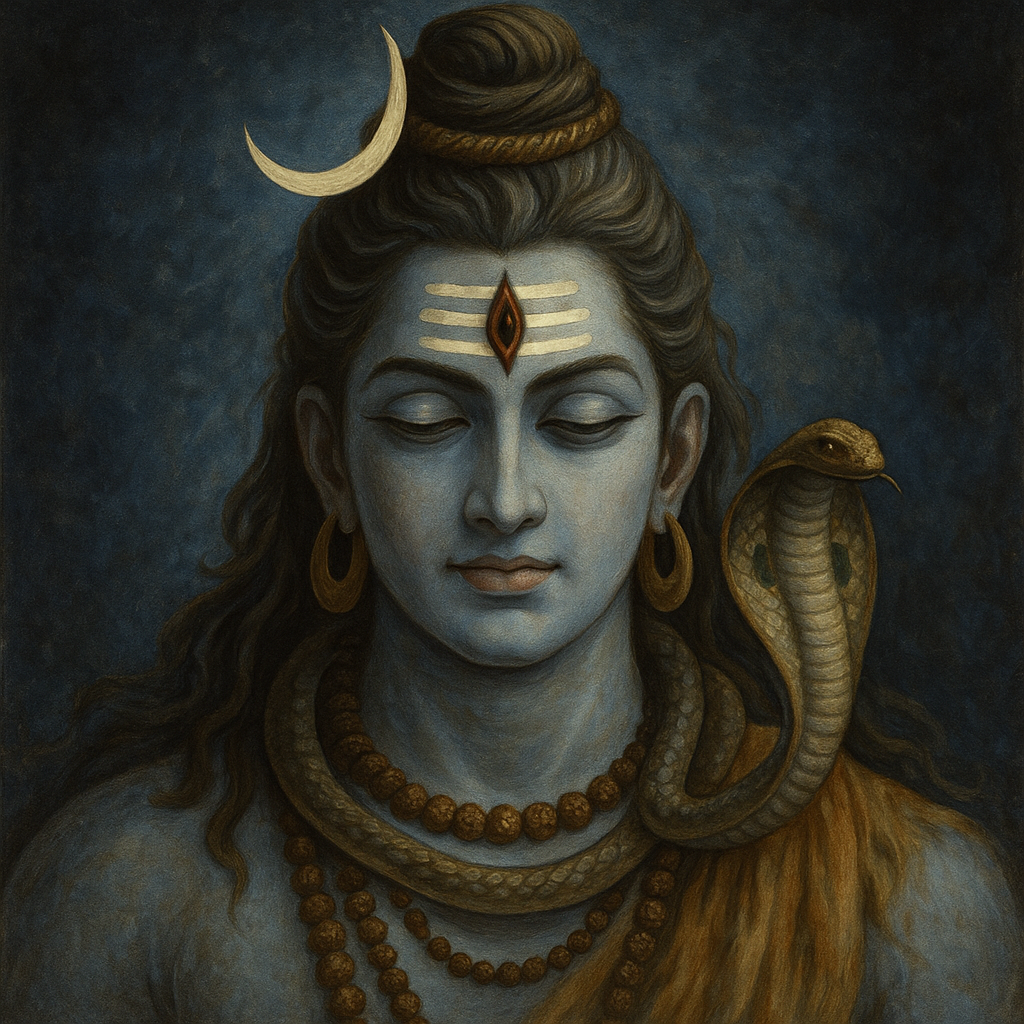
Lord Shiva – The Supreme Consciousness
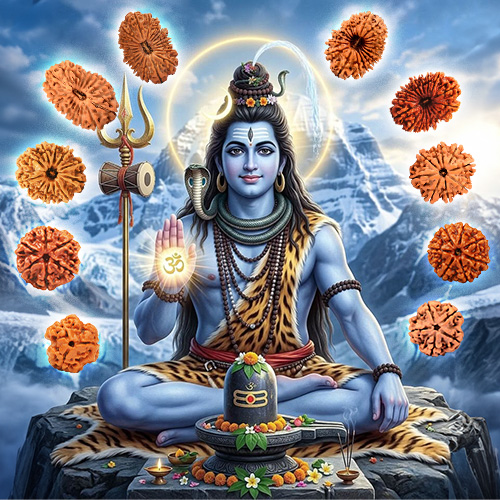
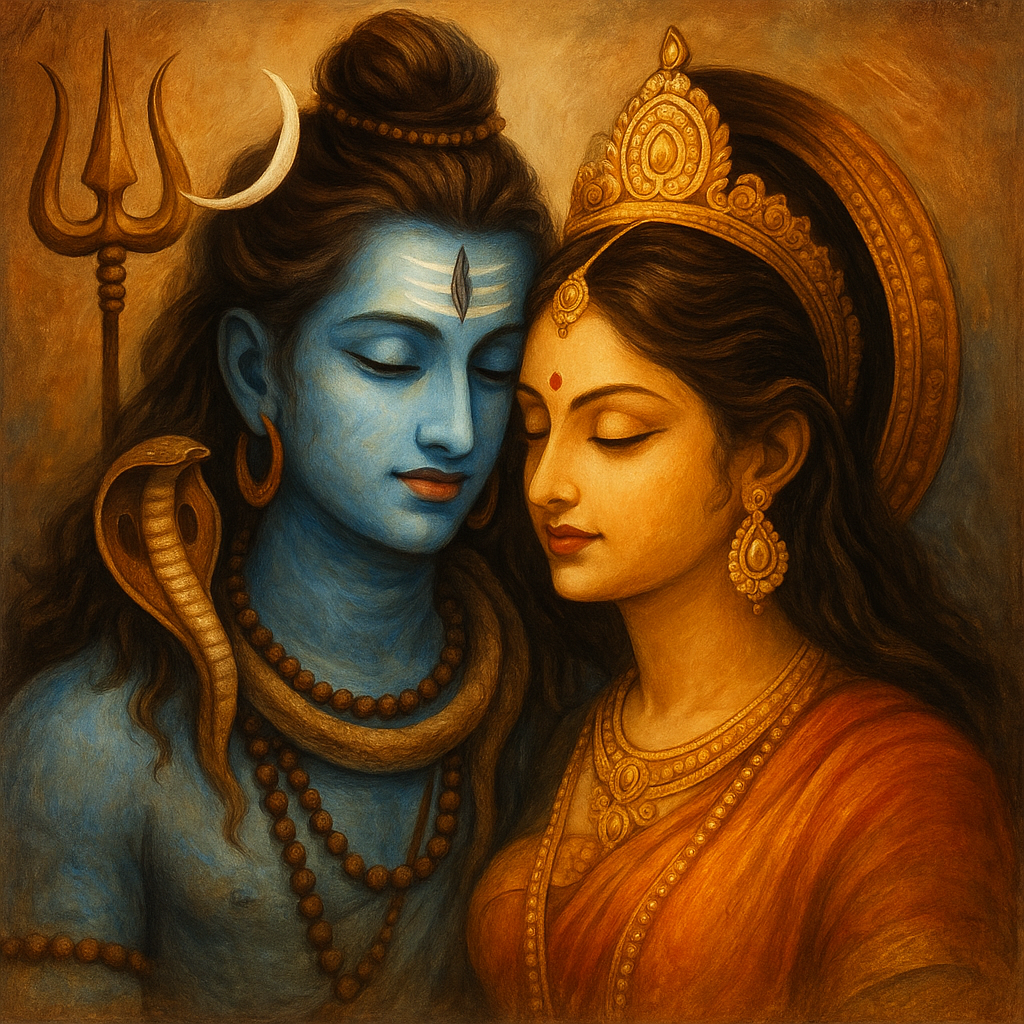
In Sanatana Dharma, Lord Shiva is not just a deity. He is the embodiment of pure consciousness. Known by many names, Mahadev, Bholenath, Shankar, Neelkanth. He is both the destroyer of illusion and the one who grants liberation (moksha). He stands at the centre of the cosmic process: creation, preservation, and destruction, yet untouched by any of it.
Shiva’s appearance is deeply symbolic. His third eye represents spiritual wisdom; the crescent moon signifies time and rhythm; the Ganga flowing from His locks symbolizes divine grace and knowledge descending to the earth. His serpent symbolizes awakened energy (Kundalini), and the tiger skin beneath Him represents mastery over desire.
Unlike anthropomorphic forms, Shiva is primarily worshipped as the Lingam. A symbol of infinite potential and the formless divine. Spiritually, Shiva teaches the path of detachment, inner stillness, and surrender. As the Adi Yogi, He is also the first teacher of yoga, tantra, and the mysteries of the cosmos.
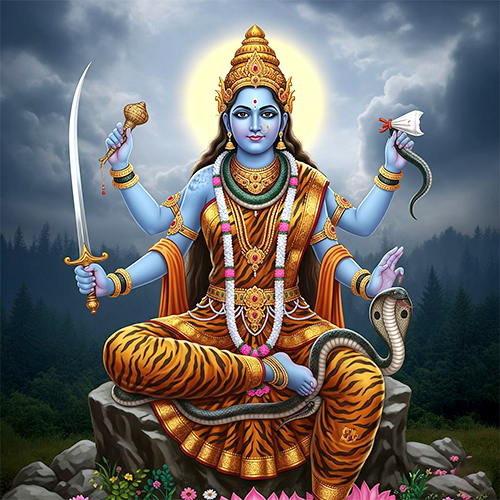
Goddess Parvati – The Divine Mother and Primordial Shakti
Parvati, the consort of Lord Shiva, is not just a goddess, she is Adi Parashakti, the eternal feminine force from which all creation springs forth. In the cosmic balance, if Shiva is the silent consciousness, Parvati is the dynamic energy that activates, sustains, and transforms life. She is the Universal Mother, both nurturing and fierce, guiding the soul from ignorance to illumination.
Born as the daughter of Himavat, the lord of the Himalayas, Parvati is the reincarnation of Sati, the first wife of Shiva. Her intense tapas (austerities) and unwavering devotion stirred even the meditative stillness of Shiva, leading to their divine union. Their marriage symbolizes the reunion of Shakti (energy) and Shiva (consciousness)—the union that gives rise to all manifestation.
Parvati embodies all aspects of the feminine divine:
- As Gauri, she is gentle, serene, and auspicious.
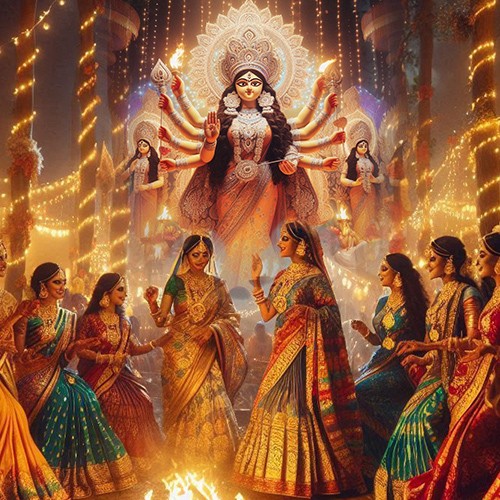
- As Durga, she rides a lion, destroying evil and restoring dharma.
- As Kali, she reveals the power that annihilates ego and liberates the soul.
She is also the mother of Lord Ganesha and Lord Kartikeya, representing wisdom and valour respectively. Spiritually, Goddess Parvati teaches the seeker the value of devotion (bhakti), discipline, inner strength, and the power of divine love.
Worship of Parvati is done with flowers, red vermilion, and sincere prayer. She is especially revered during Navratri, where her nine forms (Navadurga) are worshipped as protectors and liberators of the soul.
The 12 Adityas – Radiant Forms of the Solar Divinity
The Adityas are twelve manifestations of Surya Deva, the Sun God, representing the passage of time and the divine light that governs cosmic order. Each Aditya presides over a month in the Vedic calendar, and together, they sustain life, uphold rita (cosmic law), and inspire inner brilliance in all beings.
Spiritual Significance
In the Vedas, the Adityas are considered guardians of truth, cosmic order, and dharma. They are born of Aditi, the mother of gods, hence the name Aditya. Symbolically, they represent twelve rays of the divine sun, each with a unique spiritual frequency that nourishes and disciplines the universe across time.
The Twelve Adityas and Their Cosmic Qualities
Varuna – The Aditya of cosmic law and moral order, Varuna governs water and truth. He teaches us self-restraint and inner purity.
Mitra – The Aditya of friendship and harmony, Mitra governs cordiality, mutual respect, and sacred bonds among beings.
Aryaman – The upholder of social customs and ancestral dharma, Aryaman is linked to rites, marriage, and the continuity of civilization.
Bhaga – The divine dispenser of prosperity and fortune, Bhaga governs the just distribution of wealth and happiness.
Daksha – Symbolizing ritual skill and intelligence, Daksha brings creative order and sharp mental faculties.
Amsa – Associated with divine sharing, Amsa presides over the portioning of offerings and karmic returns.
Tvashta – The celestial craftsman, Tvashta governs creation, form, and artistic inspiration. He crafts divine weapons and cosmic bodies.
Pushan – The nourisher and guide, Pushan governs journeys, livestock, and safe passage. He is the protector of travel lers and seekers.
Vivasvan – The giver of light and knowledge, Vivasvan is the solar aspect known for imparting wisdom, especially the sacred teachings to Manu.
Savitr – The inspirer of the Gayatri Mantra, Savitr is the divine impeller of consciousness toward higher realms. He governs dawn and inspiration.
Indra – Though primarily a separate deity, as an Aditya, Indra embodies strength, leadership, and the conquering of inner enemies.
Vishnu – As an Aditya, Vishnu represents preservation and cosmic balance, infusing the world with divine harmony and sustaining truth.
Deeper Insight
The twelve Adityas align not just with the sun’s movement but also with the twelve months and signs of the zodiac. Thus, they influence both external nature and internal transformation, teaching us to evolve through time with discipline, light, and balance.
They are invoked in Surya Namaskar, the Aditya Hridayam Stotra, and in solar yajnas for health, clarity, and divine insight.
The Eight Vasus – Embodiments of the Elements and Universal Forces
The Vasus are eight divine beings who personify elemental energies that uphold the fabric of the cosmos. They are not just celestial deities but eternal tattvas, principles that govern existence, matter, and subtle life forces. Born of Aditi and Kashyapa Rishi, the Vasus are mentioned in the Rig Veda and revered in various scriptures as manifestations of divine presence in nature.
Spiritual Significance
The name “Vasu” means “one who dwells”, they are the cosmic essences that dwell in all creation, within matter and consciousness. Worship of the Vasus is an acknowledgment of the sacredness of the physical and subtle universe. They also serve as attendants of Indra and Vishnu, representing the divine order in action.
The Eight Vasus and Their Elemental Forces
Anala (Fire) – Symbol of Tejas (radiance) and transformation. Anala is the fire that purifies, digests, and sacrifices. He reminds us of the inner Agni, our will and awareness.
Anila (Wind/Air) – The breath of life, Prana itself. Anila governs motion, expansion, and the subtle winds that animate both the body and cosmos.
Apas (Water) – The Vasu of flow, emotion, and nourishment. Apas sanctifies, heals, and symbolizes the sacredness of emotional and spiritual fluidity.
Prithvi (Earth) – The foundation and mother of all. Prithvi offers stability, endurance, and the spirit of service and containment.
Dyau (Sky) – The infinite vault of consciousness. Dyau is the divine ether that holds space for all manifestation and symbolizes higher realms.
Antariksha (Space/Mid-Sky) – The bridge between heavens and earth. He represents the psychic and astral planes, and the invisible forces between matter and spirit.
Soma (Moon/Elixir) – The nectar of bliss, Soma governs inspiration, calmness, and divine ecstasy. He is the subtle delight in spiritual experiences.
Dhruva (Pole Star) – Symbol of constancy and dharma, Dhruva is the fixed point in the cosmic dance. He reminds us of the soul’s unshaken truth amidst impermanence.
The Eleven Rudras – Manifestations of Life Force and Dissolution
The Rudras are not merely fierce forms of Shiva but cosmic principles that govern vital energy, transformation, and dissolution. Their name originates from the root 'Rud,' meaning to cry or to cause to weep, indicating both intensity and purification. Spiritually, they are the elevenfold expressions of Rudra tattva, governing prana (life-breath) and its subtle movements within all beings.
These Rudras are mentioned across the Vedas, Puranas, and the Mahabharata, where they are seen as extensions of Lord Shiva, carrying out the work of dissolving ignorance, ego, and attachments.
Spiritual Significance
In the Brhadaranyaka Upanishad, the Rudras are associated with the ten vital breaths (pranas) in the body and the eleventh as the Atman (soul). When these life forces depart at death, we experience grief, hence Rudras are also the cosmic agents of life's departure and soul's release. They guide the journey beyond the body, reminding us that true life lies in realizing the eternal self beyond the temporary.
The Eleven Rudras and Their Symbolism
Prana – The central life-force governing inhalation, it energizes and animates all physiological and subtle functions.
Apana – The downward-moving energy governing elimination and grounding, responsible for physical and emotional release.
Vyana – The force that circulates energy throughout the body and aura, enabling unity between parts and whole.
Samana – The balancing prana, working in the digestive fire and responsible for assimilation, of both food and experience.
Udana – The upward-moving prana governing expression, growth, and spiritual elevation. It carries the soul at death.
Naga – Manifests as involuntary functions like burping and sneezing but also represents sudden impulses and Kundalini stirrings.
Kurma – Governs blinking and subtle reflexes; metaphorically, it represents alertness and withdrawal of senses like the tortoise.
Krikala – Controls actions like coughing, and symbolically, the rejection of inner toxins or negative samskaras.
Devadatta – Manifests as yawning; it is the Rudra of rest, pause, and absorption of pranic energy during fatigue.
Dhananjaya – Remains in the body even after death for a short time, symbolizing the lingering attachments and subtle karmas.
Atman (Soul) – The supreme Rudra within. It is beyond prana yet pervades all. The Atman is the eternal, unchanging witness, pure Shiva within.
Indra : Title of Celestial Kingship Across Cosmic Cycles
In Sanatana Dharma, Indra is not merely a singular god, but a cosmic post—a divine kingship bestowed upon a being of great merit, tapasya, and past karmas. This role is akin to a celestial administrator, entrusted with the governance of Svarga Loka (the heavenly realm), the control of weather, and the balance of divine forces.
Indra as a Role in the Manvantaras
Time in Hindu cosmology unfolds in vast cycles. Each cycle is called a Manvantara, ruled by a Manu. The progenitor of humankind. There are 14 Manvantaras, and each Manvantara has its own Indra. These Indras are not the same entity but different souls who earn the position through extraordinary punya (merit) and yogic discipline.
The current Indra of the seventh Manvantara is Purandara.
In previous Manvantaras, other souls like Rochana, Vibhu, and Shibi have occupied this position.
This highlights that Indra is a role earned, not inherited and even divine beings are subject to the cycle of karma and rebirth.
Symbolism of Indra in Yogic Wisdom
On a deeper level, Indra represents control over the senses. The root word 'Indriya' means sense organ, thus, Indra is the king of the Indriyas. In yogic philosophy:
- The external Indra rules the skies.
- The internal Indra rules the mind, the gateway to spiritual evolution or downfall.
The struggles and victories of Indra in scriptures, such as his battles with demons or his moments of pride and fall, are not just celestial stories but reflections of the human inner journey. They reveal the challenge of maintaining humility, dharma, and inner mastery, even amidst immense power.
Prajapati : The Divine Title of Creation
Prajapati, meaning “Lord of Progeny” or “Master of Creation”, is not one fixed individual but a cosmic designation. A title bestowed upon those entrusted with the task of creating and sustaining life across different cycles of time.
In the Vedas and Brahmanas, multiple beings are referred to as Prajapati at various times. The most well-known among them is Brahma, who performs the act of creation at the dawn of each cosmic cycle. However, several other seers and deities have also held this exalted role, including Daksha, Manu, and even Agni in certain hymns.
Prajapati in Vedic Cosmology
The Shatapatha Brahmana describes Prajapati as emerging from the cosmic golden egg (Hiranyagarbha), the primal womb of creation. He is portrayed as the first embodied being, born out of pure tapas (austerity) and mental resolve. From his essence, the gods, humans, and all forms of life arise.
He is also closely associated with Yajna (sacrifice), signifying that creation itself is a sacred offering, a theme deeply embedded in Hindu cosmology. Prajapati’s body is said to be sacrificed to create the universe, mirroring the eternal law that sacrifice sustains creation.
A Role Beyond Time
Just like Indra governs the celestial forces, Prajapati governs the generative forces. This role is both spiritual and cosmic:
- As a concept, Prajapati represents the impulse to manifest, to expand the One into the many.
- As a title, it reflects the sacred responsibility to initiate life, not out of desire but divine will.
Thus, Prajapati is not worshipped in the same manner as personal deities but is revered as a principle, one that reveals the divine intelligence behind existence.
Conclusion: The Divine Mosaic of Sanatana Dharma
The concept of the 33 Koti Devatas is not a polytheistic confusion, but a profound reflection of how Sanatana Dharma perceives the divine, not as distant, singular authority, but as an all-pervading presence expressed through countless functions, forms, and principles. From the radiant Adityas who uphold time and cosmic order, to the elemental Vasus that shape nature, the Rudras who govern prana and transformation, and the guiding forces like Indra and Prajapati, each represents a doorway to the same Supreme Truth.
This rich tapestry of divinities teaches us that the universe is not random, but a perfectly orchestrated flow of divine energies. To honour any of these deities is to acknowledge the divine presence in all things, within and without. In understanding these 33 types of gods, we gain not only knowledge of our scriptures but a deeper awareness of the interconnectedness of all life through the lens of Dharma.
-in-Astrology.jpg)
.jpg)


Comments 0
Leave your thought here