
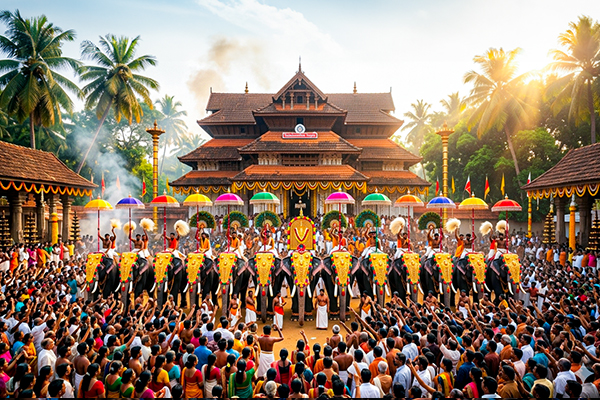
Thrissur Pooram is one of the grandest and most vibrant temple festivals in India, held annually at the Vaakkunnathan Shiva Temple in the heart of Thrissur, Kerala. This spectacular celebration, often referred to as 'The Pooram of all Poorams,' takes place on Pooram day in the month of Medam according to the Malayalam Calendar, which typically falls in April or May. For 2026, the festival will be celebrated on Monday, April 27 , a day when the moon rises with the Pooram star, marking the start of this extraordinary gathering.
This grand festival is not just a local event but a massive congregation of dynastic gods and goddesses from neighboring temples and provinces, who come together for a day of festive joy and divine reverence. Thrissur Pooram brings together thousands of devotees, tourists, and cultural enthusiasts, offering a glimpse into Kerala’s spiritual and artistic heritage. It is a day of devotion, celebration, and unparalleled grandeur, making it an unmissable event for anyone seeking to experience the soul of Kerala.
Thrissur Pooram 2026 Festival Date, Time, Muhurat & Tithi
Thrissur Pooram will be celebrated on Monday, April 27, 2026
Pooram Tithi (16th lunar day) as per the lunar calendar.
Key Timings for Thrissur Pooram 2026:
Pooram Nakshathram Begins - 08:27 PM on Apr 26, 2026
Pooram Nakshathram Ends - 09:18 PM on Apr 27, 2026
Note: Sunrise and sunset vary by region and date due to India's geographical diversity. For exact timings, please refer to local astronomical data.
Significance & Importance of Thrissur Pooram
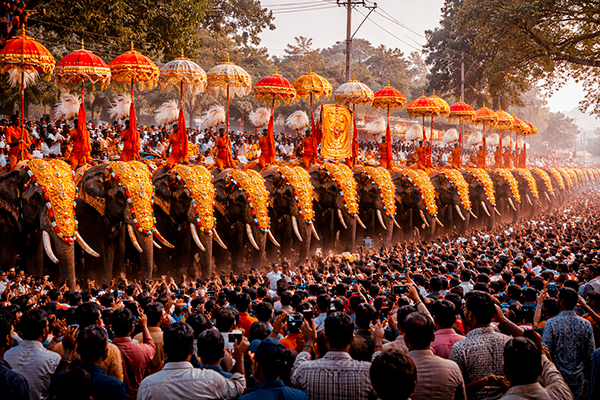
Thrissur Pooram has earned its place as the largest and most renowned Pooram festival in the country and is considered one of the greatest cultural events in Asia. The word 'Pooram' translates to 'temple festival,' and this celebration is truly a grand amalgamation of Kerala’s rich traditions, showcasing stunning processions, music, and rituals. The festival is particularly famous for the vibrant display of beautifully adorned elephants, traditional percussion performances, and the spectacular fireworks that light up the sky at night.
Thrissur Pooram is not just a grand celebration of culture, tradition, and devotion; it is also a profound testament to the rich spirit of Unity in Diversity. While it is predominantly a Hindu festival dedicated to Bhagwan Shiva, the festival holds a special place in the hearts of people from all walks of life, including those of different religious backgrounds. The inclusiveness of Thrissur Pooram reflects the harmonious coexistence that is the hallmark of Kerala’s social fabric.
One of the most striking aspects of Thrissur Pooram is the seamless collaboration between people of different faiths. Though the festival has its roots in Hinduism, its spirit transcends religious boundaries, as communities come together to participate and contribute to the celebration. An intriguing feature of the festival is that the decorations for the celebrations are often crafted by churches, while the magnificent pandal (temporary stage) that is set up for the festival is adorned by members of the Islamic community. This blending of religious efforts underscores the festival’s message of togetherness and mutual respect among different communities.
In a region where people of different religions live side by side, the Thrissur Pooram is more than just a religious event. It serves as a symbol of the unity that exists within the cultural and social diversity of Kerala. During the festival, it is common to see Hindus, Muslims, and Christians coming together to celebrate with equal zeal, adding their own contributions to the rituals and the festivities. This spirit of inclusivity is deeply ingrained in the event, with every community playing a vital role in making the Pooram a grand success.
The villagers of Thrissur and the surrounding areas come together on a single stage during the festival, setting aside any differences and working as one cohesive unit. The magnitude of the Pooram celebration brings these communities closer, fostering a sense of camaraderie and collective pride. The massive elephant processions, the synchronized beats of traditional percussion instruments, and the dazzling fireworks display are the result of immense cooperation and coordination among neighboring villages. The festival becomes a shared experience where people, regardless of their background, feel united in their devotion to the Bhagwan and their pride in their cultural heritage.
Furthermore, Thrissur Pooram is not just significant for the residents of Thrissur, but it holds great importance for devotees of Bhagwan Shiva from across Kerala. The festival is an annual pilgrimage for thousands who come to honor Bhagwan Shiva and witness the magnificent celebrations. For many, it is a chance to connect with their roots, renew their spiritual devotion, and partake in a vibrant community experience.
Thrissur Pooram, therefore, goes beyond being a mere festival; it is a living example of Kerala's historic harmony and its people's capacity to live together in peace and mutual respect. This sense of unity becomes particularly important in today’s world, where divisions based on religion, culture, and identity are often highlighted. Thrissur Pooram stands as a reminder that, at the heart of it all, we are more alike than different, and that the strength of a community lies in its ability to embrace its diversity and work together for the greater good.
This festival is a celebration of life itself—a time when tradition, devotion, and unity come together in a magnificent display. For Keralites, Thrissur Pooram is a source of immense pride, symbolizing the region’s commitment to fostering peaceful coexistence among all its people. It is a living, breathing example of how diverse cultures and religious communities can coexist, celebrate, and enrich each other’s lives in profound and meaningful ways.
What Makes Thrissur Pooram Festival Unique?
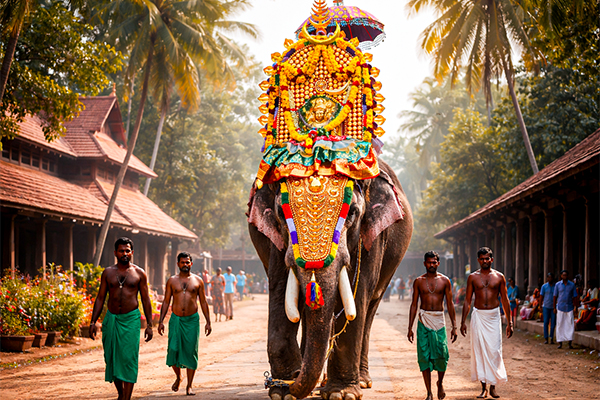
The Thrissur Pooram Festival is one of Kerala's most magnificent and colorful temple festivities. It showcases a cultural fusion and creative performances of the Paramekkavu and Thiruvambadi groups, who compete for the finest performance.During this festival, temples from surrounding Thrissur are invited to pay tribute to Bhagwan Vadakkunnathan, the presiding deity of the Vadakkunnathan Temple, in the city of Thrissur.
A massive parade is planned on temple grounds, accompanied by Chenda Melam and Pancha Vadyam music. This Pooram celebration has almost fifty elephants adorned with different golden jewelry. The magnificent, awe-inspiring processions from Krishna Temple and Devi Temple are additional festival attractions. From the day before to the last day of the festival, groups enter the Vadakumnatha Temple through the western entrance and exit through the southern gate, participating in a head-to-head march. Caparisoned elephants and the exchange of umbrellas are breathtakingly gorgeous and mesmerizing. The stunning fireworks displayed by the two temple groups create a tapestry-like splendor in the Thrissur sky. Panchavadyam is a combination of five percussion and wind instruments that creates enchanting music.
Every year, the festival creates everything from scratch, making it unique. Each elephant receives a new set of umbrellas and ornaments crafted by volunteers. The golden elephant caparison (Nettipattam), elephant paraphernalia (Chamayam), decorative fan made of peacock feathers (Aalavattom), royal fan (Venchamarom), sacred bells, and ornamental umbrellas are newly made by the Thiruvambady and Paramekkavu Devawsoms. Every year, thousands of people attend the grand old festival. The fireworks, the 'Kudamattam,' and the majestic elephants are a once-in-a-lifetime experience.
History & Story of Thrissur Pooram Festival
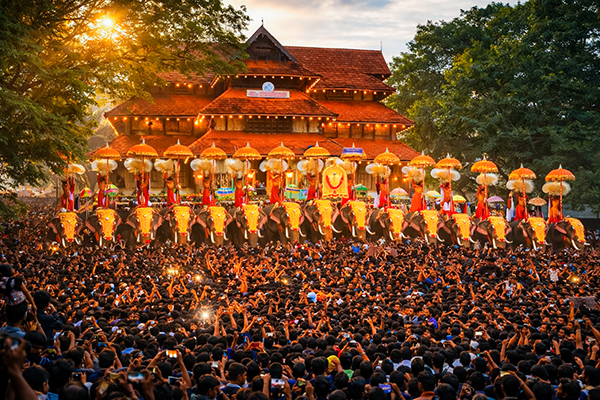
Thrissur Pooram, one of Kerala's most iconic and grand celebrations, has a fascinating history that traces back over two centuries. Its origins are rooted in the regal vision of the Maharaja of Cochin, Rama Varma Kunhjippilla Thampuran, who played a pivotal role in transforming the Pooram into the cultural spectacle it is today. Before the inception of Thrissur Pooram, Kerala’s largest temple festival was the Arattupuzha Pooram, held at the Arattupuzha Temple, located about 10 kilometers from Thrissur. This one-day festival had been the main event in the region, drawing temples from across the area for a grand celebration of devotion.
The story of how Thrissur Pooram came into being is tied to a specific incident in 1798 that sparked the creation of what would soon become the most celebrated Pooram festival in Kerala. On that particular year, the procession of temples from Thrissur, which had been participating in the Arattupuzha Pooram for many years, arrived late due to heavy rains. Despite their best efforts, they were denied admittance to the festival. This public snub, humiliating and frustrating to the temple administrators, led them to seek a solution.
In response to this incident, the temple administrators turned to the visionary ruler, Sakthan Thampuran, the Maharaja of Cochin. Thampuran, known for his progressive approach to governance and culture, immediately stepped in to resolve the matter. He organized a new temple festival that would rival Arattupuzha Pooram in grandeur and prestige. This event, which took place in the same year as the Arattupuzha incident, was designed to be even larger and more lavish than the existing Pooram, both in terms of scale and expense.
In 1798, Thampuran initiated the first-ever Thrissur Pooram, bringing together ten prominent temples from the surrounding regions of Thrissur to participate. The venue for this new festival was the Vadakkunnathan Temple, a revered Hindu temple dedicated to Bhagwan Shiva, which would become the epicenter of the Pooram. The Maharaja’s involvement was crucial in shaping the structure and coordination of the event. He divided the participating temples into two main groups, each led by prominent temples: the Paramekkavu Bagavathi Temple and the Thiruvambadi Sri Krishna Temple. These two factions became the driving forces of the festival, each competing to showcase their devotion in the form of elaborate processions, performances, and rituals.
The festival’s inaugural edition, under Sakthan Thampuran’s meticulous planning, was a massive success. The procession of elephants, the mesmerizing beats of traditional percussion instruments, the stunning decorations, and the synchronized displays of devotion set the foundation for what would become an enduring cultural legacy. This meticulously planned event marked the beginning of the now-iconic Thrissur Pooram festival, which has continued to grow in prominence year after year.
Fast forward over two centuries, and Thrissur Pooram remains true to the structure and format laid out by Sakthan Thampuran. The event has evolved over time, with increasing participation, greater grandeur, and the addition of new traditions. However, the essence of the festival—the rivalry between the Paramekkavu and Thiruvambadi temples, the iconic procession of caparisoned elephants, and the dazzling fireworks display—remains unchanged.
Today, Thrissur Pooram is a grand celebration that attracts thousands of people from across Kerala and beyond. It is not just a religious festival but a cultural event that embodies the spirit of Kerala—its devotion, art, and sense of community. The festival is a true testament to the vision of Sakthan Thampuran, who, through his foresight and leadership, turned a moment of setback into the foundation of what is now regarded as one of Asia’s greatest temple festivals.
The enduring legacy of Thrissur Pooram lies in its ability to bring together people from all walks of life—irrespective of their backgrounds or beliefs—uniting them in celebration and devotion. What began as a royal response to a local incident has blossomed into a symbol of Kerala's cultural pride, and the festival continues to be a source of immense joy, pride, and unity for generations of Keralites.
The Vadakkumnathan Temple
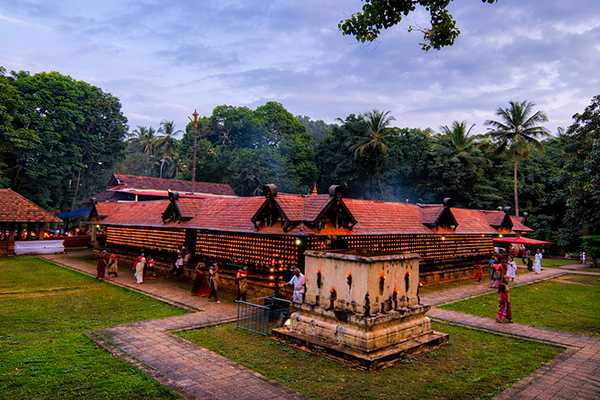
The Vadakkumnathan Temple is an ancient Hindu temple dedicated to Shiva located in Thrissur, Kerala, India. The temple is a classic example of Kerala architectural style, with one monumental tower on each of its four sides, as well as a koothambalam. The temple contains mural paintings depicting various scenes from the Mahabharata. The shrines and Kuttambalam display wood-carved vignettes. The temple, along with the mural paintings, has been designated a National Monument by India under the AMASR Act. According to popular local legend, this is the first temple built by Parashurama, Vishnu's sixth avatar. Thekkinkadu Maidan, which surrounds the Vadakkumnathan Temple, is the main venue for the renowned Thrissur Pooram festival.
In 2012, the Archaeological Survey of India (ASI) recommended 14 sites in Kerala, including the Vadakkumnathan Temple and palaces, for inclusion on the UNESCO World Heritage List. The temple is also the first of 108 Shiva Temples in ancient Kerala, founded by Parashurama, and is referred to as Shrimad-Dakshina Kailasam in the Shiva Temple Stotra, which translates to 'Mt. Kailash of the South'.
Legends about the origins of the Vadakkumnathan Temple are briefly described in the Brahmanda Purana and are also mentioned in other works. Though these accounts differ in some details, they all agree on the central theme: Parashurama founded the temple. According to legend, Parashurama asked the Lord of the Oceans, Varuna, to create a new piece of land out of the water. Varuna complied, and the resulting land became Kerala.
How to celebrate Thrissur Pooram
Thrissur Pooram, Kerala’s most renowned and grand temple festival, is not just a one-day event. It is an intricate and multi-faceted celebration that unfolds over several days, culminating in an awe-inspiring display of devotion, art, and unity. While the festival officially falls on Monday, April 27, 2026
Thrissur Pooram will be celebrated on Monday, April 27, 2026
Pooram Tithi (16th lunar day) as per the lunar calendar.
Key Timings for Thrissur Pooram 2026:
Pooram Nakshathram Begins - 08:27 PM on Apr 26, 2026
Pooram Nakshathram Ends - 09:18 PM on Apr 27, 2026
Note: Sunrise and sunset vary by region and date due to India's geographical diversity. For exact timings, please refer to local astronomical data., the festivities begin much earlier, building up to the grand event with several captivating rituals and performances that draw thousands of visitors from across the world.
The Prelude: Kodiyettan and the Flag Ceremony
One week before the actual Pooram, the celebrations begin with a key event called Kodiyettan, which marks the raising of the flag at all the participating temples. This ceremony sets the stage for the festival and is a highly anticipated moment for the local community. During Kodiyettan, the flag is hoisted with much fanfare, and a small but spectacular fireworks display marks the occasion. This is the formal beginning of the Pooram, and it’s an exciting time for the villagers who eagerly await the upcoming week of celebrations.
Poora Vilambaram: The Elephant and the Neithilakkavilamma Idol
As the flag is raised, the tradition of Poora Vilambaram comes into play. This ritual involves a majestic elephant that opens the south entrance gate of the Vadakkunnathan Temple, the heart of Thrissur Pooram. Perched atop the elephant is the Neithilakkavilamma idol, a significant deity revered by the locals. This event symbolizes the spiritual and cultural richness of the Pooram and sets the tone for the festivities that follow. The temple entrance is beautifully decorated, and soon after, a breathtaking fireworks display takes place right in the center of Thrissur, further igniting the festive spirit.
Madathil Varavu and the Majestic Panchavadhyam Melam
One of the most eagerly awaited events during the Pooram is Madathil Varavu, an important ritual where the famous Panchavadhyam melam is performed. This is no ordinary musical performance—Panchavadhyam involves over 200 talented artists playing traditional instruments such as thimila, madhalam, trumpets, cymbals, and edakka. The rhythm and power of the music energize the crowd and create an atmosphere of excitement and devotion.
The melam is a hallmark of the Thrissur Pooram and is a powerful expression of Kerala’s rich musical heritage. As the instruments are played with precision and enthusiasm, they stir the hearts of the devotees, invoking a sense of spirituality and unity.
Ilanjithara Melam: The Heart of the Pooram
The Ilanjithara Melam is another central highlight of the festival, beginning at 2:00 p.m. inside the Vadakkunnathan Temple. This performance is a stunning display of drum beats, trumpets, pipes, and cymbals that reverberate throughout the temple grounds, echoing through the streets of Thrissur. The Ilanjithara Melam is a revered tradition and one of the key attractions that draw spectators from across the globe to Thrissur Pooram. The energy of the performance and the synchronization of the artists make it an unforgettable experience.
Kudamattom: The Iconic Umbrella Exchange
One of the most symbolic and visually captivating aspects of the Thrissur Pooram is the Kudamattom, where the two main groups—the Paramekkavu Bagavathi Temple and the Thiruvambadi Sri Krishna Temple—engage in a colorful exchange of beautifully crafted, intricately designed umbrellas. These umbrellas are mounted atop the elephants, and the exchange is a dramatic display of art, tradition, and rivalry between the two temple factions. The umbrellas are symbolically passed between the two groups as they compete to showcase their devotion and grandeur.
The Kudamattom takes place in the presence of the melam, and it is considered the pinnacle of the Pooram celebrations. As the elephants sway with the massive umbrellas above them and the rhythm of the drums fills the air, the atmosphere becomes charged with excitement and devotion, making it a momentous event that defines the essence of Thrissur Pooram.
Nilapaduthara and Pakal Pooram: The Final Day
The final stage of Thrissur Pooram is a spectacle in itself. After the Kudamattom, the Paramekkavu and Thiruvambadi groups gather at Nilapaduthara near the western gopuram of the Vadakkunnathan Temple. The grandeur of the procession and the unity of the groups are on full display as the celebrations reach their zenith.
The final day of the Pooram, often referred to as Pakal Pooram, is a moment when the spirit of devotion reaches its highest peak. The closing ceremony, known as Upacharam Cholli Piriyal, marks the end of the festival, and it is an emotional event for the participants and devotees alike.
The Closing Ceremony and the Dazzling Fireworks
As the Pooram comes to a close, the idols of Thiruvambadi Sri Krishna Temple and Paramekkavu Bagavathi Temple are ceremoniously carried back from Swaraj Round to their respective temples. The day concludes with a grand fireworks display, known as Pakal Vedikkettu, which is the highlight of the evening. The fireworks light up the sky, bringing an awe-inspiring end to the week-long celebrations.
A Celebration of Unity, Tradition, and Devotion
Thrissur Pooram is not just a religious event; it is a living testament to the cultural, social, and spiritual fabric of Kerala. The festival unites people from all walks of life—Hindus, Muslims, Christians, and visitors from around the world—who come together to celebrate the region’s deep-rooted traditions. For the people of Thrissur, it is a moment of immense pride, a time when they come together to showcase their unity, artistic expression, and devotion to their gods.
From the raising of the flag during Kodiyettan to the dazzling fireworks of Pakal Vedikkettu, every moment of Thrissur Pooram is an invitation to experience the joy, culture, and unity that define this extraordinary festival. For over two hundred years, this vibrant celebration has been the heartbeat of Thrissur, and it continues to captivate and inspire all who experience it.
Thrissur Pooram Festival Puja Vidhi (Puja Procedure)
_216365.jpg)
Thrissur Pooram is a grand celebration of devotion, culture, and tradition. The puja procedures involved in this festival are deeply rooted in Kerala's religious practices, and they mark the devotion and unity of the people.
Below is an overview of puja vidhi (rituals) that take place during the festival:
- Kodiyettan (Flag Hoisting): The festival officially begins with the hoisting of the temple flags at all participating temples, marking the start of the Pooram celebrations.
- Poora Vilambaram (Opening of the Temple Gate): An elephant opens the south entrance gate of the Vadakkunnathan Temple, carrying the Neithilakkavilamma idol, signaling the commencement of the festival.
- Ganapati Homam: A Ganapati puja is performed to seek blessings from Bhagwan Ganesha before the start of the main rituals, ensuring the festival proceeds smoothly.
- Offering of Flowers (Pushpanjali): Devotees offer flowers to Bhagwan Shiva and other deities as a mark of reverence, with chants of Vedic hymns invoking blessings for prosperity.
- Lighting of Lamps (Deepa Aradhana): Traditional oil lamps are lit in the temples and on elephants, symbolizing the removal of darkness and the arrival of divine light.
- Elephant Procession (Vahanam): The adorned elephants carry the deities in a grand procession, and each elephant is treated with reverence as it enters the temple with ceremonial rituals.
- Panchavadhyam: A vibrant performance of Panchavadhyam (traditional music), consisting of drums, cymbals, and other percussion instruments, fills the air during the procession, adding an energetic spiritual atmosphere.
- Kudamattom (Umbrella Exchange): The two rival temple factions exchange elaborately decorated umbrellas atop the elephants, as part of the visual and ceremonial centerpiece of the Pooram.
- Ilanjithara Melam: Inside the Vadakkunnathan Temple, this musical offering involves a grand ensemble of drums, trumpets, pipes, and cymbals, invoking Bhagwan Shiva’s blessings.
- Pakal Vedikkettu (Fireworks Display): As the festival concludes, a spectacular fireworks display lights up the night sky, celebrating the success and joy of the event, and offering gratitude to the divine.
The Puja Vidhi of Thrissur Pooram is a harmonious blend of devotion, music, culture, and community participation. Every ritual—from the flag hoisting to the fireworks display—symbolizes the unity and reverence of the people for Bhagwan Shiva and the festival’s rich traditions. This detailed procedure showcases how spirituality and cultural expressions come together to create one of the most celebrated and awe-inspiring festivals in India.
Thrissur Pooram Puja Mantra
The Om Namah Shivaya (ॐ नमः शिवाय) mantra is undoubtedly the most chanted mantra during the Thrissur Pooram festival. Dedicated to Bhagwan Shiva, the primary deity of the Vadakkunnathan Temple, it holds immense significance and is a central part of the spiritual practices during the festival.
Meaning of Om Namah Shivaya
- 'Om' - The universal sound representing the essence of the supreme consciousness.
- 'Namah' - I bow or offer my reverence.
- 'Shivaya' - To Bhagwan Shiva, the supreme deity who represents destruction, transformation, and regeneration.
This powerful mantra is chanted by devotees throughout the festival to seek the blessings of Bhagwan Shiva, symbolizing peace, spiritual growth, and divine protection. It is considered the most sacred of all mantras and plays a pivotal role in the rituals of the Pooram.
While Om Namah Shivaya remains the most chanted mantra due to Bhagwan Shiva's central role, the festival embraces the spiritual diversity of the people, allowing each person to honor their chosen deity (Ishta Devata) in their unique way. This creates a powerful atmosphere of collective devotion, with diversity of mantras making Thrissur Pooram a truly inclusive and transformative experience for all.
Thrissur Pooram Vrat Vidhi (Fasting Procedure)
_216367.jpg)
The Thrissur Pooram Vrat Vidhi is an important part of the spiritual journey for many devotees who observe fasting during the festival. It is a time of self-discipline, purification, and devotion.
Fasting during Thrissur Pooram is believed to cleanse the body and mind, enabling devotees to connect more deeply with the divine presence of Bhagwan Shiva and the other deities. The fasting process is meant to enhance the spiritual experience of the festival, fostering an inner sense of devotion and devotion.
Here’s a procedure for observing the fasting during the festival:
Preparation of the Body and Mind
Devotees begin their vrat (fast) by preparing both mentally and physically. This includes performing a purification ritual like taking a bath before starting the fast and cleaning the surroundings to maintain a positive environment. A calm and focused mindset is essential to connect with the spiritual energy of the festival.
Setting an Intention (Sankalpa)
Devotees take a vow or Sankalpa before beginning the fast. This involves setting an intention for the vrat, such as seeking blessings for health, wealth, spiritual progress, or the fulfillment of a particular wish.
Observing a Partial Fast (Upavasa)
Most devotees observe a partial fast, where they refrain from eating solid foods but may consume liquids like water, fruit juice, or milk. Some may choose to have a simple meal without spices or grains. The fast typically lasts from sunrise to sunset, in alignment with the festival’s ritualistic timings.
Praying and Reciting Mantras
Devotees chant sacred mantras like Om Namah Shivaya or Maha Mrityunjaya Mantra throughout the day. Mantra chanting strengthens their connection to Bhagwan Shiva and purifies their mind, aiding in spiritual growth. Prayers are offered to the deities for their blessings.
Offering Rituals and Pujas
During the fasting period, devotees perform small pujas (rituals) at home, offering flowers, incense, and lighted lamps to their Ishta Devata (chosen deity). Many also visit temples to participate in the festival’s rituals, seeking to absorb the divine atmosphere of the Pooram.
Breaking the Fast (Parana)
After the day’s fasting, the vrat is concluded by breaking the fast in a ritualistic manner. The fast is typically broken with simple food such as fruits, milk, or a light meal, while chanting prayers of gratitude. This marks the end of the fasting period, and the devotee thanks the deity for the blessings received.
The Thrissur Pooram Vrat Vidhi is a spiritually enriching experience that enables devotees to deepen their devotion while participating in one of the grandest festivals of Kerala. Fasting during this time is not merely about abstaining from food but about purifying the mind, body, and soul, enabling a stronger connection to the divine during the vibrant and festive celebration of Thrissur Pooram.
Thrissur Pooram Vrat Katha (Traditional Fasting Story)
_216366.jpg)
Once upon a time, in a small village near Vadakkunnathan Temple, there lived a devout man named Krishna Varma. Krishna Varma had been a lifelong worshipper of Bhagwan Shiva and had always wished to attend the grand celebration of Thrissur Pooram. However, due to personal hardships, he could never afford to visit the temple during the festival.
Desiring to witness the Pooram and receive Bhagwan Shiva’s blessings, Krishna Varma vowed to observe a rigorous fast during the festival. He hoped that by fasting with utmost devotion, he would gain spiritual merit and be granted the darshan (vision) of Bhagwan Shiva and the other deities during the grand celebrations.
The villagers, upon hearing of his vow, mocked Krishna Varma, saying that fasting would not help him attend the Pooram and that the festival was too grand for a humble man like him to witness. But Krishna Varma’s faith in Bhagwan Shiva was unwavering. He began his fast on the day of Kodiyettan, the flag hoisting ceremony, and decided to remain steadfast until the final rituals of the Pooram.
During the days of fasting, Krishna Varma dedicated himself to prayer and devotion, constantly chanting mantras like Om Namah Shivaya and performing small rituals at his home. He would offer flowers and light lamps while meditating deeply on the divine presence of Bhagwan Shiva. Despite feeling weak from hunger, he remained committed to his vow, hoping that Bhagwan Shiva would bestow upon him the gift of darshan during the festival.
On the final day of the Pooram, as the grand Pakal Pooram and Kudamattom ceremonies were being held, Krishna Varma made his way to the Vadakkunnathan Temple, despite his frail condition. As he approached the temple, he miraculously felt a divine energy surrounding him. When he entered the temple premises, he witnessed the grand procession, the elephants adorned with colorful umbrellas, and the vibrant sounds of the Panchavadhyam filling the air.
It is said that as Krishna Varma stood in awe, Bhagwan Shiva and Goddess Bhagavati appeared before him, blessing him for his unwavering devotion. The divine vision he had longed for was finally bestowed upon him, and his faith and dedication were recognized by the gods. His fast had been a true act of devotion, and it had earned him the opportunity to witness the divine celebration.
From that day forward, Krishna Varma became a symbol of devotion and piety in his village. The villagers, who once mocked him, were filled with awe at his divine blessing, and they too began to observe the fast with reverence in honor of Bhagwan Shiva’s grace.
Moral of the Story:
The Thrissur Pooram Vrat Katha teaches that fasting during the Pooram festival is not just about physical abstinence but about offering one's heart and soul to the divine. The story emphasizes the importance of unwavering devotion, discipline, and faith. Just like Krishna Varma, any devotee who observes the fast with sincere reverence can expect to receive divine blessings, and the fast becomes a way to purify the body, mind, and spirit, leading to spiritual fulfillment.
The Thrissur Pooram Vrat Katha continues to inspire devotees during the festival, reminding them of the power of devotion, the significance of fasting, and the divine blessings that come from sincere worship. This traditional fasting story reinforces the belief that Bhagwan Shiva rewards those who approach him with pure faith and determination, making the observance of the Pooram vrat a truly sacred and spiritually enriching experience.
Puja Utensils, Essentials

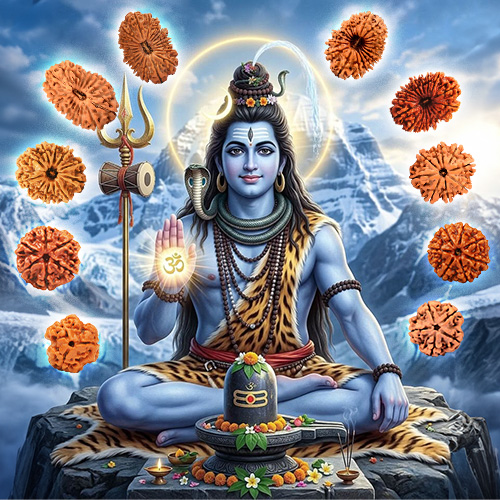
Rudra Centre brings an extensive collection of Puja Articles which caters to all that is required for daily and special Puja Vidhis. We offer variants of designs and sizes in each category. The list includes handcrafted Puja Mandirs, Puja Pedestals, offering Bowls, Panchpatra, intricately carved Puja Thalis, Abhishek Vessels, in different materials, Pure Silver/German Silver articles like Kalash, set of Shodash Upachara and Several other Puja Articles, which we deliver at your doorstep.
Rudraksha Malas
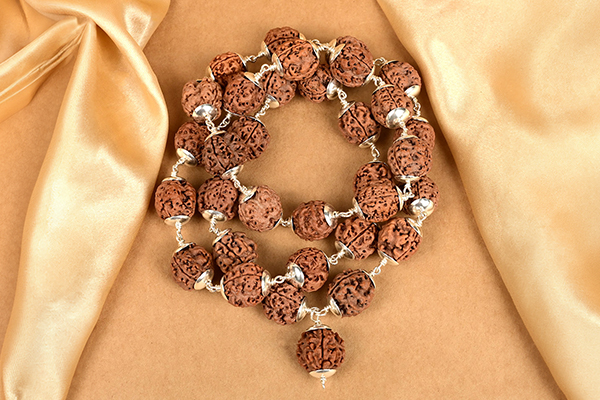
Rudraksha 1 Mukhi to 14 Mukhi Malas, made of the best quality, natural Rudraksha Beads, handpicked for optimum benefits. The Malas are mostly strung in Thread with knots in between the beads and a Silk Tassel with Sumeru Bead. They are worn and also used for Japa or chanting purposes. Other variants are Silver or Gold designer capped Malas.
Visit our Exclusive Collection
Gods and Goddesses Brass Idols
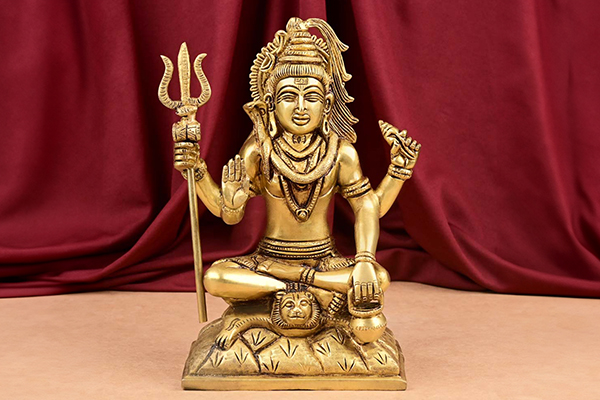
Extensive collection of God and Goddess Idols and Statues in various forms and designs made in brass. The intricate craftsmanship of every God/Deity idol and others make them look outstanding for homes and offices. Choose from the widest range of premium Deity Idols to grace your dwelling or to give as a gift to your loved ones.
Visit our Exclusive Collection
Gods and Goddesses Gemstone Idols
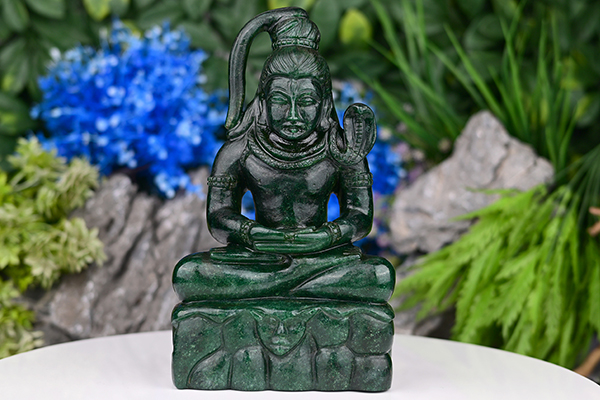
Premium range of Deity Idols crafted in 100% natural gemstones. Natural gemstone idols provide dual benefits of Divine blessings of the Deity and also additional benefits of gemstone. Beautiful and rare these Gemstone Deity idols are carved from a single piece of gemstone and help cleanse the surroundings with energies of harmony, good fortune and positivity.
Visit our Exclusive Collection
Brahma Vishnu Mahesh Trimurti Puja
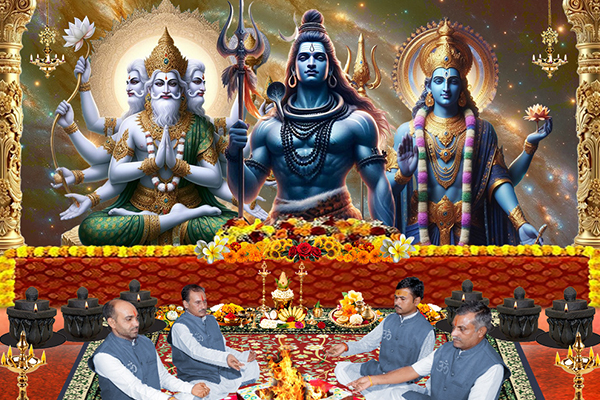
The Brahma Vishnu Mahesh Puja is a sacred Vedic ritual performed to honor the divine trinity-Brahma (the Creator), Vishnu (the Preserver), and Mahesh or Shiva (the Destroyer) -who collectively govern the cosmic cycle of creation, preservation, and transformation. By invoking their energies, this puja harmonizes the mind, body, and soul while clearing obstacles and enhancing life’s positive aspects.
Rudra Centre Puja Services is the oldest and most trusted Online Puja Services provider in the world. Over 20 years we have organized Yagnas, Pujas, Homas and Kathas like Ati Rudra Mahayajna, Sahasra Chandi Homa, Akhand Ramayan Paath, Shiva Maha Puran Katha, 4 Prahar Mahashivratri Mahapuja with teams of 100’s of curated priests for the benefit of mankind and our global clientele.
Kartikeya Puja Mantra Japa and Yajna
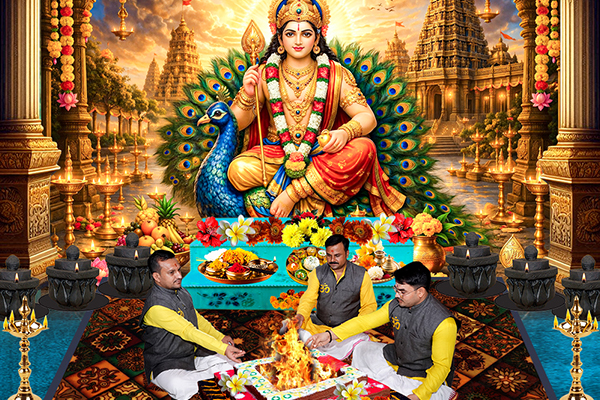
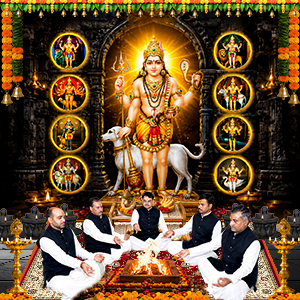
Rudra Centre Karm Kandi Pandits perform the Kartikeya puja and Subramanya homam by following proper Vedic Bhagwan Kartikeya Puja Vidhi (procedure) which appeases the Bhagwan and helps the participant to garner His benevolent blessings.
Bhagwan Kartikeya Puja & Yajna Benefits:
- For courage, confidence, strength, vitality, youthfulness & fearlessness
- To overcome all challenges, enemies, and negativities
- Blessings of good health, wealth, prosperity, and success.
- To attract positivity and auspiciousness.
- Growth both in spiritual and material realms.
- For removing negative propensity and ego.
- For Attractive personality and charm
- For getting relief from Mangal Dosha and Kuja Dosha.
Rudra Centre Puja Services is the oldest and most trusted Online Puja Services provider in the world. Over 20 years we have organized Yagnas, Pujas, Homas and Kathas like Ati Rudra Mahayajna, Sahasra Chandi Homa, Akhand Ramayan Paath, Shiva Maha Puran Katha, 4 Prahar Mahashivratri Mahapuja with teams of 100’s of curated priests for the benefit of mankind and our global clientele.
Visit this Link for complete information about Kartikeya Puja
Conclusion
The Thrissur Pooram festival is more than just a grand spectacle of vibrant processions, mesmerizing fireworks, and magnificent elephant parades; it is a celebration of devotion, unity, and the rich cultural heritage of Kerala. Rooted deeply in the spiritual traditions of the region, this festival brings together people from all walks of life, transcending religious boundaries, and fostering a sense of collective joy and reverence. Through its rituals, music, and exuberant celebrations, Thrissur Pooram captures the essence of Kerala’s cultural identity, making it one of the most awe-inspiring festivals in India and a truly unforgettable experience for all who witness it.
Whether it’s the powerful beats of the Panchavadhyam, the breathtaking Kudamattom umbrella exchange, or the divine aura that surrounds Vadakkunnathan Temple, the festival offers something truly special to every devotee and visitor. As the sounds of drumbeats echo through the air and the night sky lights up with brilliant fireworks, the spirit of Thrissur Pooram lives on reminding us that festivals are not just about external celebrations but about connecting with the divine, the community, and the timeless traditions that bind us all. The energy and magic of Thrissur Pooram will continue to inspire and enchant for generations to come, making it a living testament to the cultural vibrancy of Kerala.
-in-Astrology.jpg)
.jpg)


Joju Francis
|April 22, 2025
Soooooper 👍👍👍