

ॐ एकाक्षराय विद्महे त्रिनेत्राय धीमहि तन्नः शिवः प्रचोदयात्॥
Om Ekākṣarāya Vidmahe Trinetraaya Dhīmahi Tannah Śivah Prachodayāt
We meditate on the One Eternal Syllable (Om), and on the Three-Eyed Lord. May that Shiva awaken our minds and guide our inner vision.
Across various ancient traditions and spiritual systems, the concept of the Third Eye is revered as a gateway to higher consciousness, spiritual awakening, and inner vision. In Taoism, masters guide students to close their eyes and concentrate on the point between the eyebrows, a practice believed to align them with the universal energy and deepen meditative awareness. In Buddhism, ascetics engage in rigorous practices to activate the Third Eye in pursuit of transcending the physical realm and achieving self-realization.
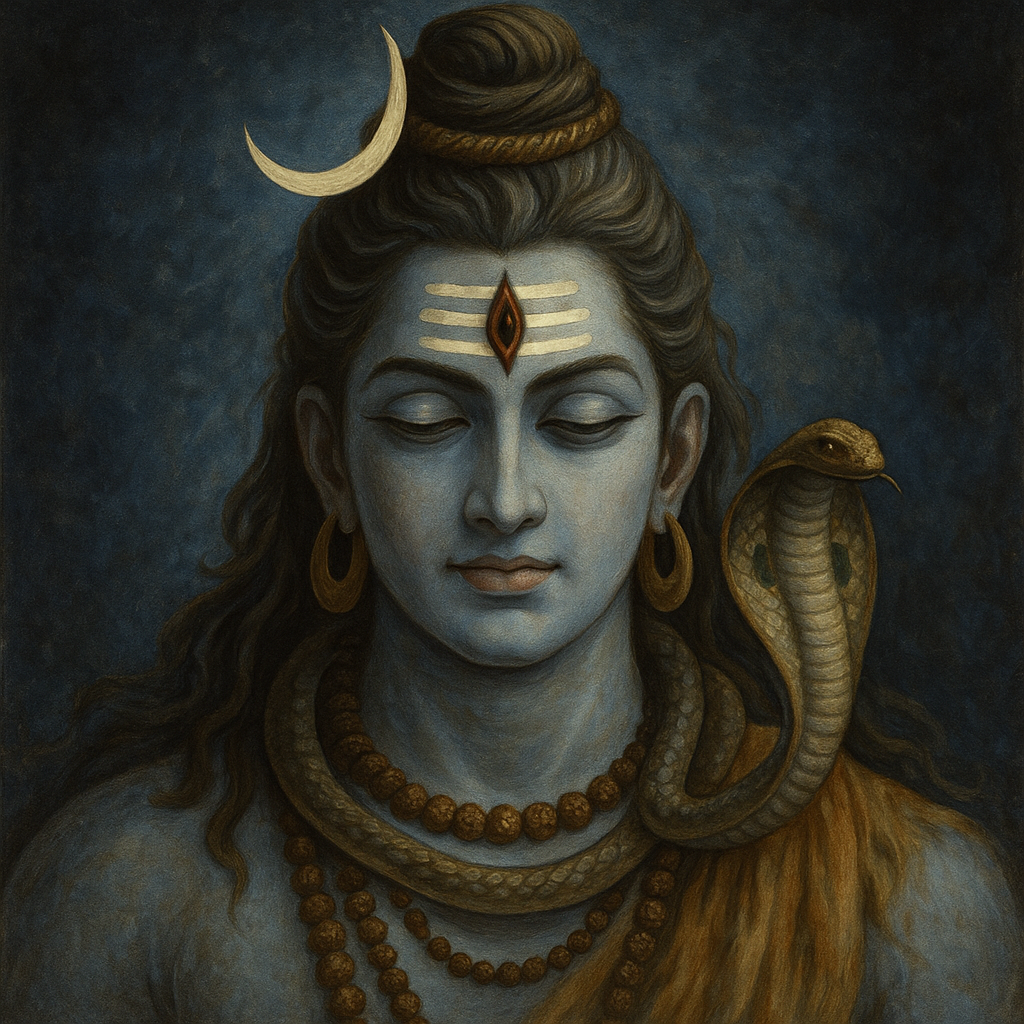
This sacred symbol of insight and inner power finds its most awe-inspiring expression in Lord Shiva, the supreme yogi of Hinduism. Shiva’s Third Eye, located at the centre of His forehead, represents the ability to perceive beyond illusion, revealing the ultimate truth that liberates the soul.
Lord Shiva’s Third Eye in Hinduism
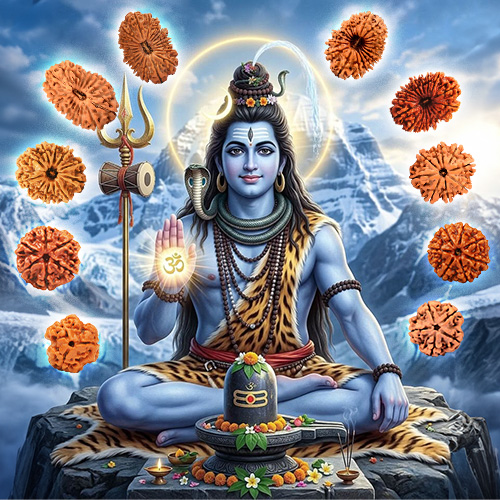
In the vast and mystical world of Vedic scriptures, Lord Shiva stands apart as the Trinetra, the Three-Eyed One. His two eyes symbolize the sun and the moon, governing time, perception, and balance. These eyes are engaged in observing both the physical world and the inner stillness of meditation. But it is the Third Eye, nestled at the centre of His forehead, that carries the most enigmatic and terrifying power.
This Third Eye of Shiva is more than a divine symbol, it is a portal to absolute truth, the seat of cosmic perception, and a force that transcends time and matter. Where the physical eyes are limited to form and duality, Shiva’s Third Eye penetrates through the veils of illusion (Maya), seeing existence as it truly is, raw, eternal, and unbounded.
Feared by both gods and demons, the opening of Shiva’s Third Eye signifies a moment of total annihilation and transformation. In various Puranic stories, when adharma (unrighteousness) spreads or cosmic balance is threatened, it is the Third Eye that is invoked. Once opened, it releases a blazing fire of awareness, capable of burning ignorance, ego, and evil to ashes in an instant.
But its power is not solely destructive. At a higher level, Shiva’s Third Eye represents Jnana (spiritual wisdom) and Vairagya (detachment). It is the eye of inner awakening, of clarity that cuts through illusion, of detachment from material allure, and of unwavering focus in meditation. It is said that when one activates their own Ajna Chakra, the energy centre linked to the Third Eye, they begin to perceive life as Shiva does: from a place of stillness, truth, and transcendence.
Thus, Shiva’s Third Eye is not just an eye, it is the divine eye of higher consciousness, a reminder that true vision lies beyond sight, and that liberation comes not from what we see outside, but what we awaken within.
Mythological Context of Shiva's Third Eye
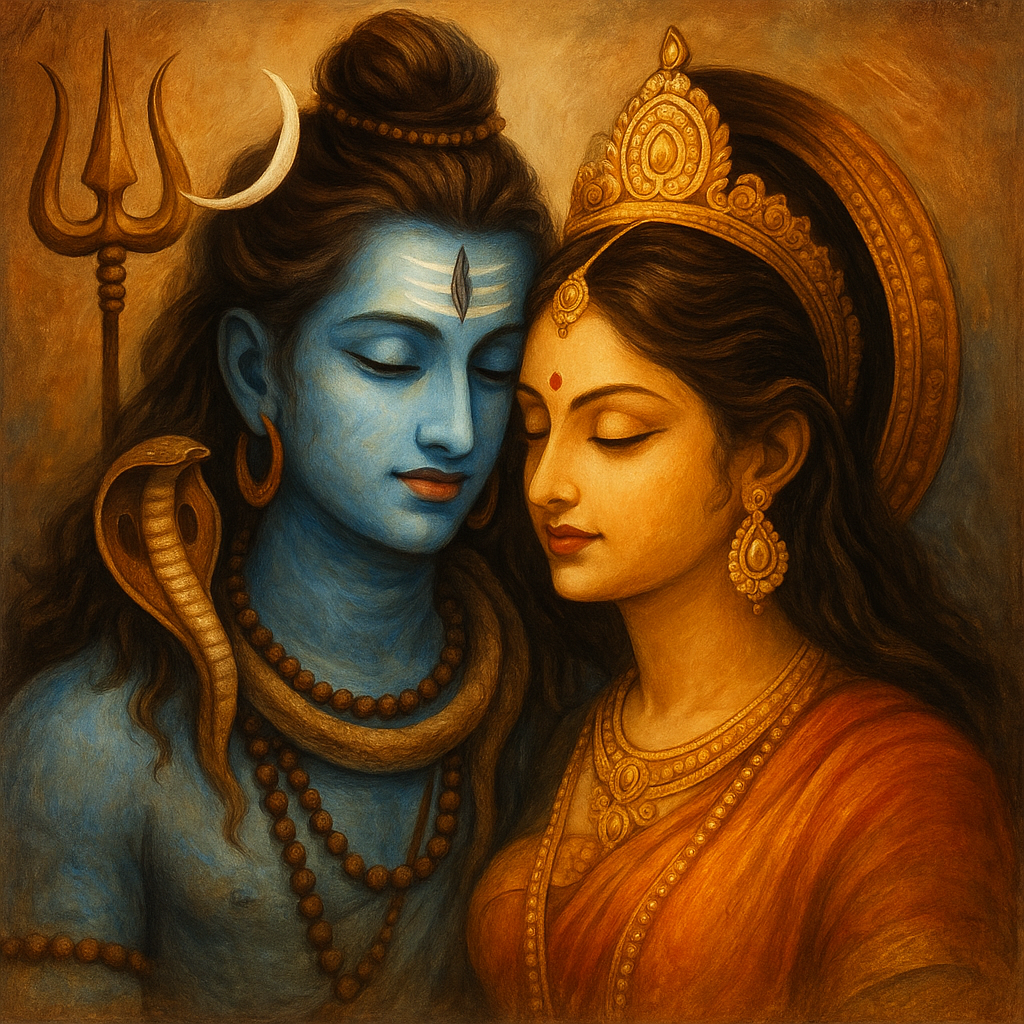
The origin of Shiva’s Third Eye is profoundly rooted in one of the most powerful legends of Hindu mythology, the story of Sati and Shiva. According to the Shiva Purana, Sati, the first consort of Lord Shiva, self-immolated during a grand yagna organized by her father, King Daksha. The sacrificial ceremony, meant to honour the gods, deliberately excluded Lord Shiva, whom Daksha disapproved of. When Sati witnessed the blatant disrespect towards her husband and the divine beings, she was overcome with sorrow and rage, ultimately ending her life through the fire of yogic self-sacrifice.
Upon hearing of Sati’s death, Lord Shiva was consumed by unimaginable grief. In a moment of divine wrath, he plucked a lock of his matted hair and flung it to the ground, from which emerged Virabhadra, a fierce warrior form of Shiva. Accompanied by Shiva’s terrifying attendants, the Ganas and spirits, Virabhadra stormed the yagna, destroying everything in sight, and beheading Daksha.
This devastating moment in Shiva mythology marks the first intense manifestation of Shiva’s destructive energy, an energy that arises not out of vengeance, but from profound cosmic imbalance.
Following this chaos, Shiva withdrew into deep meditation, severing ties with the material world. In his state of absolute detachment, he renounced worldly engagements, responsibilities, and even divine duties. This period symbolizes Shiva’s complete immersion in the Self, the inner world where time, ego, and emotion dissolve.
When Sati was reborn as Parvati, the daughter of the mountain king Himavan, she embarked on a long journey of devotion and penance to reunite with Shiva. Yet Shiva, the supreme ascetic, remained indifferent detached from desire, emotions, and even celestial love. His Third Eye, symbolic of his inner vision and spiritual mastery, remained closed but brimming with potential, ready to awaken only in the face of deeper cosmic necessity.
This tale not only defines the mythological context of Shiva’s Third Eye but also illustrates the essence of his character: a being who moves between intense destruction and transcendental stillness, from emotional loss to divine detachment, guided only by truth, dharma, and inner awareness.
The Opening of the Third Eye: The Story of Kamadeva
As Parvati, the reincarnation of Sati, undertook intense penance to win Lord Shiva's love, the gods grew anxious. They feared that without Shiva’s union with Parvati, cosmic balance would be disrupted and the birth of a divine warrior (Kartikeya) needed to defeat the demon Tarakasura would never occur. Sensing Parvati’s unwavering devotion and the urgency of the situation, the gods sought help from Kamadeva, the Hindu god of love and desire.
In a bold and fateful act, Kamadeva approached Shiva, who was deep in divine meditation on Mount Kailash, and released his mystical flowery arrow aimed at igniting desire in the heart of the ascetic god. The atmosphere trembled. Kamadeva’s arrow was no ordinary one, it carried the essence of charm, pleasure, and emotional allure.
But what followed left the entire universe stunned.
Disturbed from his deep yogic state, Shiva opened his Third Eye, the all-seeing eye of truth and destruction. In a flash of blinding fire, Kamadeva was reduced to ashes. This moment in Shiva’s Third Eye story is one of the most profound illustrations of Shiva’s spiritual detachment, yogic mastery, and transcendence over material desire.
The burning of Kamadeva is not a tale of vengeance but of clarity. It reveals the true power of the Third Eye, a force that annihilates illusion, ego, lust, and distraction. Shiva’s Third Eye does not see the world as the two eyes do, it perceives the eternal, the real, the unchanging truth behind all appearances.
This incident is also deeply symbolic within Chakra Science. The Third Eye corresponds to the Ajna Chakra, located between the eyebrows, the seat of intuition, higher wisdom, and inner guidance. When activated, it destroys attachment to the physical senses and opens the path to inner mastery, divine insight, and self-realization.
By rejecting Kamadeva’s temptations, Shiva demonstrated that liberation lies beyond pleasure and pain, beyond attachment and aversion. The Third Eye is the ultimate spiritual purifier, burning away all that veils the truth of the soul.
To this day, devotees meditate upon Shiva’s Third Eye to awaken their own inner fire of clarity, invoking strength to transcend desire and align with divine consciousness.
Shiva’s Third Eye and Chakra Science
In the subtle science of yogic energy systems, the Third Eye corresponds to the Ajna Chakra, also known as the Intuitive Chakra or the Third Eye Chakra. Located in the brain, just behind the eyebrow centre, the Ajna Chakra is associated with insight, higher perception, and spiritual intuition. It governs the realms of imagination, inner wisdom, and clarity of thought, making it one of the most crucial energy centres for spiritual awakening.
In chakra science, when the Ajna Chakra is balanced, an individual displays remarkable mental calmness, intuitive brilliance, and a charismatic presence that transcends mere intellect. Such a person sees life with clarity, makes decisions beyond logic, and is guided by inner vision rather than external distractions.
Lord Shiva, the supreme yogi, is considered the divine master of this chakra. His Third Eye is the awakened Ajna Chakra in its most potent and fully realized form. It symbolizes spiritual mastery, unshakable clarity, and the ability to pierce through illusion (Maya). Shiva’s Third Eye is the seat of divine perception, not just seeing the world as it is, but understanding the truth behind its ever-changing nature.
In Shiva’s meditative stillness, the power of the Ajna Chakra is perfectly embodied. He represents the ideal of a being who has transcended the senses, balanced the dualities of existence, and reached the pinnacle of inner awareness.
For spiritual seekers, meditating on Shiva’s Third Eye becomes a pathway to activating their own Ajna Chakra, unlocking the realms of intuition, clarity, and spiritual enlightenment.
The Role of Shiva’s Third Eye in Cosmic Balance
As the awakened master of the Ajna Chakra, Lord Shiva embodies perfect inner clarity, detachment, and spiritual wisdom. But this profound stillness does not render Him passive, instead, it positions Him as the cosmic force that awakens only when balance is threatened, and illusion overtakes truth.
Throughout the Hindu scriptures and epics, the Third Eye of Shiva has been the ultimate instrument for restoring cosmic harmony. When the universe is thrown into turmoil by demonic forces, unchecked desires, or rising adharma (unrighteousness), it is not through war or negotiation that resolution is found, but through the opening of Shiva’s Third Eye.
This eye, unlike the physical ones, sees not form but essence. It detects the roots of darkness, ego, ignorance, and illusion, and dissolves them instantly in a blaze of spiritual fire. The power of Shiva’s Third Eye is not merely destructive; it is transformative and regenerative, acting as a divine reset button for the universe.
Whether in the story of Kamadeva’s annihilation, the destruction of Tripurasura’s flying cities, or other moments of cosmic crisis, Shiva’s Third Eye has served as the final call for truth and order. It burns away everything that obstructs dharma, wisdom, and spiritual evolution, making way for purity and renewal.
In this sense, the Third Eye is not a symbol of rage, but of higher judgment, a purifying gaze that sees beyond appearances and aligns the universe with its original rhythm.
For spiritual seekers, this reveals a deeper truth: when one’s own Ajna Chakra is activated and aligned like Shiva’s, it brings about not just personal clarity, but also the strength to correct inner imbalance, destroy self-delusion, and live in accordance with cosmic order.
Thus, Shiva’s Third Eye becomes both a universal force and a personal guide, teaching us that true power lies in stillness, vision, and the courage to destroy what no longer serves the soul.
Conclusion: The Eternal Power of Shiva’s Third Eye
As we journey through the rich symbolism, mythology, and spiritual science behind Lord Shiva’s Third Eye, one truth becomes clear, it is not merely a mythological concept, but a profound spiritual metaphor that continues to inspire seekers across time and traditions.
From the legends of Sati and Kamadeva to the deeper understanding of the Ajna Chakra, the Third Eye of Shiva emerges as a powerful symbol of inner awakening, clarity, and the fearless pursuit of truth. It teaches us that transformation often begins with destruction, the destruction of illusion, ego, and desire.
For Shiva devotees, the Third Eye is more than a mystical element, it is a guiding force. It encourages self-reflection, detachment from material distractions, and alignment with one’s higher self. It embodies the discipline to walk the path of dharma, the courage to face inner darkness, and the wisdom to recognize the eternal beyond the temporary.
To meditate upon Shiva’s Third Eye is to awaken the flame of awareness within, to access that quiet, piercing vision that sees through the veils of the world and reveals the truth of existence.
In a world filled with noise and illusion, Shiva’s Third Eye stands as a timeless reminder: that true vision is not about looking outward, but about seeing inward, clearly and fearlessly.
May this divine eye of Shiva continue to illuminate the path for all who seek liberation, clarity, and spiritual fulfilment.
Spiritual Tools to Awaken Shiva’s Third Eye
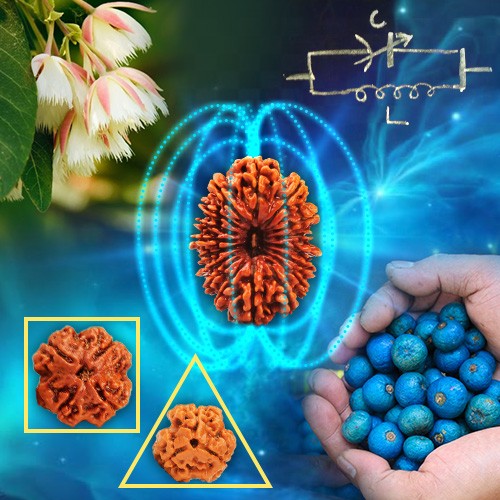
For seekers wishing to connect more deeply with the energy of Lord Shiva’s Third Eye, incorporating sacred tools into one’s spiritual practice can be highly beneficial. These items, rooted in Vedic wisdom, are designed to support meditation, chakra balancing, and inner awakening. Here are some powerful offerings from Rudraksha Ratna that align beautifully with the teachings of Shiva’s Third Eye:
Rudraksha Beads and Malas
1 Mukhi Rudraksha – Symbolizing Shiva himself, it enhances concentration and helps in attaining a meditative state.
Click Here to buy 1 Mukhi Rudraksha
5 Mukhi Rudraksha Mala – Ideal for chanting “Om Namah Shivaya,” it promotes calmness and spiritual growth.
Click Here to buy 5 Mukhi Rudraksha
Gemstones for Ajna Chakra Activation
Amethyst – Resonates with the Third Eye Chakra, enhancing intuition and spiritual clarity.
Lapis Lazuli – Aids in inner vision and deepened self-awareness.
Click Here to buy Lapis Lazuli
Sacred Idols and Yantras
Parad Shivling – Energizes the space with Shiva's transformative power and is ideal for home worship.
Click Here to buy Parad Shivling
Shree Yantra – Helps in aligning one's mind with the higher cosmic order, aiding in focus and meditation.
Click Here to buy Shree Yantra
Chakra Healing Jewellery
Brahma Bracelet – Supports clarity, willpower, and balanced thought, directly influencing the Ajna Chakra.
Click Here to buy Brahma Bracelet
Supreme Kavacham – A protective and empowering combination for spiritual alignment.
Click Here to buy Supreme Kavacham
Puja Services
Maha Mrityunjaya Puja – Dedicated to Lord Shiva, this powerful ritual invokes protection, healing, and Third Eye energy activation.
Click Here to buy Maha Mrityunjaya Puja
Each of these tools is designed to support your journey toward self-realization, inner vision, and spiritual awakening, key aspects of Shiva’s divine gaze.
To explore or purchase, visit Rudraksha Ratna .
-in-Astrology.jpg)
.jpg)


Shiva
|January 27, 2024
I want to know everything about shiva's third eye 👁️.