
Lord Shiva, revered as the Hindu god of transformation, plays a pivotal role in Hinduism. As Lord Shiva the destroyer in the Holy Trinity alongside Brahma and Vishnu. His divine purpose revolves around Moksha, the ultimate liberation from the cycles of birth and death. Shiva’s transformative power liberates us from worldly attachments, such as Kama (desire), Krodha (anger), Moha (delusion), Mada (pride), and Lobha (greed), guiding us toward self-realization and our true purpose. His act of destruction is not an end but a cosmic cleansing that sets the stage for new creation. As Satyam (Truth), Shivam (Goodness), and Sundaram (Beauty), Shiva embodies divine purity and godliness. The auspicious festival of Maha Shivratri, celebrated with Shivaratri puja, invokes the blessings of Lord Shiva and his consort, Goddess Parvati.
Symbolism and Attributes of Lord Shiva
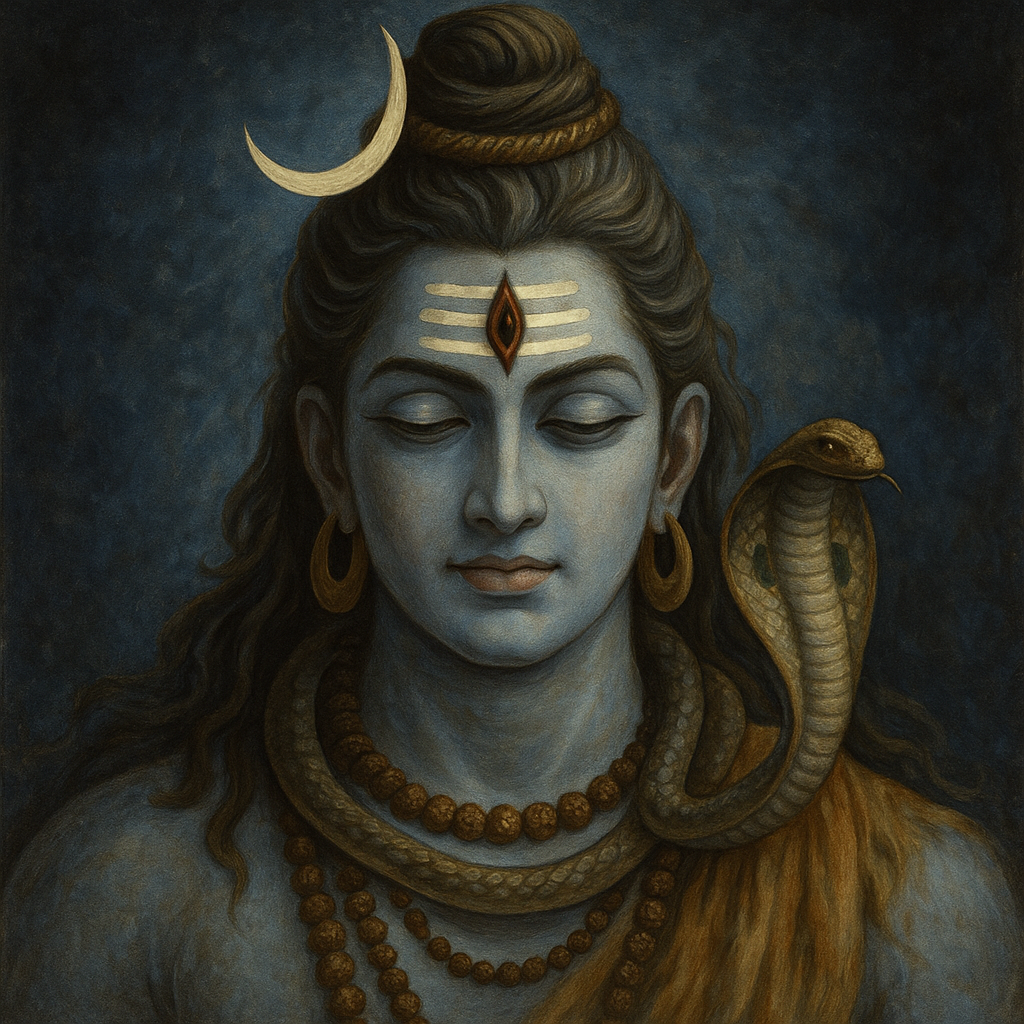
The various symbols associated with Lord Shiva reflect deep Shiva symbolism, each representing cosmic truths in Hindu philosophy. Lord Shiva’s appearance and attributes carry deep spiritual significance, each symbolizing a unique aspect of his cosmic nature. Here is a detailed explanation of his key symbols:
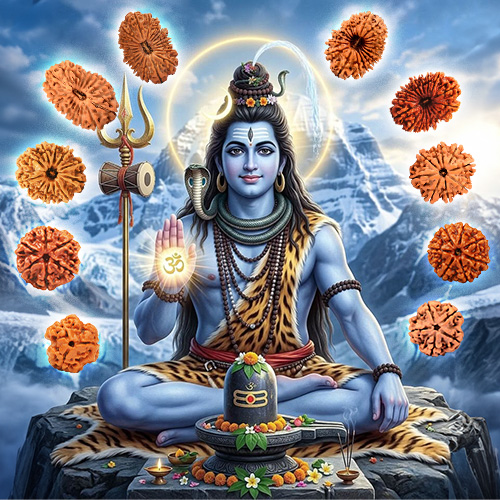
- The Third Eye: Located on Shiva’s forehead, the third eye symbolizes his all-seeing wisdom and ability to destroy ignorance. It represents higher consciousness and the power to perceive beyond the physical realm. When opened, the third eye emits a fiery energy capable of annihilating evil and delusion.
- Trishul (Trident): The trident represents the three gunas (qualities) that form the foundation of existence: Sattva (purity), Rajas (activity), and Tamas (inertia). It signifies Shiva’s mastery over these energies and his role in maintaining cosmic balance.
- The Snake (Vasuki): The serpent coiled around Shiva’s neck represents his control over primal energies and fearlessness in the face of death and poison. It also symbolizes Kundalini energy, the dormant spiritual power that resides within every being.
- Tiger Skin: Shiva’s tiger skin attire signifies his victory over desires and the mind. The tiger, a symbol of lust and aggression, is subdued under his control, reflecting his ascetic nature and transcendence of worldly attachments.
- Ash-Smeared Body: The ash on Shiva’s body symbolizes impermanence and the ultimate reality of life—that everything material will return to dust. It also reflects his renunciation of worldly pleasures.
- Rudraksha Beads: Rudraksha, sacred seeds associated with Lord Shiva, adorn his neck and symbolize spiritual enlightenment, focus, and meditation. They are believed to protect against negative energies and promote inner peace.
- Nandi (The Bull): Shiva’s vehicle, Nandi, signifies joy, devotion, and strength. Nandi also represents patience and dharma (righteousness), standing as the gatekeeper to Shiva’s abode.
- Mount Kailasha: Shiva resides on Mount Kailasha, which symbolizes spiritual ascension and the ultimate goal of liberation. It is a sacred site that represents the stillness and serenity of meditation.
- The Crescent Moon: The crescent moon on Shiva’s head signifies the cyclical nature of time and his control over it. It also represents the soothing and nurturing aspect of his persona.
- The Ganga (River Ganges): The Ganga flowing from Shiva’s matted hair signifies purity, life, and sustenance. It symbolizes Shiva’s role as the bearer of cosmic energy and his ability to nurture creation.
Each of these attributes contributes to the understanding of Lord Shiva as the embodiment of cosmic balance, spiritual wisdom, and transcendence.
Forms of Shiva: Divine Manifestations of the Hindu God Shiva
Lord Shiva manifests in various forms, each reflecting a unique aspect of his divine essence and cosmic roles. Each of these forms of Shiva reveals a profound spiritual lesson and showcases the divine manifestations of Hindu god Shiva. These forms embody his dual nature as the creator and destroyer, guiding humanity toward spiritual evolution. Here is a detailed exploration of Shiva’s forms:
Aghora: Residing in cremation grounds, Aghora represents the destruction of fear and attachment. This form symbolizes Shiva’s ability to transcend life and death, showing the ultimate truth of existence beyond the material world.
Ishana: Often depicted as the Shivalingam, Ishana embodies Shiva’s creative energy and the purity of consciousness. This form signifies the omnipresent nature of Shiva, manifesting in all dimensions of creation.
Tat Purusha: In this meditative form, Shiva represents stillness and introspection. Tat Purusha reflects the power of deep meditation (Samadhi), encouraging devotees to seek the formless essence of the divine.
Varna Deva: Known as the eternally auspicious Shiva, Varna Deva embodies peace, compassion, and benevolence. This form highlights Shiva’s nurturing aspect, protecting and guiding his devotees.
Sadyojat (Braddha Rudra): Sadyojat symbolizes Shiva’s wrathful and transformative nature. Representing the old, wise, and wrathful form of Shiva, it signifies destruction as a precursor to renewal and regeneration.
Nataraj (The Cosmic Dancer): In this iconic form, Shiva performs the Tandava, the cosmic dance of creation and destruction. Nataraj’s dance represents the cycles of birth, life, and death, crushing ignorance (Apasmara) underfoot. The raised foot symbolizes liberation, while the fire in his hand signifies purification and the destruction of illusions.
Mahamrityunjaya: Depicted as the conqueror of death, Mahamrityunjaya emphasizes Shiva’s power to eradicate disease, suffering, and fear of mortality. Chanting the Mahamrityunjaya mantra invokes healing and immortality, reflecting this form’s protective energy.
Ardhnarishwara: This unique form portrays Shiva as half-man, half-woman, signifying the unity of Shiva and Shakti (energy). Ardhnarishwara emphasizes the balance between masculine and feminine forces, highlighting the importance of harmony in creation.
Each form of Shiva reveals a profound lesson, guiding devotees toward self-realization, balance, and liberation.
The Shiva Lingam: Symbol of Creation and Energy
The Shiva Lingam is a profound representation of Lord Shiva in his formless, eternal essence. It is conceived as the unborn and invisible form of Shiva, symbolizing his creative and regenerative energy. The Shiva Lingam is worshipped across Shiva temples as a representation of his formless and eternal essence.
One of Shiva’s most iconic connections to the Lingam is his association with water and life. When Ganga incarnated on Earth, Shiva captured her in his matted hair to prevent her from flooding the world, thereby becoming known as Ganagadhar, the bearer of the sacred Ganges. This act signifies Shiva’s role in balancing cosmic energies and sustaining creation. His matted hair also earns him the name Jatadhari, cherished by his ascetic followers.
As a perfect being, Shiva is revered as Siddheshwar, the embodiment of spiritual perfection. His Trishul (trident), held in hand, symbolizes his fearless and heroic nature as Trisuladhari. Shiva’s role as a teacher is immortalized in the form of Dakshinamurti, the world teacher, celebrated in Adi Shankara’s famous work, 'Hymns to Dakshinamurti'.
Shiva’s Lingam is a reminder of his vast and boundless love for creation. It allows followers immense freedom in worship, offering a path to self-realization suited to their unique spiritual inclinations. This is one of the reasons why Shiva’s worshippers, known as Shaivites, are among the most devoted ascetics, often smearing their bodies with ashes, donning saffron robes, and wearing Rudraksha malas. For Shaivites, the Lingam represents the ultimate inward journey to discover the inner self and attain liberation.
Relationship Between Shiva and Parvati
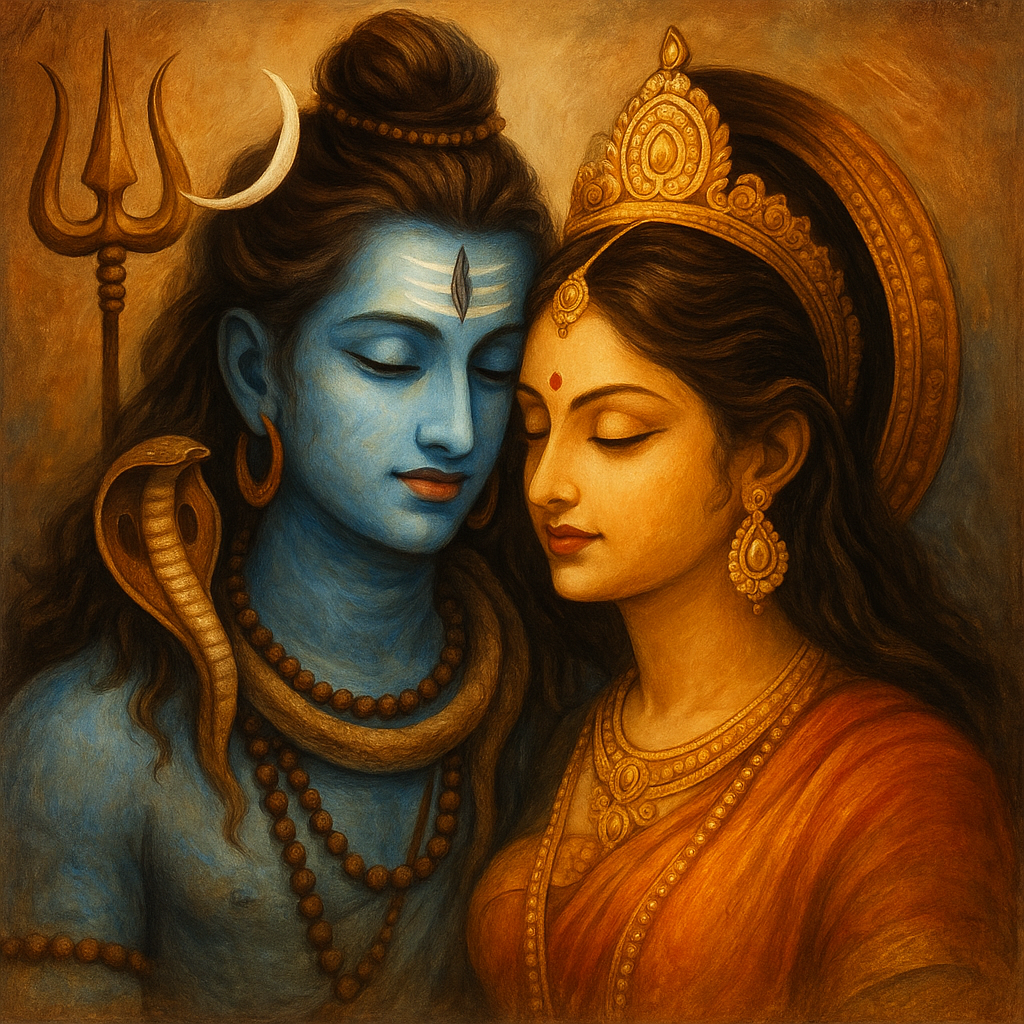
The relationship between Lord Shiva and Parvati is a profound embodiment of cosmic balance and divine love. Parvati, Shiva's consort, is regarded as his Shakti (energy), completing and complementing his consciousness. Together, they represent the union of power and purpose, with Parvati symbolizing the dynamic force and Shiva embodying the stillness of awareness.
Shiva's first wife was Sati, a manifestation of Adhi Shakti. After her self-immolation, Sati reincarnated as Parvati to reunite with Shiva. This cycle signifies the eternal bond between Shiva and Shakti. Parvati is also known by various names, such as Uma, Gauri, Durga, Kali, Annapurna, and Shakti, each representing different aspects of divine feminine energy.
Shiva and Parvati’s relationship is not just of a husband and wife but also as spiritual companions. While Shiva imparted Vedanta (transcendent knowledge) to Parvati, she taught him Sankhya (cosmological knowledge), demonstrating their intellectual and spiritual partnership. Both are considered perfected yogis, embodying the ultimate balance of discipline and devotion.
Shiva is known by numerous titles that reflect his multifaceted nature. As Kailasapathi, he is the Lord of Kailash, his divine abode in the Himalayas. As Purusha, he is the cosmic being, and as Pasupathinath, he is the protector of all living beings. Parvati’s influence further softens Shiva’s fierce aspects, showcasing their perfect harmony.
The divine couple is also parents to Ganesha and Kartikeya. Ganesha, the remover of obstacles, represents wisdom, while Kartikeya, the warrior god, symbolizes courage. Their family dynamic portrays the completeness and diversity of the universe itself.
The story of Shiva and Parvati continues to inspire devotees, symbolizing the path to enlightenment through balance, love, and spiritual growth.
Shiva and Parvati’s union epitomizes cosmic balance. Parvati, Shiva’s consort and Shakti (energy), complements Shiva’s consciousness. Their relationship is a profound blend of devotion, knowledge, and spirituality. While Shiva imparted Vedanta (transcendent knowledge) to Parvati, she taught him Sankhya (cosmological knowledge). Together, they are parents to Ganesha and Kartikeya, symbolizing wisdom and courage.
Nataraj: The Cosmic Dance of Shiva
Shiva’s form as Nataraja, the Lord of Dance, is a profound depiction of the cosmic cycles of creation, preservation, and destruction. This iconic representation of Shiva emphasizes the dynamic interplay of energy that sustains the universe, seamlessly merging motion and stillness into a single, eternal rhythm.
In the Nataraja depiction, Shiva is portrayed dancing within a circular frame, often referred to as the 'circle of the cosmos.' This circle represents the universe and the eternal flow of time, encompassing birth, life, and death. Each element of the image is deeply symbolic:
The Tandava Dance: Shiva’s dance, known as Tandava, symbolizes the five cosmic acts (Panchakritya): creation (Srishti), preservation (Sthiti), destruction (Samhara), concealment (Tirobhava), and grace (Anugraha). The dynamic movements of the dance illustrate the eternal energy of the cosmos.
The Raised Foot: One of Shiva’s feet is lifted, symbolizing liberation from ignorance and worldly attachments. It invites devotees to rise above the illusions of the material world and attain spiritual freedom.
The Demon Apasmara: Beneath Shiva’s dancing form lies the demon Apasmara, representing ignorance and forgetfulness. By crushing this demon, Shiva demonstrates his role as the destroyer of ignorance and the liberator of souls.
The Flame of Destruction: Shiva holds a flame in one hand, symbolizing the destructive aspect of his nature. This fire represents the end of the old and the beginning of the new, ensuring the continuity of creation.
The Drum (Damaru) : In another hand, Shiva holds a drum, representing the primordial sound of creation. This drumbeat signifies the rhythm of life and the unfolding of the universe through sound.
The Serene Expression: Despite the vigorous dance, Shiva’s face remains calm and serene, symbolizing his mastery over the chaos of creation and destruction.
The depiction of Nataraja is not only a powerful spiritual symbol but also a profound scientific metaphor. The cosmic dance of Nataraja mirrors the perpetual motion of subatomic particles in the universe. In acknowledgment of this parallel, a statue of Nataraja stands at the entrance of CERN, the European Organization for Nuclear Research in Switzerland, symbolizing the harmony between ancient philosophy and modern science.
Through the image of Nataraja, Lord Shiva invites humanity to embrace the cycles of change, destruction, and renewal as a natural part of existence, ultimately leading to liberation and self-realization. In his form as Nataraj, Shiva performs the Tandava, the cosmic dance that signifies the cycles of creation, preservation, and destruction. This dance also represents the rhythm of the universe and the transcendence of ignorance. In this pose, Shiva’s raised foot points to liberation, while his hand gestures reassure devotees of protection. The fire in his hand signifies destruction, paving the way for renewal.
Maha Shivratri: The Night of Shiva
Maha Shivratri, which translates to 'The Great Night of Shiva,' is one of the most significant festivals dedicated to Lord Shiva. Maha Shivratri is celebrated at every major Shiva temple in India with Shiva worship, mantra chanting, and offerings to the Shiva Lingam. Celebrated annually on the 14th night of the lunar month of Phalguna, it marks a powerful spiritual event when devotees come together to worship Shiva with utmost devotion and surrender. This night is believed to be when Shiva performed the Tandava, his cosmic dance of creation, preservation, and destruction, and also signifies the union of Shiva and Shakti.
Devotees observe Maha Shivratri through intense spiritual practices, including fasting, meditation, and chanting of mantras such as 'Om Namah Shivaya' and the Mahamrityunjaya Mantra. The night-long vigil and prayers symbolize the journey from darkness to light, ignorance to wisdom. Offering Bilva leaves, water, and milk to the Shiva Lingam is considered highly auspicious, as it pleases Lord Shiva and invokes his blessings for spiritual growth and liberation.
Maha Shivratri is also a time for inner reflection and self-discipline. It is said that the planetary alignment on this night creates a powerful energy conducive to meditation and spiritual awakening. Observing the festival with sincerity and devotion can help individuals transcend worldly attachments and realize their higher purpose.
The festival holds great significance at major Shiva temples across India, especially in Kashi Vishwanath, Somnath, and Chidambaram, where elaborate rituals and celebrations are conducted. Maha Shivratri is not just a religious occasion but a universal call to align oneself with the cosmic rhythm and seek the divine grace of Lord Shiva.Maha Shivratri is a sacred festival dedicated to Lord Shiva. On this night, devotees perform special pujas, chant mantras, and offer Bilva leaves to seek Shiva’s blessings. Observing Shivratri is believed to bestow spiritual growth, liberation, and inner peace.
Rudraksha: Sacred Beads of Lord Shiva
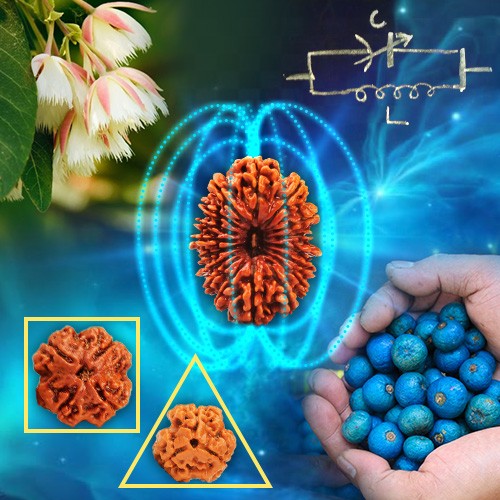
Rudraksha beads, sacred to Lord Shiva, are often used in chanting mantras like Om Namah Shivaya during Shiva worship. The term 'Rudraksha' is derived from the Sanskrit words 'Rudra' (a name for Shiva) and 'Aksha' (meaning 'eyes' or 'tears'), translating to 'the tears of Rudra.' According to ancient scriptures, these beads originated from the tears shed by Lord Shiva during deep meditation for the well-being of all creatures. As his tears fell to the earth, they transformed into Rudraksha trees, bearing the sacred seeds revered today.
Botanically, Rudraksha beads are the dried seeds of the Elaeocarpus ganitrus tree, predominantly found in regions of Nepal, India, and Indonesia. The seeds are encased in a blue outer fruit when ripe, often leading to the nickname 'blueberry beads.' Each bead features natural grooves, known as 'mukhis' or faces, ranging from one to twenty-one. These faces are believed to represent different deities and possess distinct spiritual benefits.
Rudra Centre is a pioneer in offering authentic Rudraksha online since 1997, serving devotees across the globe. It offers a wide range of Rudraksha beads—from 1 Mukhi to rare and powerful Trijuti Rudraksha.
Wearing Rudraksha beads is considered an act of devotion towards Lord Shiva, serving as a tangible connection between the devotee and the divine. They are commonly used in meditation practices, aiding concentration and fostering a sense of inner peace. The beads are often strung into malas (prayer beads) of 108 beads, a number traditionally significant in Hinduism, used to count repetitions of mantras such as 'Om Namah Shivaya.'
Beyond their spiritual importance, Rudraksha beads are also attributed with protective and healing properties. They are believed to create a cocoon of the wearer's own energy, acting as a shield against negative influences. Additionally, the unique vibration of Rudraksha is said to calm the mind and soothe the nervous system, promoting mental clarity and emotional balance.
In essence, Rudraksha beads symbolize the compassionate grace of Lord Shiva, offering devotees a means to connect with his energy, seek protection, and progress on their spiritual journey.
To explore and buy Rudraksha beads, check out the complete range by clicking on the link below.
Transform your Live with Rudraksha
Powerful Shiva Mantras for Transformation, Protection, and Liberation
Chanting Shiva mantras invokes the supreme energy of transformation and protection. Some of the most revered mantras include:
- “Om Tat Purushaya Vidmahe Mahadevaya Dhimahi Tanno Rudra Prachodayat” Meaning: We pray to Mahadeva, the supreme of all gods, to bestow intellect and liberation from ignorance.
- “Om Namah Shivaya” Meaning: I bow to Shiva, the all-auspicious Divine.
- “Om Namo Bhagwate Rudraay” Meaning: This Rudra mantra is recited to seek Shiva’s blessings and fulfill one’s wishes.
- “Karcharankritam Vaa Kaayjam Karmjam Vaa Shravannayanjam Vaa Maansam Vaa Paradham | Vihitam Vihitam Vaa Sarv Metat Kshamasva Jay Jay Karunaabdhe Shree Mahadev Shambho” Meaning: May the Supreme One purify our body, mind, and soul from all negatives, failures, and distress.
- “Om Tryambakam Yajamahe Sugandhim Pushti-Vardhanam Urvarukamiva Bandhanan Mrityormukshiya Mamritat” (Mahamrityunjaya Mantra) Meaning: We worship the Three-eyed Lord Shiva, who nourishes all beings. May he free us from death and grant us immortality.
- “Mrutyunjayaaya Rudraaya Neelakantaya Shambhave Amriteshaaya Sarvaaya Mahadevaaya Te Namaha” Meaning: We bow to Shiva, the conqueror of death, destroyer of illusions, and the blue-throated one.
- “Karpur-Gauram Karunaavtaaram Sansaar-Saara Bhujagendrahaaram Sadaa Vasantam Hridyaravinde Bhavam Bhavaani Sahitam Namaami” Meaning: I bow to Shiva, as pure as camphor, the essence of compassion, who resides in the lotus-like heart and is accompanied by Parvati.
Conclusion: Shiva, the Eternal Guru
Lord Shiva, the Eternal Guru and cosmic force, transcends time and space as a symbol of transformation, balance, and liberation. His myriad forms, from the tranquil meditator Tat Purusha to the dynamic cosmic dancer Nataraja, reveal the boundless dimensions of his essence. Through the powerful symbolism of the Shiva Lingam, the sacred Rudraksha beads, and the profound cosmic lessons embedded in Maha Shivratri, Shiva’s presence guides humanity toward spiritual awakening and self-realization.
The union of Shiva and Parvati embodies the harmony of consciousness and energy, serving as a divine inspiration for seekers to balance their inner worlds. His teachings through Vedanta, his protection through the Mahamrityunjaya mantra, and his destruction of ignorance through the Tandava, together offer a path of hope, renewal, and inner clarity.
In modern times, the ancient wisdom of Shiva resonates universally, bridging spirituality with science, as seen in the symbolism of Nataraja at CERN. Whether through his compassionate grace as Rudra or his fearless strength as Trisuladhari, Shiva reminds us to embrace change, seek truth, and transcend the illusions of the material world.
As devotees and seekers turn to him for guidance, Lord Shiva remains a timeless beacon of light, offering liberation and enlightenment to all who seek to understand the profound mysteries of existence. His eternal dance continues to inspire the rhythm of life, urging us to awaken the divinity within and merge with the cosmic whole.
-in-Astrology.jpg)
.jpg)


Sujatha Vadisela
|August 17, 2025
Thankyou I really love it
Rhitabrata
|March 2, 2024
This is very informative. Thank you!
Rhitabrata
|March 2, 2024
Very informative! Thanks for sharing.