

The Janeyu, also known as Yajnopavita or the sacred thread, is one of the most important symbols of Hindu tradition. More than just a thread, it represents a vow of discipline, purity, and spiritual responsibility. Worn across the left shoulder and resting diagonally on the chest, the Janeyu marks the beginning of a new spiritual journey in a person’s life.
The ritual of investing a young boy with the Janeyu, called Upanayana Sanskar, is described in the Vedas as the “second birth.” The first birth is from one’s parents, while the second is entry into the world of knowledge, guided by a Guru. From that moment, the wearer of the Janeyu is reminded daily of his duties to God, to his parents, and to his teachers, while also committing himself to a life of truth, study, and dharma.
Through centuries, the Janeyu has remained a sacred marker of learning, faith, and the eternal bond between the soul and the Supreme.
What is Janeyu (Yajnopavita)?
The word Janeyu is a common name for Yajnopavita, which literally means “sacred thread worn for yajna or spiritual purpose.” It is made of three thin cotton strands, tied together with a sacred knot, and worn diagonally across the body- from the left shoulder to the right side of the waist.
Each strand of the Janeyu carries profound symbolism. It represents the three key responsibilities of a human being:
- Duty towards the Divine
- Duty towards one’s parents and teachers
- Duty towards society and self-discipline
Some traditions also interpret the three strands as the trinity of deities- Brahma (creation), Vishnu (preservation), and Shiva (transformation)- or as the three states of existence- body, mind, and soul.
When a boy receives the Janeyu during the Upanayana Sanskar, he is considered “twice-born” (Dvija). The first birth is physical, and the second birth marks entry into the life of study, discipline, and spiritual responsibility. Wearing the Janeyu thus becomes a constant reminder of one’s vow to live with purity, truth, and devotion.
Scriptural References to Janeyu
The practice of wearing a Janeyu is not a social custom alone, it is firmly rooted in Vedic and Smriti traditions. Ancient texts highlight its importance as a sacred marker of initiation into a life of discipline and spiritual learning.
In the Vedas
The Rigveda and Yajurveda mention the Upanayana Sanskar, the initiation ceremony where the sacred thread is bestowed upon a young student. This ritual marked the beginning of Vedic study, where the boy was introduced to his Guru and the recitation of the Gayatri Mantra.
In the Manusmriti
The Manusmriti prescribes the sacred thread as an external sign of a Dvija (twice-born). It states that Brahmins, Kshatriyas, and Vaishyas should undergo the Upanayana ceremony, after which they become eligible to learn and practice the Vedas.
In the Yajnavalkya Smriti
This text emphasizes that wearing the Janeyu is not a temporary practice but a lifelong vow. It affirms that one must keep the sacred thread while performing daily rites, yajnas, and samskaras.
In the Grihya Sutras
The Grihya Sutras detail how the ceremony is to be performed- including mantras, offerings, and the exact way the thread should be worn across the body. They also prescribe the rules of conduct for a person who has been initiated with the Janeyu.
Taken together, these scriptural references show that the Janeyu is more than a piece of thread- it is an ancient spiritual discipline, sanctified by divine authority, and carried forward by tradition for thousands of years.
Spiritual Significance of Wearing Janeyu
The Janeyu is far more than a ritual ornament- it is a sacred reminder of spiritual rebirth and responsibility. Every strand and every knot woven into it carries a meaning that shapes the wearer’s inner journey.
The Second Birth
Hindu tradition teaches that every person has two births. The first is the physical birth from one’s parents. The second comes with Upanayana Sanskar, when the Guru accepts the child as a disciple. This “second birth” transforms the child into a Dvija (twice-born), ready to walk the path of knowledge, self-discipline, and dharma.
Meaning of the Three Strands
The three strands of the Janeyu remind the wearer of his three lifelong debts:
- To the Gods, for the gift of life
- To the Rishis, for the wisdom of the scriptures
- To the Ancestors, for carrying forward the lineage
They are also seen as symbols of purity in thought, word, and action, or as the three deities Brahma, Vishnu, and Shiva, guiding the wearer through creation, preservation, and transformation.
A Vow of Discipline
Wearing the Janeyu is a daily reminder of restraint, humility, and sacred duty. It commits the wearer to rise early, chant the Gayatri Mantra, practice self-control, and live with integrity. It is said that the thread constantly “touches the heart,” reminding the soul of its higher calling.
Connection to Divine Energy
Placed over the left shoulder and across the body, the Janeyu rests close to the heart and spine- symbolizing the channel of prana (life force). In yogic thought, this placement helps the devotee align body, mind, and spirit toward the Divine.
In this way, the Janeyu becomes more than a thread- it becomes a spiritual compass, guiding the devotee through every stage of life.
Ritual and Cultural Role of Janeyu
The Janeyu is inseparable from the Upanayana Sanskar, one of the most sacred rites of passage in Hindu tradition. This ceremony and its ongoing practices weave the thread into the very fabric of a devotee’s daily life.
Upanayana Sanskar: The Sacred Initiation
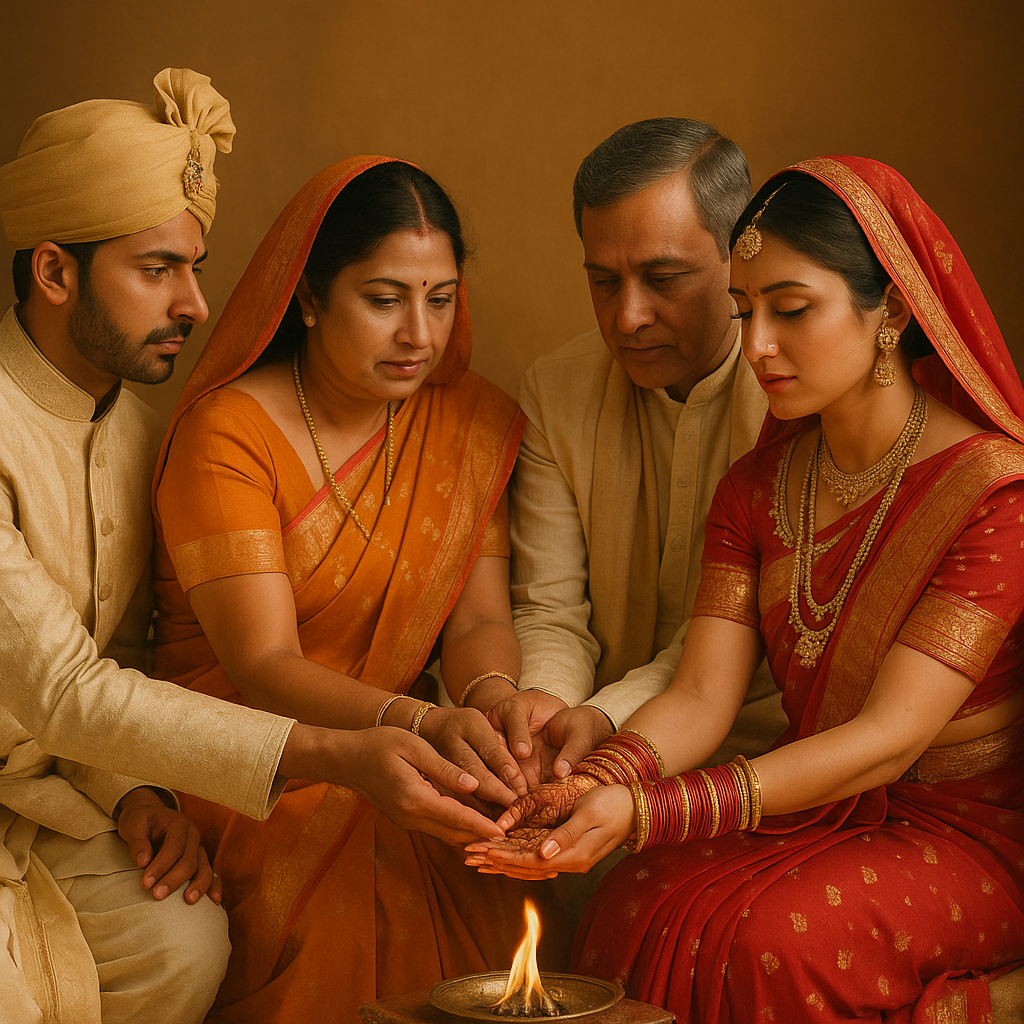
The Janeyu is first bestowed during the Upanayana ceremony, usually performed between the ages of seven and twelve. At this moment, the child is introduced to the Gayatri Mantra and formally begins a life of learning under the guidance of a Guru. His head is shaved, leaving a tuft (Shikha) as a sign of focus on spiritual knowledge, and the thread is placed across the body with mantras of purification and protection.
Who Traditionally Wears It
- Brahmins wear the Janeyu to signify their commitment to scriptural study and priestly duties.
- Kshatriyas wear it as a vow to protect dharma through courage and service.
- Vaishyas wear it to carry forward their duty of trade, prosperity, and community support.
- Although most common among these three varnas, in some region's women known as Brahmavadinis- also received the sacred thread as part of their spiritual journey.
Role in Daily Life and Rituals
Once invested, the Janeyu becomes part of a devotee’s daily routine. It is worn while performing:
- Sandhyavandanam (morning and evening prayers)
- Pujas and homas (ritual offerings and fire ceremonies)
- Samskaras (rites of passage like marriage, ancestor rituals, and shraddha)
- Even simple acts like eating food or reciting mantras are traditionally done only while wearing the Janeyu, reinforcing its role as a constant spiritual companion.
In this way, the Janeyu is not only a symbol of initiation but also a lifelong reminder of one’s dharmic responsibilities, tying together culture, ritual, and daily living.
Scientific and Yogic Perspective of the Janeyu (Yajnopavita)
Energy channels in yoga
In yogic philosophy, the human body has subtle energy channels called nadis. The main three are ida (left, lunar), pingala (right, solar), and sushumna (central). The Janeyu is seen as a reminder to keep these channels balanced through mantra, breath, and disciplined living. This is more of a spiritual map than a medical explanation, but it shows how closely the thread is tied to awareness and focus.
Ways of wearing the thread
Tradition describes three main ways of wearing the Janeyu:
Upavita, Pracinavita and Nivita positions are symbolic, connecting the wearer to deities, ancestors, or worldly duties.
The right ear custom
During bathing or certain rites, many families place the Janeyu over the right ear. This keeps the thread pure according to tradition. Some believe that light pressure on the ear can also calm the body and mind, since parts of the ear are linked to the nervous system.
Mantra, breath, and calmness
The Janeyu is always linked with the chanting of the Gayatri Mantra and daily practice of sandhyavandanam. Chanting mantras with slow breathing is known to steady the heartbeat, calm the nervous system, and reduce stress. In this way, the thread is part of a wider spiritual routine that helps both body and mind.
Posture and mindfulness
Because the Janeyu rests diagonally across the chest, it often reminds the wearer to sit upright and stay mindful of breath. This simple physical awareness supports focus and meditation.
Clearing a common myth
Some people say that wearing the thread on the left shoulder “activates the right brain.” This is not backed by science. What is true, however, is that the chanting, breathing, and mindful practices that go along with the Janeyu bring calmness, better concentration, and inner balance.
Regional and Sectarian Variations of the Janeyu (Yajnopavita)
Though the sacred thread looks the same everywhere, the way it is named, worn, and celebrated changes across India and among different traditions.
Different Names in Different Regions
The Janeyu is known by many names: Janoi in Gujarat, Poite in Bengal, Munj or Vratabandh in Maharashtra, Upanayanam or Poonul in Tamil Nadu, Janivara in Karnataka, and Yagnopaveetam in Andhra and Telangana. Despite the differences, all of these point to the same sacred thread ceremony.
Age and Ceremony
Traditionally, the Upanayana Sanskar was performed around the ages of 8 to 12, though scriptures allowed some flexibility. Today, families may perform it at different ages depending on custom and convenience.
Material of the Thread
In ancient times, Brahmins used cotton, Kshatriyas hemp, and Vaishyas wool. Nowadays, cotton threads are used almost everywhere because of their purity and simplicity.
Number of Strands and How It’s Worn
The sacred thread usually has three strands, sometimes more for married men. It is worn in three ways:
Upavita –
over the left shoulder, used for daily prayers and worship.
Pracinavita –
over the right shoulder, for ancestor rituals and funerals.
Nivita –
around the neck, for certain household activities.
South Indian Customs
In Tamil families, the ceremony is called upanayanam or poonul kalyanam. A waist belt of sacred grass is tied, and the three strands are often explained as symbolizing the goddesses Saraswati, Lakshmi, and Parvati. In Karnataka and Andhra, the thread is called janivara or yagnopaveetam with slight variations in mantras and rituals.
Western and Eastern Traditions
In Maharashtra, the ceremony is popularly known as munj or vratabandh. In Gujarat, it is janoi. In Bengal, it is called poite and is often accompanied by local songs and rituals, but the essence- the vow of learning and discipline- remains the same.
Women and Janeyu
Ancient texts mention two paths: some girls who pursued scriptural study underwent Upanayana and were called brahmavadinis, while others received a symbolic form of the rite at marriage. Today, this varies depending on family tradition.
Differences Between Lineages
- Sri Vaishnava and Smarta families follow a similar ritual but differ in the mantras emphasized and in tilak or markings used.
- Gaudiya Vaishnava traditions sometimes give the sacred thread as a “second initiation” to committed practitioners, regardless of birth.
- Lingayats and some reform movements do not use the thread, preferring other symbols of devotion.
Why Women Traditionally Do Not Wear the Janeyu
In Hindu tradition, the sacred thread ceremony (Upanayana) was mainly performed for boys. It marked their entry into the study of the Vedas and a life of discipline. For girls, marriage was seen as the equivalent rite of passage, which is why most families did not give them the Janeyu.
However, early scriptures and stories mention women called brahmavadinis- seekers like Gargi and Maitreyi- who studied deeply and, in some cases, also underwent the sacred thread initiation. Texts like the Grihya Sutras describe two paths for women: the brahmavadini, who pursued Vedic knowledge, and the sadyovadhu, for whom marriage became the main samskara. This shows that practices were not the same everywhere in ancient times.
Over time, the more common custom became that men wore the Janeyu, while women received other sacred symbols, such as the mangalsutra, after marriage. Today, most traditions keep this distinction, though some modern teachers encourage equal spiritual study for women, even without the thread.
How to Practice Wearing Janeyu Today
In ancient times, the Janeyu was invested through the Upanayana Sanskar in Gurukuls, where a child was trained in Vedas and discipline under a Guru. While the Gurukul system may not exist in the same way today, the essence of the Janeyu tradition is still alive- reminding the wearer of purity, duty, and higher learning.
The Ceremony in Modern Homes and Temples
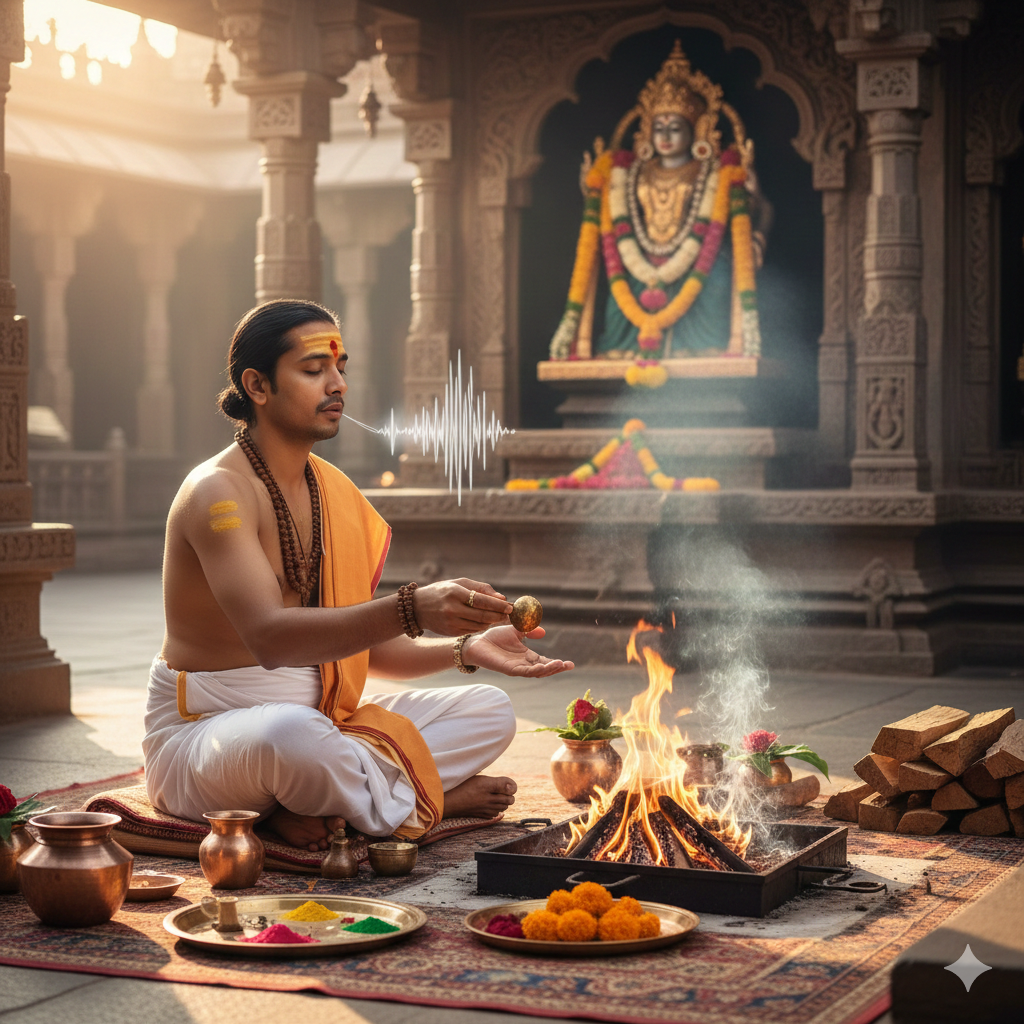
Many families still perform the sacred thread ceremony at the age of 7–12, often with the guidance of priests who recite Vedic mantras and teach the child the Gayatri Mantra. Even if performed later in life, the ceremony is considered a powerful spiritual rebirth, making the person eligible for scriptural study and ritual responsibilities.
Daily Discipline with the Thread
Wearing the Janeyu today is not just about keeping it on the body, it is about remembering its meaning through daily practices:
- Chanting the Gayatri Mantra morning and evening.
- Performing Sandhyavandanam or simple prayers at sunrise and sunset.
- Using the thread correctly in rituals- over the left shoulder for puja, over the right for ancestral offerings.
- Treating the thread with respect by keeping it clean and never placing it casually on the ground.
Spiritual Reminder in Modern Life
In today’s busy world, the Janeyu can be seen as a subtle companion that keeps one connected to dharma. Its constant touch on the body reminds the wearer to keep thoughts, words, and actions pure. Even if one cannot follow every ancient rule strictly, approaching the Janeyu with sincerity, respect, and devotion is enough to preserve its essence.
Symbol of Identity and Continuity
For many, the Janeyu is also a way of carrying forward the family’s spiritual heritage. While some wear it strictly with daily rituals, others keep it mainly for special occasions like weddings, festivals, or shraddha ceremonies. Both approaches show how the sacred thread adapts to modern lifestyles while still keeping its sacred meaning intact.
-in-Astrology.jpg)
.jpg)


Comments 0
Leave your thought here