

In every Hindu marriage, the Kanyadaan ceremony is regarded as one of the most sacred and emotional rituals. It is the moment when the bride’s parents, especially her father, place her hand into the groom’s, symbolizing trust, responsibility, and blessing. The Sanskrit word Kanyadaan combines kanya (daughter) and daan (sacred gift), reflecting the offering of the daughter to her new partner in life. Seen as a mahadaan (the greatest of gifts), this ritual carries deep spiritual, cultural, and emotional meaning. The bride is revered as Goddess Lakshmi, while the groom is honored as Lord Vishnu, making the act of Kanyadaan not just a family tradition but a divine union blessed by the gods.
Scriptural and Spiritual Significance of Kanyadaan
Kanyadaan is described in Hindu scriptures as one of the noblest acts a parent can perform. In the Grihya Sutras and Dharmashastras, it is praised as a sacred duty that brings immense spiritual merit. The word daan (gift) here is not just material but spiritual, symbolizing the offering of life itself, since a daughter is seen as a manifestation of divine energy.
The ritual is considered a Mahadaan- the greatest of all offerings. Unlike gifts of land, wealth, or cattle, which are temporary, the gift of a daughter is believed to create eternal merit, purify past karmas, and grant blessings for future lifetimes. Texts such as the Manusmriti and Vishnu Purana emphasize that a parent performing Kanyadaan gains spiritual elevation, as it is an act done without expectation of return.
In the ceremony, the bride is revered as an embodiment of Goddess Lakshmi, the goddess of prosperity, while the groom is regarded as Lord Vishnu, the divine preserver. This symbolism elevates the union beyond human ties, turning it into a sacred covenant between divine principles. Offering the daughter to Vishnu in the form of the groom is thus seen as entrusting her to the highest protector of dharma.
Spiritually, Kanyadaan also represents the law of detachment. For the parents, it is a moment of surrender, releasing attachment while blessing their daughter’s new journey. For the bride, it is a transformation from maidenhood to wifehood, guided by the blessings of gods, ancestors, and family elders.
Procedure of Kanyadaan in Hindu Marriage (Step-by-Step)
Purification and vow (sankalpa)
At the mandap, the priest begins with invocations and a brief vow by the families to perform the rite with devotion. This sets the spiritual intent for Kanyadaan within the larger wedding sequence.
Bride’s arrival
The bride is brought to the mandap- often by her maternal uncle or brother- amid mantras and blessings. In many South Indian traditions, she is seated on her father’s lap for the giving-away moment, underscoring the emotional weight of the rite.
Lineage announcement and intent
The priest asks the bride’s father (or guardian) to state the families’ lineage and declare the intent to give the bride in marriage. This frames the union as a joining of two ancestral lines, not just two individuals.
Hasta-milap (joining of hands)
The father places the bride’s hand into the groom’s hand, asking him to accept her as an equal partner and care for her with righteousness. The priest guides specific Kanyadaan mantras during this joining.
Water libation (jala-dhara)
The bride’s mother pours sacred water- sometimes through the father’s cupped palm so it flows over the joined hands. This stream symbolizes blessings and the formal transfer of responsibility. Grains, rice, flowers, and betel nut may also be placed on the hands as auspicious tokens.
Acceptance vow and Vedic verses
The groom voices his acceptance in the presence of the sacred fire. Many lineages integrate verses associated with “taking the hand” from the marriage hymns of the Rig Veda, which sanctify the bond and the couple’s shared life duties.
Binding for unity (granthi-bandhan / cloth tie)
A sacred thread or cloth may lightly bind the couple’s hands or garments, signifying a firm, graceful union of minds and households. Regional forms vary, but the symbol of an unbreakable bond remains common.
Offerings and blessings
Fruits, flowers, and grains are offered, and elders bless the couple. In some traditions the father seeks a promise that the groom will support his wife in righteousness, livelihood, and shared joys.
What follows Kanyadaan
Depending on the region, the sequence moves to fire rituals, the mangal-sutra or sindoor rites, the seven steps, and circumambulation of the sacred fire. Kanyadaan typically precedes the sindoor or mangal-sutra rituals in many customs.
Regional notes
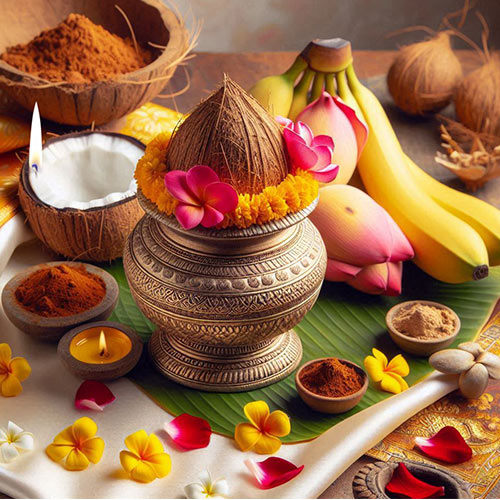
South Indian “Kannikadanam” often includes the bride seated on her father’s lap with a coconut in the joined hands while water is poured. North Indian weddings commonly emphasize the hand-joining, water libation, and cloth tie after the garland exchange. These are variations on the same core vow.
Emotional and Cultural Value of Kanyadaan
Kanyadaan is more than a ritual- it is one of the most emotional and deeply symbolic moments in a Hindu wedding. For the bride’s parents, especially her father, it represents the sacred act of entrusting their daughter into the care of another family. This moment is filled with both joy and poignancy, as it symbolizes the shift of responsibilities, blessings, and love from one household to another.
Culturally, Kanyadaan embodies the values of sacrifice and trust. The father gives his daughter, considered the most precious gift, without expecting anything in return- an act celebrated as mahadaan, the highest form of giving. The ritual also reinforces the belief that marriage is not merely a contract between two individuals, but a union of families, traditions, and divine forces.
On an emotional level, Kanyadaan captures the bittersweet reality of marriage: parents letting go of their daughter, and at the same time, blessing her new journey. The mother’s role in pouring holy water and the father’s act of joining hands reflect parental love, prayers for the couple’s well-being, and the hope that the groom will honour and cherish the bride as an equal partner.
For the community, this moment is a reminder of the sanctity of marriage, the continuity of family values, and the enduring importance of faith and tradition in Indian culture.
Scientific and Psychological Perspective of Kanyadaan
While Kanyadaan is rooted in Vedic tradition, it also holds deep psychological meaning that modern science helps us understand. Rituals often act as emotional anchors, providing structure to life’s transitions. Kanyadaan is one such rite that eases the shift of the bride and her family into a new phase of life.
For the parents, the act of formally placing their daughter’s hand in the groom’s hand creates a sense of closure. Psychologists explain that symbolic gestures, like the pouring of water or chanting of mantras, help process complex emotions. This ritual allows parents to release attachment while transforming their love into blessings for their child’s future.
For the bride, Kanyadaan marks a conscious acknowledgment of change. By being ritually “given away,” she symbolically steps from maidenhood into a new role as wife, supported by prayers and affirmations from both families. This makes the transition less overwhelming and more meaningful.
From a scientific perspective, the chanting of mantras, rhythmic music, and the presence of fire during the ceremony reduce stress and induce calm. Neuroscience studies show that rituals activate the brain’s reward system, releasing hormones like dopamine and oxytocin, which create feelings of connection, security, and joy.
Thus, Kanyadaan is not just a cultural obligation. It is a powerful psychosocial tool that strengthens family bonds, promotes emotional acceptance, and turns what could be an anxious moment into one filled with reverence, peace, and hope.
How the Ritual of Kanyadaan is Adapted Today
Both parents performing Kanyadaan - In many families, both mother and father together place the bride’s hand in the groom’s hand, emphasizing shared responsibility and blessings.
Bride’s conscious choice – Some weddings highlight the bride’s own willingness, showing that Kanyadaan is not only a parental offering but also her decision to step into marriage.
Mutual vows added – Couples often include promises of equality, love, and respect, where the groom accepts not only responsibility but also commits to partnership in every aspect of life.
Cultural explanation in diaspora weddings – Outside India, priests and families explain the meaning of Kanyadaan to guests, turning it into a moment of cultural learning and appreciation.
Simplified yet sacred – Even when the ritual is shortened, its essence, blessings, trust, and divine protection- is preserved.
Balance of tradition and modern values – The ceremony adapts to contemporary ideas of companionship while still honouring its roots in Vedic practice.
Regional Variations of Kanyadaan in India
While the essence of Kanyadaan- entrusting the bride to her husband- remains universal, its expression differs across regions, shaped by local customs, philosophies, and family traditions.
North India (Uttar Pradesh, Bihar, Rajasthan):
Kanyadaan here is a solemn and elaborate ritual. The father formally places his daughter’s hand into the groom’s palm, accompanied by Vedic mantras. The pouring of holy water and offerings of rice or flowers symbolize blessings. In many Rajput families, the ritual carries great pride, as the bride is considered a gift of honor.
South India (Tamil Nadu, Karnataka, Andhra Pradesh, Kerala):
The ritual is known as Kannikadānam in Tamil traditions. The bride is sometimes seated on her father’s lap, and a coconut or betel nut is placed in her hands while water flows from the mother’s palm to the groom’s. This emphasizes the sanctity of parental blessings. In Kerala’s Nair weddings, which follow matrilineal traditions, the ritual is simplified or replaced with Kanyadanam as part of the Thali Kettu (tying of the sacred thread).
Eastern India (Bengal, Odisha, Assam):
In Bengali weddings, the bride is brought in a palki or wooden seat, covering her face with betel leaves. The father then performs Kanyadaan by offering her hand to the groom while chanting mantras. In Odisha, the ritual is followed by Hastamilaap (joining of hands) and Saptapadi . In Assam, while Kanyadaan exists, in some communities, the emphasis is more on welcoming the groom into the bride’s family, reflecting a blend of traditions.
Western India (Maharashtra, Gujarat):
In Maharashtrian weddings, Kanyadaan is often combined with Kanyadān Samskār , where the father and mother together give away the bride. The ritual is highly symbolic, with the belief that giving away one’s daughter is the highest form of charity. In Gujarati weddings, the ritual is sometimes followed by Hasta Milap , where the priest ties the ends of the bride and groom’s garments together, signifying unity.
North-East India:
Among some tribes, especially in Meghalaya and parts of Assam, matrilineal traditions are strong. Here, the groom is welcomed into the bride’s household instead of the bride moving into the groom’s. In such customs, Kanyadaan may not take the central role, as the responsibility remains with the bride’s family. Instead, the rituals emphasize union, shared responsibility, and acceptance of the groom into the community.
Himalayan Regions (Himachal Pradesh, Uttarakhand):
Weddings often retain older Vedic styles of Kanyadaan, with rituals performed before the sacred fire in village temples. In some traditions, both parents together participate, highlighting equality in the act of giving their daughter to the groom.
Rudra Centre’s Kanyadaan
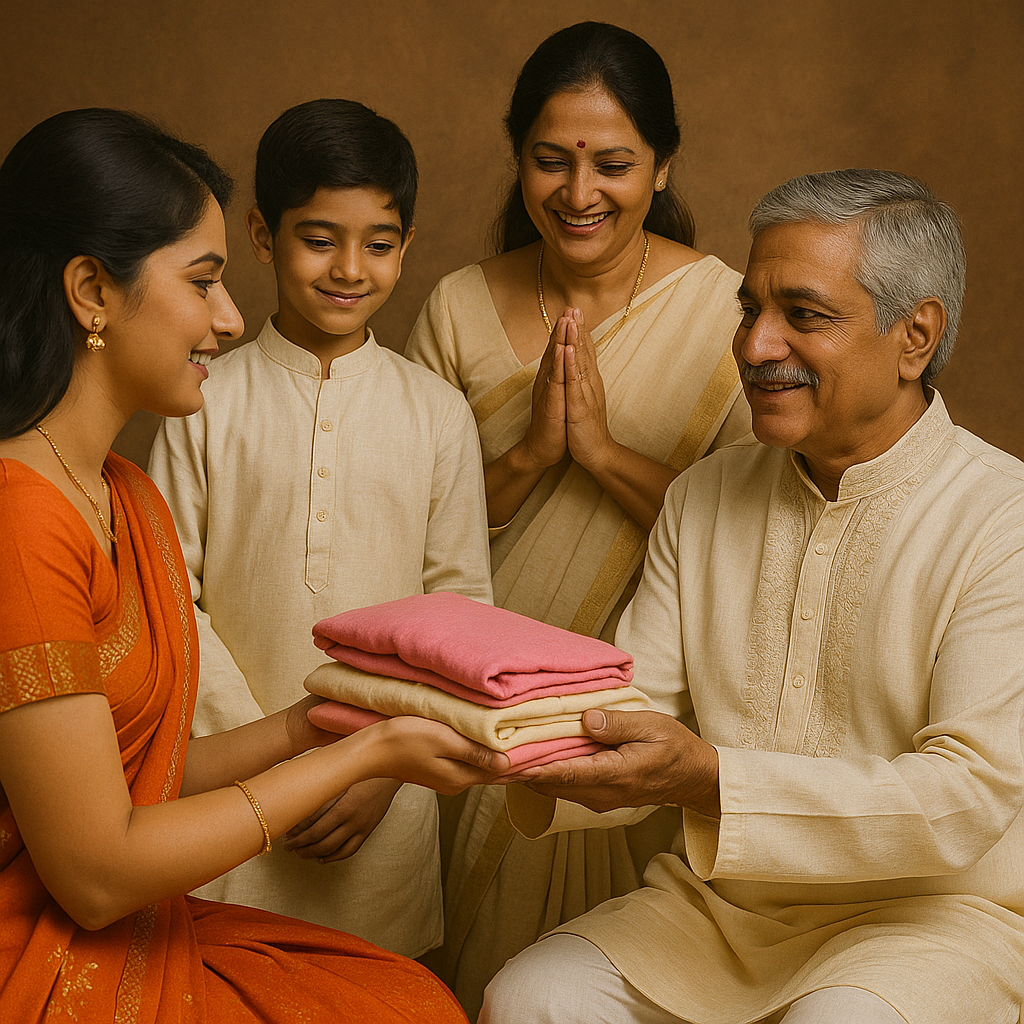
Rudra Centre offers the sacred service of Kanyadaan (Girl Marriage Donation), supporting the weddings of underprivileged girls. Considered a mahadaan (the greatest gift) in Hindu tradition, this act brings blessings of prosperity, health, and spiritual merit. By helping a girl begin her new life with dignity, devotees also honour the timeless ritual of Kanyadaan, performed with purity and compassion.
Click on the link to contribute to Rudra Centre’s Kanyadaan service
-in-Astrology.jpg)
.jpg)


Comments 0
Leave your thought here