

Prasad is one of the most cherished parts of a Hindu puja. After the rituals are complete, devotees receive a small portion of food, often sweets like laddu, peda, halwa or kheer, that has been lovingly offered to the deity. This sanctified food is not just a treat for the senses; it is divine grace made tangible.
In Sanskrit, the word Prasada means “favour” or “blessing.” Once the food is placed before the deity with devotion, it is believed to absorb sacred vibrations. When shared among devotees, it carries the grace of the Divine, reminding us that all nourishment, material and spiritual, comes from God. The sweetness of prasad symbolizes joy, love, and the bliss of divine connection, turning a simple offering into a sacred bond between the worshipper and the worshipped.
What is Prasad in Hinduism?
- Prasada (also written prasadam) literally means “grace” or “divine favour” in Sanskrit. In devotional use today, it refers to food, water, flowers, or other offerings first presented to the deity and then shared with devotees as a tangible blessing. Receiving prasad is understood as partaking of that sanctified grace.
- Classical usage describes prasad as a state of serene grace; later Puranic practice popularized the idea of material offerings that, once offered and accepted by the deity, become spiritually charged and fit to be distributed. In living temple and home worship, this is why devotees treat prasad as sacred and uplifting.
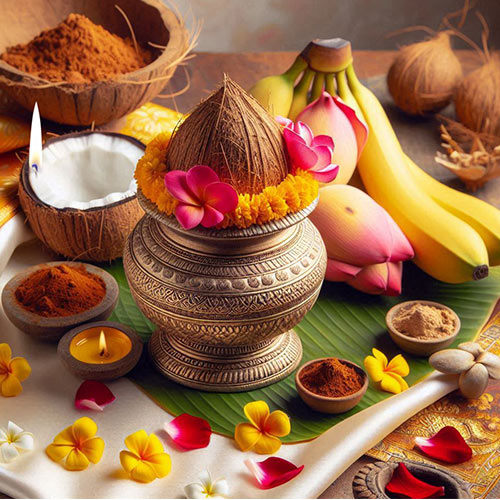
- In day-to-day puja, devotees prepare sattvik vegetarian items with care, cooking in a clean space, using pure ingredients, not tasting the food before it is offered, and placing it before the deity in a fresh, unused vessel. These norms reflect the belief that purity of mind and method helps the offering carry auspicious vibrations.
- Prasad can take many forms. Common temple examples include tirtha (sacred water), flowers returned from the altar, panchamrit/panchamrut (a five-ingredient nectar of milk, curd, ghee, honey, and sugar), and regional sweets like sakkarai pongal, laddoo, or peda. Some traditions, such as Krishna worship, emphasize milk products and Tulsi leaves as beloved offerings.
In essence, prasad is not valued for taste alone; it is revered as sanctified nourishment, a reminder that all sustenance, material and spiritual, flows from the Divine.
Why Is Sweet Prasad Offered After Puja?
Sweet prasad isn’t just dessert, it’s a symbol. In Hindu tradition, sweetness represents the rasa of divine love and the bliss (Ananda) that flows from God’s grace. By offering something sweet, devotees pray that life, speech, and thoughts become madhuram, gentle, pure, and pleasing to the Divine.
Sweet taste is associated with sattva (purity, harmony). Sattvik foods calm the mind and make it fit for devotion.
The act of sweet offering teaches seva and sharing. When everyone receives the same prasad, it dissolves differences and unites the community.
Sweets like ladoo, peda, halwa, kheer, sakkarai pongal are traditional temple offerings because dairy, grains, and natural sweeteners are considered nourishing, clean, and worthy of the altar.
After the deity’s acceptance, the sweet is believed to carry shakti (sacred energy). Tasting it becomes a reminder that everything auspicious in life is a gift from the Divine.
Scriptural References on Prasad
Bhagavad Gita:
devotion sanctifies the offering.
Krishna states that even a simple leaf, flower, fruit, or water, when offered with devotion, is accepted by the Divine (BG 9.26). This verse is the core scriptural basis for making naivedya before any meal or puja.
Bhagavad Gita:
eat what is first offered, it purifies life.
The Gita also teaches that those who partake of food offered in sacrifice (yajña-śiṣṭa) are freed from sin, whereas cooking only for oneself binds one to karma (BG 3.13). This is the classic justification for sharing and consuming prasada after worship.
Taittiriya Upanishad:
food as a form of the Eternal.
In the Bhrigu Valli, the seeker realizes “annam brahma iti vyajanat”-“food is Brahman,” because beings are born of food, live by food, and return into food. The same tradition lays down: “annam na nindyat”- “do not despise food,” establishing reverence for what is later offered as naivedya and returned as prasada.
Chandogya Upanishad:
meditate on food; it supports life and virtue.
Teachings associated with the Chandogya emphasize the greatness of food and the fruit of contemplating it with sanctity- another philosophical root for consecrating nourishment before partaking.
Puranic witness (Jagannath tradition):
Mahaprasad as ‘Anna Brahma’.
Texts and temple tradition attest that Lord Jagannath redeems devotees by allowing them to partake of His Mahaprasad; at Puri it is revered as ‘Anna Brahma’ (food as the Divine). These lines, cited with the Skanda Purana, anchor the idea that once accepted by the Deity, food becomes a carrier of grace for all.
How to Prepare and Offer Prasad (step by step)
-
Set your sankalp
Decide whom you’re offering to and the purpose (gratitude, health, festival). Keep the mind calm and positive. -
Cleanse the space and yourself
Bathe or wash hands/feet, wear clean clothes, wipe the altar or a dedicated, raised surface. Light a diya and incense. -
Choose sattvik items
Cook fresh, vegetarian food with pure ingredients (grains, milk, ghee, jaggery/sugar, fruits). Avoid onion, garlic, mushrooms, alcohol, and anything stale or packaged with eggs. -
Maintain hygiene and purity
Cook in a clean kitchen, use separate, unused vessels/plates for the deity. Do not taste the food before offering. -
Plate the naivedya
Place a small, beautiful portion of everything you’ve prepared on the deity’s plate. Add water in a small lota/katori for achamana. In Vaishnava tradition, place a Tulsi leaf on the offering. -
Face the right direction
Sit or stand facing east or north if possible. Keep the mind turned inward; silence the phone and avoid conversation. -
Invoke and meditate
Close the eyes, steady the breath, and mentally invite the Deity. Simple dhyana or a short prayer is enough if you do not know long mantras. -
Offer with mantra
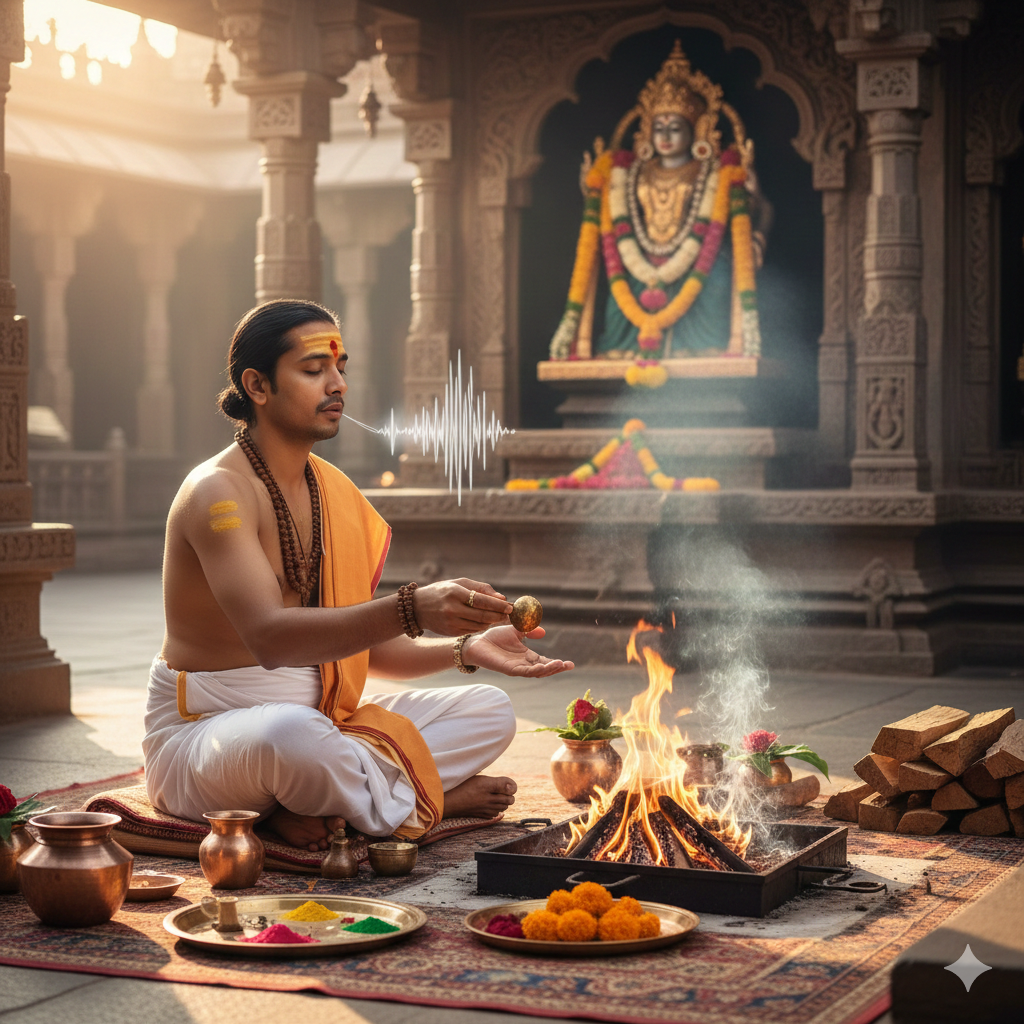
Ring a small bell once, then offer the food with a simple offering line such as:
“Idam naivedyam samarpayami.”
You may also chant a brief name-mantra of the deity (for example, “Om Namah Shivaya” or “Om Namo Bhagavate Vasudevaya”) a few times. -
Allow symbolic partaking
Keep the prasad before the deity for a few minutes. You may perform a brief aarti or recite a shloka, then gently cover the plate (do not blow on it). -
Conclude the worship
Offer water, flowers, and show the incense/diya once more. Do pradakshina (circumambulation) if space allows, then bow. -
Distribute prasadam
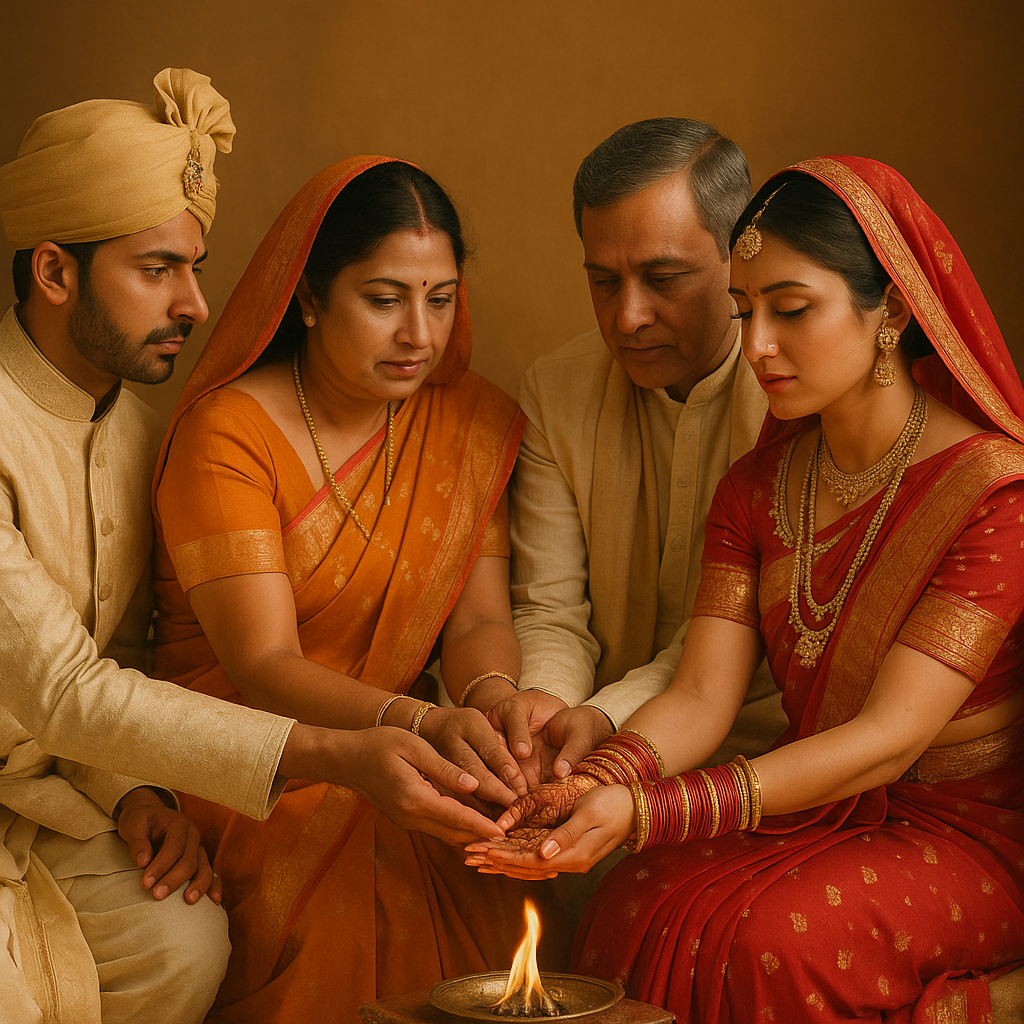
First serve a small portion to everyone present. Receive it in the right hand with gratitude, eat calmly, and avoid wasting even a crumb. If someone is fasting or diabetic, they can accept a token amount. -
Store and handle respectfully
Keep leftover prasad separate from regular food. Consume the same day when possible; avoid discarding. If perishable, refrigerate and finish soon.
Do’s
- Cook fresh the same day
- Keep thoughts loving and uplifted while cooking and offering
- Share with all present equally
Don’ts
- No tasting before offering
- Don’t place the plate directly on the floor, use a cloth or patra/altar
- Don’t argue, hurry, or multitask during the offering
Optional additions
- Panchamrit: equal parts milk, curd, ghee, honey, sugar, stir clockwise and offer in a clean katori.
- Seasonal fruits and dry fruits for simplicity.
- For daily practice, even a single fruit, a piece of jaggery, or a spoon of kheer is enough when offered with devotion.
Benefits of Serving and Receiving Prasad
Prasad is a sacred cycle, it is first offered to the deity, then served with devotion, and finally received with gratitude. Both giving and receiving carry immense blessings.
Benefits of Serving Prasad
Act of Seva (Service) : Distributing prasad is considered an offering of love to fellow devotees. The scriptures describe anna daan (giving food) as the highest charity.
Cultivates Humility: Serving prasad teaches equality. Whether a priest, devotee, or volunteer, all bow before the same food that has been touched by the Divine.
Generates Positive Karma: Feeding others with prasad is believed to wash away sins and invite prosperity into one’s life.
Spreads Auspicious Energy: As devotees distribute prasad, they help share the blessings of the deity with the community, magnifying its power.
Benefits of Receiving Prasad
Physical Nourishment: Since prasad is prepared as sattvik food, it nourishes the body and uplifts health.
Emotional Joy: The sweetness of prasad reminds devotees of divine love, filling the heart with peace and gratitude.
Spiritual Grace: Once offered, prasad carries the vibrations of the deity. Eating it purifies the soul and brings one closer to moksha (liberation).
Unity in Devotion: Receiving prasad alongside others symbolizes equality, dissolving social boundaries and uniting everyone as children of the same Divine.
Together, serving and receiving prasad transform a simple act of sharing food into a sacred exchange of blessings, where the giver and receiver both partake in the grace of God.
Temple Prasad Offerings Available from Rudra Centre
Rudra Centre offers authentic prasad from sacred temples, allowing devotees to receive blessings from revered shrines across India:
Shirdi Sai Baba Temple Udi Prasad – The sacred ash blessed by Sai Baba, believed to heal, protect, and bring peace to devotees.
Click on the link to buy Udi Prasad
Shani Shingnapur Maha Prasad – Offered at Lord Shani’s temple, this prasad is believed to remove obstacles and reduce the effects of Saturn’s influence.
Click on the link to buy Maha Prasad
Vindhyavasini Devi Temple Prasadam – Vindhyachal – From the holy shrine of Goddess Vindhyavasini, this prasad grants strength, protection, and fulfillment of desires.
Click on the link to buy Vindhyavasini Temple Prasadam
Mumbadevi Temple Prasadam Mumbai – Offered at the temple of Goddess Mumbadevi, the presiding deity of Mumbai, it blesses devotees with prosperity and wellbeing.
Click on the link to buy Mumbadevi Temple Prasadam
Babulnath Temple Prasad – From the revered Shiva temple in Mumbai, this prasad is said to bestow health, longevity, and spiritual upliftment.
Click on the link to buy Babulnath Prasad
Siddhi Vinayak Temple Prasadam Mumbai – Prasad from Lord Ganesha’s famous temple, believed to remove obstacles and bring success in new beginnings.
Click on the link to buy Siddhi Vinayak Temple Prasad
Trayambakeshwar Temple Prasadam – From one of the 12 Jyotirlingas, this prasad carries Lord Shiva’s blessings for liberation, protection, and divine grace.
Click on the link to buy Trayambakeshwar Prasad
Akshardham Swaminarayan Temple Prasadam (Delhi) – Prasad from the grand Swaminarayan temple, symbolizing purity, peace, and harmony in life.
Click on the link to buy Akshardham Prasad
Mansa Devi Prasadam Haridwar – From the Shakti Peeth in Haridwar, this prasad is believed to fulfill wishes and grant divine blessings of Goddess Mansa Devi.
Click on the link to buy Mansa Devi Prasad
Chandi Devi Prasadam Haridwar – Offered at Goddess Chandi Devi’s shrine, it is said to bring protection, courage, and victory over negativity.
Click on the link to buy Chandi Devi Prasad
Hari ki Pauri Prasadam Haridwar – Prasad from the sacred ghats of Ganga, believed to purify karma, wash away sins, and grant peace of mind.
Click on the link to buy Har ki Pauri Prasad
Baglamukhi Nalkheda Temple Energized Photoframe, Chunri & Raksha Sutra Set – A spiritually energized devotional set including a framed photo of Maa Baglamukhi, a yellow chunri, and protective Raksha Sutra blessed at the sacred Nalkheda temple in Ujjain.
Click on the link to buy Baglamukhi Nalkheda Temple Energized Set
-in-Astrology.jpg)

.jpg)



Comments 0
Leave your thought here