

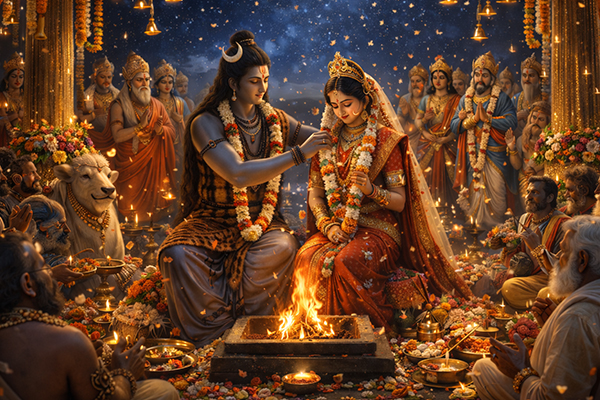
Mahashivratri is the most sacred night dedicated to Bhagwaan Shiva- a night of awakening, devotion, and inner transformation. Celebrated once a year on the Krishna Chaturdashi of Phalguna (15th February 2026), this festival holds deep spiritual, mythological, and yogic significance in Sanatana Dharma.
In this detailed guide, you will discover the significance, important muhurats, vrat/fasting rules, vrat katha (fasting story), sacred stories, puja vidhi (procedure) & more of Mahashivratri 2026.
Mahashivratri 2026 Date & Muhurat (Auspicious Timings) For Puja & Fasting
Mahashivratri is on 15 February 2026 (Sunday)
Nishita Kaal Puja Time:
12:28 AM to 01:17 AM, Feb 16
(Duration: 50 Minutes)
This is the most auspicious time-period to worship Bhagwan Shiva
On 16th Feb, Shivaratri Parana Time:
7:06 AM to 03:46 PM
Devotees begin the fast from 15th February Sunrise onwards & break their fast during the above mentioned time-period
Ratri Prahar Puja Timings:
1st Prahar: 6:39 PM to 9:45 PM
2nd Prahar: 9:45 PM to 12:52 AM, Feb 16
3rd Prahar: 12:52 AM to 3:59 AM, Feb 16
4th Prahar: 3:59 AM to 7:06 AM, Feb 16
Chaturdashi Tithi:
Begins – 05:04 PM on Feb 15, 2026
Ends – 05:34 PM on Feb 16, 2026
Significance of Mahashivratri
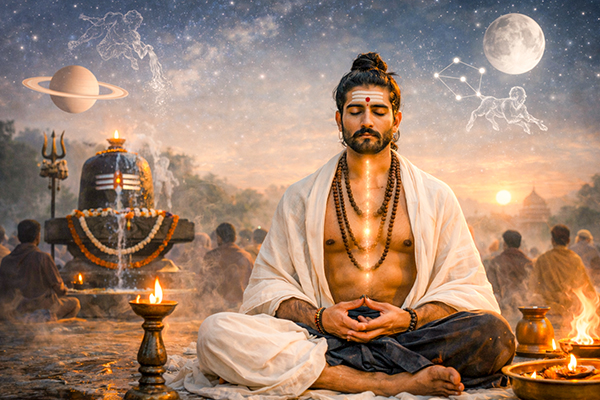
Mahashivratri is the most powerful night dedicated to Bhagwan Shiva, symbolizing inner stillness, transformation, and heightened awareness. Unlike celebratory festivals, it is observed through fasting, meditation, and night-long vigil, encouraging seekers to turn inward and dissolve mental and emotional limitations. This sacred night is regarded as a gateway to deeper consciousness and spiritual renewal.
From an astrological perspective, Mahashivratri holds exceptional importance. It occurs when the Sun is in Kumbh (Aquarius) and the Moon is in Makar (Capricorn) during the waning phase of Krishna Chaturdashi. Both Kumbh and Makar are ruled by Saturn (Shani), the planet associated with discipline, detachment, karma, and sadhana. This rare alignment is considered highly conducive for spiritual practices, as Saturn’s influence supports introspection, endurance, and inner transformation. Additionally, the waning Moon reduces emotional fluctuations, making it easier to calm the mind and deepen meditation.
Yogic and geological traditions further explain that on Mahashivratri, especially in the Northern Hemisphere, there is a natural upward movement of energy within the human system. This subtle upliftment supports spinal alignment, nervous system balance, and heightened awareness. Staying awake, maintaining an upright posture, and remaining inwardly focused allow the body to align more easily with these natural forces, enhancing the impact of sadhana.
From an Ayurvedic and scientific viewpoint, the Sun–Moon alignment on this night is believed to influence Vata dosha, which governs movement, circulation, nerve activity, and mental processes. When Vata is balanced, clarity, alertness, and stability increase. Mahashivratri is said to naturally support this balance, helping harmonize the body and mind. Fasting throughout the day and night further aids detoxification, reduces digestive load, and redirects energy toward mental clarity and inner stillness.
This combination of planetary alignment, bodily balance, and natural energy flow makes Mahashivratri especially powerful for meditation and sankalpa. Ancient seers believed that intentions set and meditation practiced on this night yield deeper and more lasting results than at any other time. The festival also coincides with a seasonal shift, as nature begins to awaken after winter, symbolizing renewal, regeneration, and new beginnings- both outwardly in the Earth and inwardly within the seeker.
Because of these powerful astrological alignments, subtle geological influences, and yogic conditions, Mahashivratri has been regarded as an extraordinary night across time. These natural phenomena are not only understood through science and astrology but are also reflected symbolically in the Purāṇic texts, where sacred stories describe cosmic events, divine manifestations, and transformative moments associated with this night. Hence, Mahashivratri is considered one of the most vital occasions for a sadhak to engage in penance and sincere sadhana, as both nature and consciousness move in harmony.
Sacred Stories of Mahashivratri
Mahashivratri is associated with several sacred stories mentioned across different Purāṇas. Each legend explains the spiritual depth of this night from a unique perspective.
Marriage of Bhagwan Shiva & Goddess Parvati
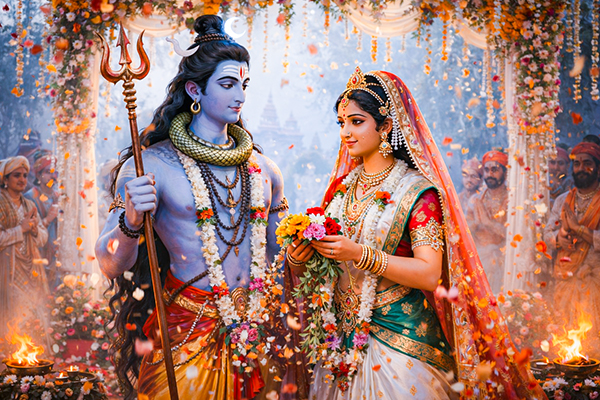
The divine marriage of Bhagwan Shiva and Maa Parvati is one of the most celebrated legends of Mahashivratri. To win Shiva’s heart, Parvati performed intense penance and unwavering devotion. Moved by her dedication and the guidance of the devas, Shiva accepted her as His consort. Their sacred union took place just before Amavasya in the month of Phalguna. This event symbolizes the union of Shiva (consciousness) and Shakti (energy) and marks Shiva’s transition from Nirgun Brahman, the formless absolute, to Sagun Brahman, the manifest divine.
Samudra Manthan and the Story of Neelkanth
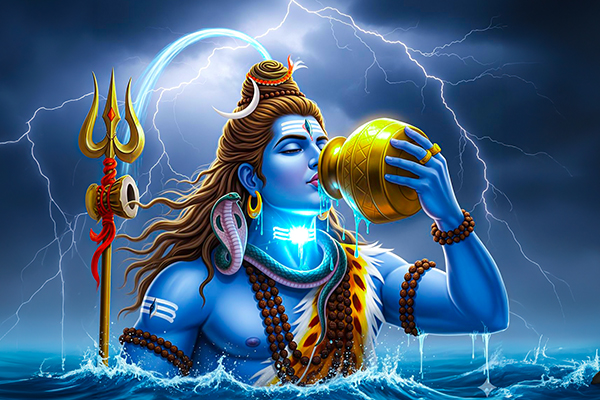
During the churning of the cosmic ocean (Samudra Manthan), a deadly poison known as halahala emerged, threatening to destroy all creation. The devas and asuras sought Bhagwan Shiva’s help, as only He could contain such destructive power. Shiva consumed the poison to save the universe, while Maa Parvati pressed His throat to prevent it from spreading. As Shiva remained awake throughout the night, sustained by devotion and cosmic balance, the poison turned His throat blue, earning Him the name Neelkanth. This story reflects Shiva’s supreme sacrifice and protective grace.
Descent of Maa Ganga
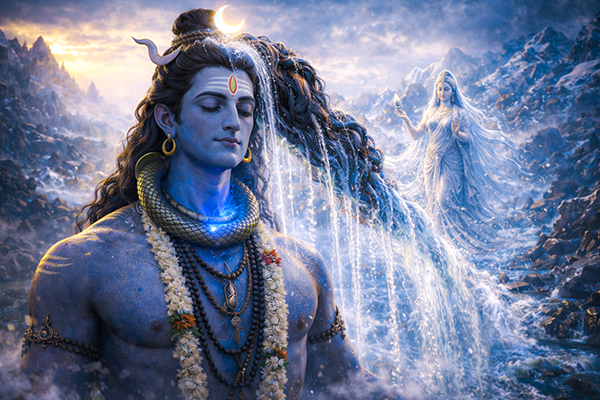
Another sacred legend states that on Mahashivratri, Maa Ganga descended from the heavens with immense force. To prevent her from destroying the Earth, Bhagwan Shiva captured her in His matted locks and gently released her as sacred streams. This act symbolizes Shiva’s role as the protector and purifier, allowing divine grace to flow into the earthly realm. Mahashivratri is therefore regarded as a night of inner cleansing and spiritual renewal.
Lingodhbhav – Manifestation of the Infinite
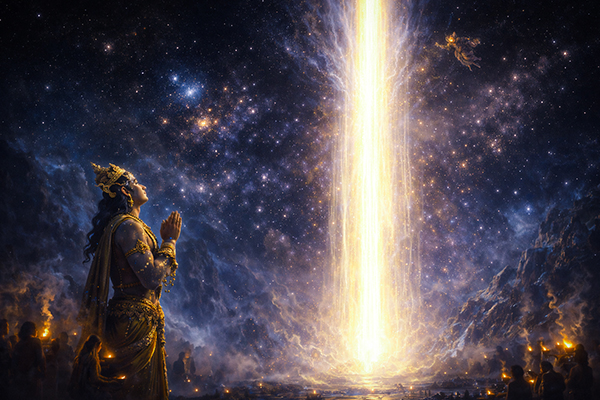
One of the most profound legends of Mahashivratri speaks of Lingodhbhav, when Bhagwan Sadashiva manifested as an infinite pillar of light at midnight. Neither Brahma nor Vishnu could find its beginning or end, revealing Shiva as the eternal, formless reality beyond time and space. This event established the worship of the Shivling as a symbol of infinity. Devotees stay awake throughout the night to honour this boundless form of Shiva.
The Bilva Tree and the Hunter
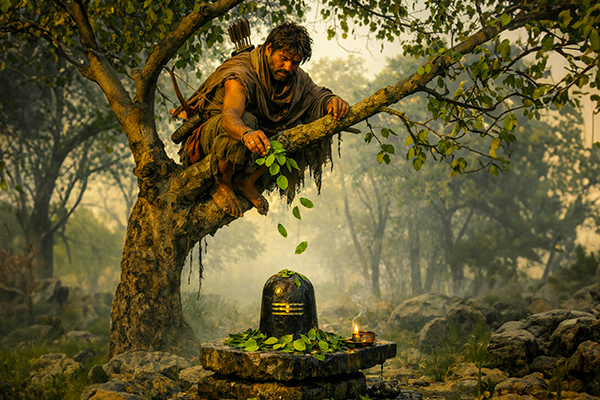
A simple yet powerful story tells of a hungry hunter who climbed a Bilva tree to escape danger. Beneath the tree stood a Shivling. To stay awake, the hunter unknowingly plucked Bilva leaves and dropped them below. Without any ritual knowledge, he ended up worshipping Bhagwan Shiva throughout the night. Pleased by his sincerity, Shiva granted him moksha, demonstrating that pure intent and devotion are more important than elaborate rituals.
Tandava – The Cosmic Dance of Shiva
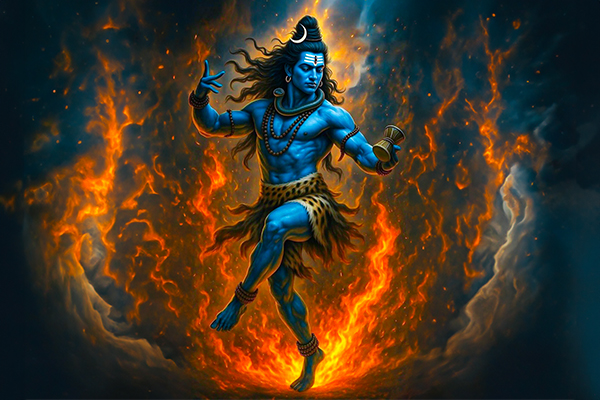
It is believed that on Mahashivratri, Bhagwan Shiva performs the Tandava, the cosmic dance of creation, preservation, and destruction. This dance represents the destruction of ego, ignorance, and negativity. To calm the intense energy of Tandava, devotees offer milk and honey to Shiva. The night-long vigil symbolizes awakening from ignorance into divine bliss and higher awareness.
What to Do on Mahashivratri
Mahashivratri is best observed through simple yet disciplined spiritual practices that help align the mind and body with Shiva consciousness. Devotees may follow all or a few practices based on their capacity.
Observe Jagran (Night Vigil)
 copy_206338.jpg)
Jagran is the practice of staying awake through the night of Mahashivratri in devotion to Bhagwan Shiva. Observed from sunset on 15 February 2026 until sunrise on 16 February 2026, it represents spiritual alertness and conscious participation in this sacred night. Devotees remain engaged in prayer, chanting, meditation, or silent reflection to maintain inner focus.
More than a ritual, Jagran symbolizes overcoming inertia and awakening higher awareness. Even a partial vigil observed with sincerity is believed to enhance the spiritual benefits of Mahashivratri, supporting deeper clarity, discipline, and devotion.
Wear Rudraksha
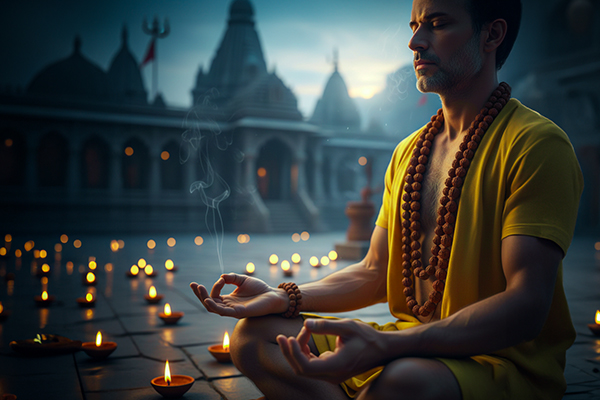
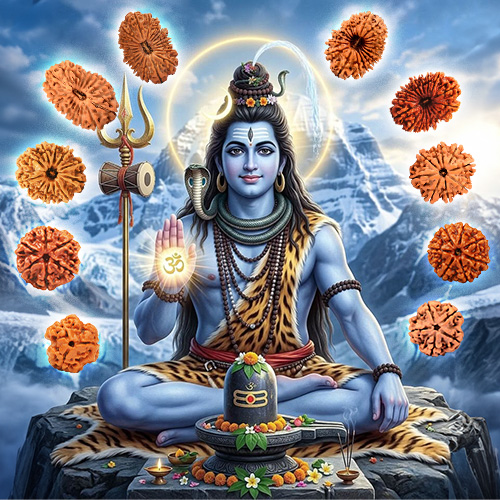
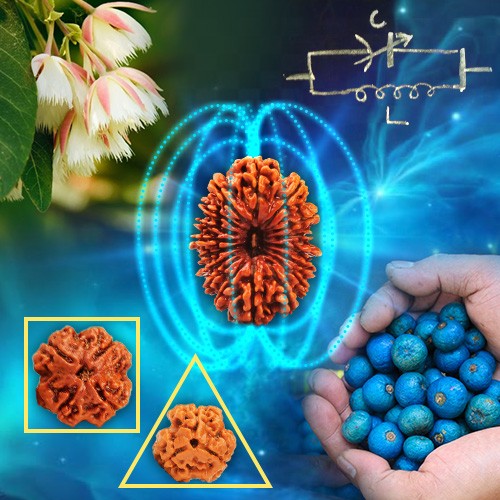
Wearing Rudraksha on Mahashivratri is believed to help align the mind and body with the energy of Bhagwan Shiva. It supports mental calm, clarity, and spiritual focus, making it especially beneficial during mantra chanting, meditation, and other sadhana performed on this sacred night.
Explore 1 to 21 Mukhi Rudraksha from Rudra Centre
Mahashivratri is the most powerful time to start your Rudraksha Journey. You can consult with Rudra Centre Experts who will recommend the best Rudraksha for your Goals.
Book Consultation with Rudra Centre Experts
Sakhashree (Founder of Rudra Centre) is the World’s renowned authority on Rudraksha, Gemstones & Chakra Therapy. Over the years she has healed & empowered thousands of individuals using the patented Rudraksha Ratna Chakra Therapy
Book Consultation with Sakhashree
Perform Shiva Puja & Rudrabhishek
Performing Shiva Puja on Mahashivratri is a sacred way to express devotion and surrender to Bhagwan Shiva. Worship of the Shivling with offerings such as water, milk, honey, and bilva leaves is considered highly auspicious, while Rudrabhishek performed on this night is believed to be especially powerful, bringing spiritual purification and divine grace.
Devotees may book authentic Shiva Puja services through Rudra Centre, where rituals are conducted by learned Vedic priests following proper procedures.
Book Shiva Puja with Rudra Centre Puja Services
Rudrabhishek is regarded as the most important and transformative ritual of Mahashivratri, performed to cleanse negative energies and invoke Shiva’s blessings. Abhishek of the Shivling with water, milk, honey, and other sacred offerings is believed to bring spiritual purification, peace, and upliftment. Devotees who wish to understand and perform this ritual correctly can read the complete Rudrabhishek procedure in detail.
Read More:
Rudrabhishek Procedure
Observe Fast (Vrat) on Mahashivratri
 on Mahashivratri_206337.jpg)
The Mahashivratri fast begins at sunrise on 15 February 2026, after bathing and offering prayers to Bhagwan Shiva. Devotees may choose the nature of their vrat based on health, capacity, and tradition. Some observe a nirjala vrat, abstaining from food and water throughout the day and night, while others follow a phalahar vrat, consuming fruits, milk, curd, and dry fruits. Another common practice is ek bhukta vrat, where one simple sattvic meal is taken before sunset.
During the fast, foods such as fruits, dairy products, dry fruits, and vrat-friendly preparations made from sabudana, makhana, or singhara atta are permitted, along with rock salt (sendha namak). Grains, lentils, onion, garlic, non-vegetarian food, regular salt, and processed items are avoided. If food is consumed, it is generally taken before sunset, though some devotees may take fruits or milk once during the night.
The fast is traditionally broken on 16 February 2026 during Shivratri Parana time, after morning prayers and offering food to Bhagwan Shiva. Fasting on Mahashivratri is believed to purify the body, discipline the senses, and prepare the mind for deeper spiritual awareness.
Meditate
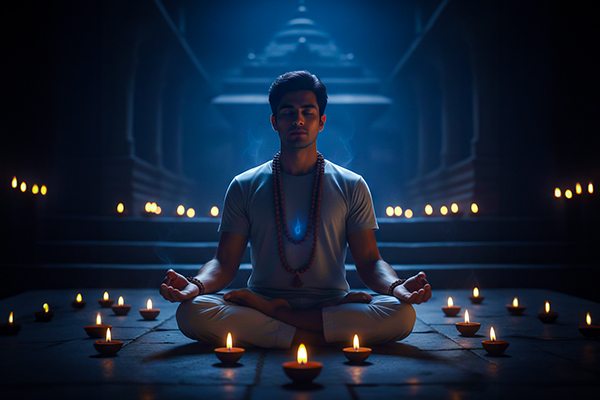
Meditation on Mahashivratri allows the mind to naturally settle into stillness, as the night is believed to support heightened awareness and inner balance. Devotees may focus gently on the breath, mentally chant Om Namah Shivaya, visualize a glowing Shivling or the form of Bhagwan Shiva, or simply remain in silent awareness by observing thoughts without engagement.
Even short meditation sessions of 10–15 minutes can be beneficial, while experienced practitioners may choose to sit for longer durations or meditate in multiple sessions throughout the night. Meditation on Mahashivratri is believed to dissolve mental restlessness, calm emotional patterns, and support spiritual awakening. Even a few minutes of sincere practice on this night is said to bring lasting inner clarity and transformation.
Chanting Shiva Mantras
Chanting Shiva mantras on Mahashivratri helps purify the mind and deepens devotion. Mantra repetition calms mental fluctuations, refines emotions, and allows the consciousness to remain absorbed in Bhagwan Shiva. Chanting may be done individually or in a group, silently or aloud, according to one’s comfort.
One can chant the below Mantras on Mahashivratri
Om Namah Shivaya
ॐ नमः शिवाय
The most sacred mantra of Bhagwan Shiva, chanted for purification, inner peace, and spiritual awakening.
Maha Mrityunjaya Mantra
ॐ त्र्यम्बकं यजामहे सुगन्धिं पुष्टिवर्धनम् ।
उर्वारुकमिव बन्धनान् मृत्योर्मुक्षीय मामृतात् ॥
Chanted for health, protection, fearlessness, and liberation.
Om Namah Shivaya Rudraya
ॐ नमः शिवाय रुद्राय
Invokes the fierce yet compassionate form of Bhagwaan Shiva for inner strength and clarity.
Shiva Gayatri Mantra
ॐ तत्पुरुषाय विद्महे महादेवाय धीमहि ।
तन्नो रुद्रः प्रचोदयात् ॥
Chanted for wisdom, higher consciousness, and spiritual guidance.
Shivaya Namah Om
शिवाय नमः ॐ
A simple yet powerful mantra for devotion, focus, and mental steadiness.
Even gentle and mindful chanting of these mantras on Mahashivratri is believed to bring lasting spiritual benefit.
Organize Bhajans & Paaths
Organizing or participating in Shiva bhajans, kirtans, and paaths on Mahashivratri helps create a devotional atmosphere throughout the night. Recitation of Rudram Paath or Shiva stotras is considered especially auspicious, as collective chanting sustains focus, deepens devotion, and keeps the mind absorbed in the remembrance of Bhagwan Shiva.
Perform Charity & Daan
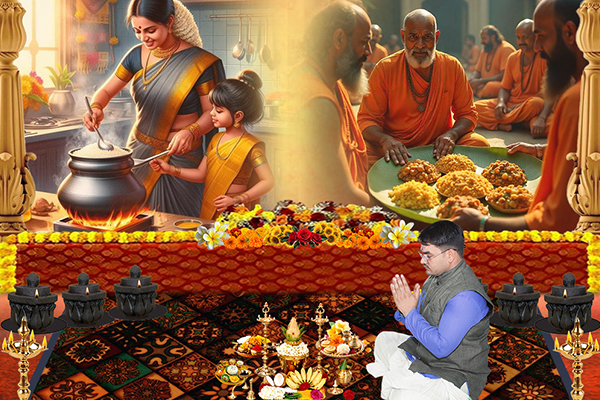
Performing charity on Mahashivratri is considered a sacred act of compassion and selflessness. Offering food, clothing, or essential items to those in need is believed to bring spiritual merit. Acts such as Ann Daan, Gau Daan, and Brahmin Bhoj are regarded as especially auspicious, and charity offered with humility is said to please Bhagwan Shiva.
Ann Daan, the act of offering food to the needy, is considered one of the highest forms of charity, as it nourishes life and relieves suffering. Devotees who wish to perform Ann Daan on this sacred day may book Ann Daan through Rudra Centre, ensuring the offering is carried out with sanctity and care.
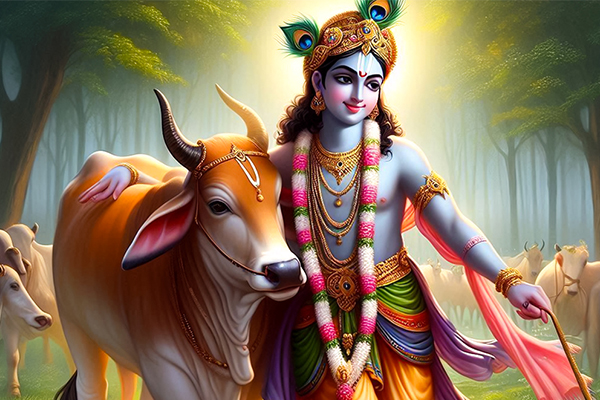
Gau Daan holds special significance in Shiva worship, as cows are considered sacred and dear to Bhagwan Shiva. Supporting the welfare of cows on Mahashivratri is believed to bring spiritual merit, peace, and blessings. Devotees may book Gau Daan with Rudra Centre to perform this sacred offering in a meaningful and respectful manner.
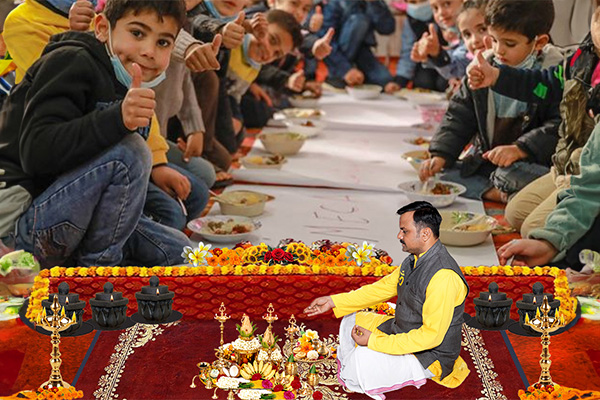
Brahmin Bhoj is a traditional act of gratitude, where meals are offered to Brahmins as a form of reverence and humility. Performing Brahmin Bhoj on Mahashivratri is believed to enhance spiritual merit and invoke divine grace. Those wishing to observe this tradition may book Brahmin Bhoj through Rudra Centre, ensuring the ritual is conducted as per sacred customs.
Visit Shiva Temples
Visiting Shiva temples on Mahashivratri is considered highly auspicious. Devotees offer prayers and abhishek to the Shivling and, where possible, participate in temple rituals conducted during the four prahars of the night. Darshan of a Jyotirlinga on this sacred occasion is believed to bestow profound spiritual blessings.
Mahashivratri Celebration at Rudra Centre
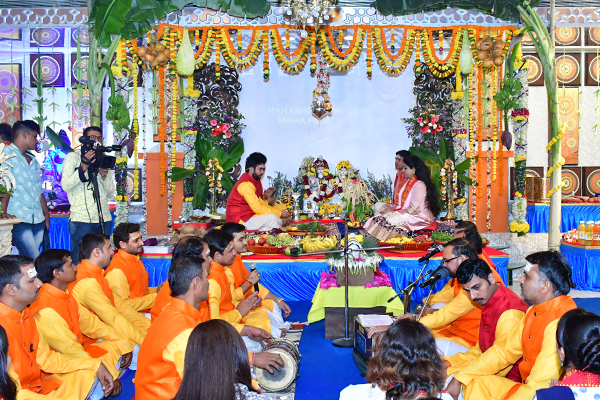
Rudra Centre observes Mahashivratri with a grand annual Mahashivratri Maha Puja, creating a deeply spiritual and immersive experience for devotees worldwide. The celebration is centered around the four prahar Rudra Abhishek, performed with Vedic precision, devotion, and powerful mantra chanting.
The night-long celebration includes Namak Chamakam (Rudri Path), Shiva bhajans, Rudram chanting, satsang with Sakhashree Neeta, spiritual dances, and live-streamed rituals, allowing devotees to participate from anywhere. The atmosphere is infused with Shiva energy in a Chakra Yog–aligned spiritual setting.
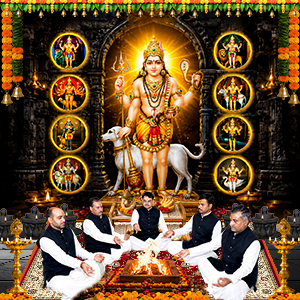
The core Mahashivratri Puja is conducted by 21 learned Vedic Brahmins, ensuring authenticity and adherence to sacred traditions.
Participate in Mahashivratri Mahapuja as a Yajman https://www.rudraksha-ratna.com/buy/maha-shivratri-mahapuja
Mahashivratri Maha Puja at Rudra Centre – Four Prahar Celebration
Rudra Centre is organizing a sacred all-night Four Prahar Mahashivratri Maha Puja on the auspicious occasion of Maha Shivaratri, 15 February 2026. The puja begins with the First Prahar at 6:39 PM on Sunday, 15 February, and continues seamlessly through the night until 7:06 AM on 16 February, culminating with the Fourth Prahar at dawn.
Throughout the night, the Shivling is worshipped through Maha Rudra Abhishek, Vedic mantra chanting, Shiva stotras, stutis, and powerful mantra japa. Abhishekam is performed using sacred offerings, including fruit juices, fragrant liquids, and rare herbs, creating a deeply charged spiritual atmosphere aligned with the energy of Mahashivratri.
First Prahar – Mahamrityunjaya Shiva
06:39 PM – 09:45 PM (15 February 2026)
The first prahar invokes Mahamrityunjaya Shiva, the eternal healer and protector. This phase focuses on health, longevity, and release from fear and untimely suffering. Worship is performed through Sahasra Bilva Archan, offering one thousand Bilva leaves to the Shivling, symbolizing surrender, healing, and karmic purification.
Second Prahar – Shiva–Parvati Vivah
09:45 PM – 12:52 AM (16 February 2026)
The second prahar celebrates the divine marriage of Lord Shiva and Goddess Parvati, representing the union of consciousness and energy. Traditional vivah rituals are performed to invoke blessings for harmony in relationships, marital bliss, emotional balance, and inner union within the devotee.
Third Prahar – Neelkanth Shiva
12:52 AM – 03:59 AM (16 February 2026)
During the third prahar, Neelkanth Shiva is worshipped-the form in which Lord Shiva consumed cosmic poison to save creation. Bhasma Abhishek is performed, symbolizing detachment, ego dissolution, and resilience. This phase supports inner strength, wisdom, and the courage to transform life’s challenges.
Fourth Prahar – Nataraja, the Cosmic Dancer
03:59 AM – 07:06 AM (16 February 2026)
The final prahar invokes Nataraja, Lord Shiva as the cosmic dancer who governs creation, preservation, and liberation. As dawn approaches, worship through Bhaang Abhishek and special offerings aligns devotees with Shiva’s cosmic rhythm, invoking joy, creativity, spiritual elevation, and liberation.
Observed in this manner, the Mahashivratri Maha Puja at Rudra Centre offers devotees a rare opportunity to journey through the four sacred expressions of Shiva in a single night, making Mahashivratri a deeply transformative spiritual experience.
-in-Astrology.jpg)
.jpg)


Comments 0
Leave your thought here